


Trusted Repiping Specialists in Santa Clara
Whole-House Repiping Done Right The First Time






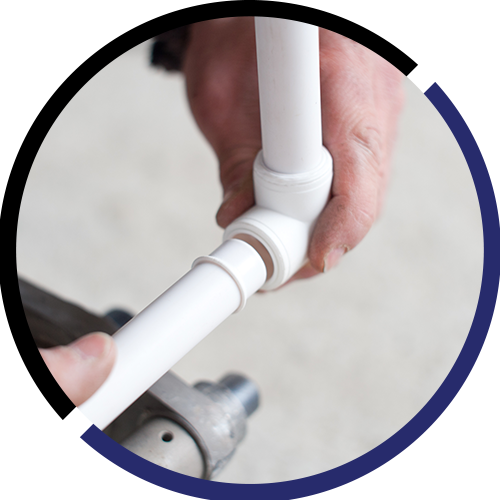
Repiping in Santa Clara, CA
Santa Clara is one of the most interesting cities in the South Bay from a plumbing standpoint, and that is because the city's housing stock tells three very different stories depending on which zip code you're standing in. The tract homes built between 1948 and 1965 that fill neighborhoods like Old Quad, Santa Clara's original downtown grid near SCU, and the streets off El Camino were almost all built with galvanized steel supply lines, and those pipes are now well past the end of their useful life. The mid-1960s through 1980s homes in the Rivermark corridor and North Santa Clara often used a mix of copper and, in some unlucky cases, polybutylene, which is a flexible gray plastic pipe that has a documented history of failing without warning. Then there are the newer builds closer to Great America and the Mission College area, which used copper or early PEX and are now starting to show pinhole leaks from Santa Clara's naturally hard water.
Venture Plumbing has been repiping Santa Clara homes for over 15 years from our headquarters on San Jose Ave, just a short drive up the 880 or Central Expressway. We've pulled galvanized out of ranch homes on Monroe Street, traced polybutylene through attics in homes near Santa Clara Square, and repiped Eichler-adjacent mid-century homes where routing matters more than material. If your water pressure has dropped over the years, if you're noticing rust-colored water at the first pour in the morning, or if you've had two or three leaks in the last 18 months, it's probably time to stop patching and start over.
Call (408) 898-2500 or schedule online for expert repiping service in Santa Clara, CA
When A Santa Clara Home Needs To Be Repiped
Not every leak means the whole system needs to come out, but there are clear patterns that tell you whether you're dealing with an isolated failure or a house-wide problem that's going to keep draining your time and money. Here's what we see most often in Santa Clara homes:
Galvanized Steel Pipes in Homes Built Before 1970:
Galvanized steel was the standard for residential water supply lines through most of the post-war building boom, and Santa Clara has thousands of these homes. The zinc coating that was supposed to prevent corrosion breaks down from the inside over decades, and what you end up with is a pipe that's rusting from within while looking fine from the outside. The symptoms show up gradually, dropping pressure at the furthest fixtures from the main, discolored water when you first turn on a tap, and a slow increase in small pinhole leaks behind walls. Once a galvanized system starts failing in one spot, it is almost certainly failing in other spots you haven't found yet.
Polybutylene Systems in 1970s and 1980s Homes:
Polybutylene was marketed as the future of plumbing for about a decade, and then it started bursting. We still find it in Santa Clara homes, usually gray or sometimes blue, often routed through attics or along exterior walls. If you have polybutylene, you have a ticking clock, and most insurance companies know it, which is why polybutylene is one of the few plumbing materials that can directly impact your homeowners policy.
Pinhole Leaks in Copper Lines:
Santa Clara receives its water from Santa Clara Water & Sewer Utilities, which blends local groundwater with imported Hetch Hetchy and Central Valley Project supply. The hardness runs in the 200 to 300 mg/L calcium carbonate range depending on your area of the city, which is classified as hard to very hard. Over 30 or 40 years, that water chemistry, combined with Santa Clara's municipal pH and chloramine treatment, wears down copper from the inside until you start seeing pinhole leaks. If you've already had one or two repaired, the third and fourth are most likely coming.
Water Pressure Problems Across Multiple Fixtures:
When one showerhead is weak, it's usually a mineral buildup issue at the fixture. When every fixture in the house has dropped off, the supply lines themselves are restricted, and that restriction almost never gets better on its own.
Water That Looks Or Tastes Off:
Brown or yellow water at the first tap in the morning is a strong indicator that the inside of your supply pipes is corroding. By the time you can see it, the corrosion likely has been happening for years.
When To Repipe Your Santa Clara Home By Decade Built
The decade your home was built is one of the most reliable predictors of whether a repipe is coming, and if so, how soon. Here's a quick reference based on what we've seen across hundreds of Santa Clara homes.
| Year Built | Likely Original Supply Pipe | Repipe Urgency | Common Issues | Santa Clara Neighborhoods Where Common |
|---|---|---|---|---|
| Pre-1950 | Galvanized steel | Overdue in most cases | Severe internal corrosion, low pressure, discolored water, pinhole leaks | Old Quad (95050), Santa Clara University area (95050) |
| 1950 to 1970 | Galvanized steel | High, plan within 2 to 5 years | Pressure loss, rust flakes, recurring small leaks | Central Santa Clara (95050/95051), El Camino corridor, Monroe, Warburton, Scott |
| 1970 to 1985 | Copper or polybutylene | Material-dependent | Polybutylene failures, early copper pinhole leaks | West Santa Clara (95051), Pruneridge Ave area, older Rivermark edges |
| 1985 to 2000 | Copper, some early PEX | Moderate, monitor for pinholes | Copper pinhole leaks from hard water corrosion | North Santa Clara (95054), Mission College area |
| 2000 to present | PEX or copper | Low in most cases | Fixture-level issues, not system-wide | Rivermark (95054), Great America area, newer infill builds |
Slab Leak Repair Or Full Repipe, How To Tell The Difference
One of the most common situations we walk into in Santa Clara is a homeowner who has been told they have a slab leak, which usually costs between a couple thousand dollars to locate and repair, and is trying to decide whether that repair is the right move or whether the whole system should come out.
The honest answer depends on three things: the age of the home, the pipe material, and whether this is the first slab leak or the third. A single slab leak in an otherwise healthy copper system in a 1990s home is a repair. A third slab leak in a 1960s galvanized or early copper system is almost always a full repipe, because every dollar you spend opening the slab to chase one leak is a dollar that should have gone toward a permanent solution. When we come out to a suspected slab leak, we don't just quote the repair, we look at the full system and tell you what we'd do if it were our house. If a repipe is the better call, we explain why, and if it isn't, we just fix the leak.
Most Santa Clara homes with slab-on-grade construction, which is common in the 1950s and 1960s ranch neighborhoods off Benton, Warburton, and Monroe, are routed with supply lines either in the slab or in the attic. When we repipe these homes, we typically abandon the in-slab runs and route new PEX through the attic, dropping down to fixtures through wall cavities. That approach saves the slab from further demolition and gives you a modern, accessible system going forward.
PEX Versus Copper For Your Santa Clara Repipe
Both materials are code-compliant, both are proven, and both will outlast the remaining years you plan to spend in your home. The right choice comes down to budget, layout, and preference. Here's how they compare side by side for a Santa Clara repipe.
| Factor | PEX (Cross-Linked Polyethylene) | Type L Copper |
|---|---|---|
| Material cost | Lower | Significantly higher |
| Installation time | Faster, flexible routing | Slower, rigid routing and soldering |
| Wall demolition required | Less, flexes through cavities | More, straight runs only |
| Expected lifespan | 50+ years | 50 to 70+ years |
| Hard water performance | Resistant to scale buildup | Slowly corrodes from the inside in hard water |
| Freeze resistance | Expands without bursting | Can split when frozen |
| Pressure handling | Rated for residential use | Handles very high pressure |
| UV exposure | Must be protected from sunlight | Not affected |
| Recyclability at end of life | Not recyclable | Fully recyclable |
| Best for | Most Santa Clara repipes | Premium builds, exposed runs, traditional preference |
Repiping Eichlers And Mid-Century Homes In Santa Clara
Santa Clara has pockets of Eichler and Eichler-adjacent mid-century homes, particularly in the Pomeroy Green co-op community and on streets that border Cupertino's Fairgrove neighborhood, and these homes present a specific set of repiping challenges that a lot of plumbers aren't equipped for. Eichlers were built on slab, typically with radiant floor heating loops in the slab and supply lines either in the slab or in the ceiling. The original copper is often undersized by modern standards and has been sitting in hard water for 60+ years.
When we repipe an Eichler or a mid-century slab home in Santa Clara, we almost always route the new supply system through the attic or the finished ceiling cavities above the drop-beam structure, abandoning the in-slab runs entirely. That protects the slab, preserves the original architecture, and gives the home a modern, serviceable system. We also take extra care with ceiling penetrations to preserve the tongue-and-groove finishes that are a defining feature of these homes.
What A Santa Clara Repipe Actually Looks Like From Start To Finish
One of the things that keeps homeowners from scheduling a repipe is not knowing what the process involves, and we get it, the idea of opening walls in your home is not fun. Here's how we do it.
Initial Evaluation:
An experienced, senior technician comes out, walks the house with you, inspects your existing supply system, checks pressure at multiple points, and identifies the wall cavities and routes we can use to minimize demolition. You get multiple written scopes and a clear price before anything starts.
Permits With The Santa Clara Building Department:
Every repipe in the city of Santa Clara requires a plumbing permit, and we pull it under our license. We handle the inspection scheduling, the rough-in sign-off, and the final sign-off.
Staging and Wall Protection:
Before we cut a single access hole, we lay down floor protection, wrap furniture, and isolate the work areas. We're going to be in your home for several days, and we treat it like our own.
Routing and Installation:
For most homes we route new lines through attic spaces, interior wall cavities, and under the house where access allows. We avoid cutting exterior walls wherever possible, and in homes with finished attics or tight crawl spaces, we route strategically to protect finishes.
Pressure Testing and Inspection:
Before any walls go back up, the entire new system gets pressure tested at levels well above normal operating pressure, and the Santa Clara Building inspector signs off on the rough-in.
Drywall Patching and Texture Matching:
We handle the drywall patching in-house or through our regular trade partners. The finish work gets done to blend, and if your home has knockdown or orange peel texture, we match it.
Final Inspection and Walk-Through:
Once the city signs the final, we walk the house with you, turn every valve, run every fixture, and confirm pressure at each one.
Most whole-house repipes in Santa Clara take between three and seven working days depending on the size of the home and the complexity of the routing.
What To Expect Living Through A Repipe
The question every Santa Clara homeowner asks before they sign is a variation of the same thing, which is what is my life going to look like for those five days. Here's an honest timeline based on hundreds of repipes we've done in homes just like yours. Disclaimer, not all repipes are the same, one project may only need one day while another might need a week.
Day One:
We arrive early, lay floor protection from the front door to every work area, wrap furniture, and start cutting access holes. You'll have water all day while we work, because we tie in the new system before we abandon the old. Expect a lot of noise during cutting and drilling hours, usually 8 AM to 4 PM. You can stay in the home the entire day.
Days Two Through Four:
The new supply system gets routed and installed. On most mid-size Santa Clara homes, this is the bulk of the work, and you'll have working water every night. We shut the water off only during the actual tie-ins, which we schedule in advance with you, usually for a couple of hours mid-day, we ensure there is no surprises.
Day Four Or Five:
Pressure testing and the Santa Clara Building Department inspection. The inspector typically arrives within a 2 to 4 hour window, and once the rough-in passes, we start closing walls.
Days Five Through Seven:
Drywall patching, texture matching, and final cleanup. We walk the house with you at the end, run every fixture, confirm pressure, and leave the home cleaner than we found it.
A few practical notes:
- Pets are fine, we just ask that you contain them to a room we're not working in that day.
- Kids are fine, we keep tools and materials secured at the end of every day.
- You can keep working from home during the job, although expect drilling noise during the day and plan video calls accordingly. Most homeowners stay in the home the entire time without issue.
- For larger homes or homeowners who'd rather not deal with the noise, a five-day hotel stay is a reasonable alternative and we can help you time things around it.
Red Flags When Getting A Repipe Quote In Santa Clara
A whole-house repipe is one of the larger purchases you'll make on your home, and Santa Clara homeowners sometimes get pulled into quotes that look good on paper but fall apart in practice. Here's what to watch out for.
🚩 A Quote That Doesn't Include Permits:
Every repipe in the city of Santa Clara requires a plumbing permit. If a contractor is quoting a price that skips the permit to come in low, you're not saving money, you're taking on the risk of the permit later, a failed inspection during a future sale, and zero recourse if the work is bad.
🚩 Crimp Fittings Without Brand Specification:
Not all PEX fittings are created equal, the cheaper crimp rings and generic fittings have been the source of most PEX failure stories you read online. Ask what brand system is being installed, Uponor, Viega, Apollo, and whether they're using the manufacturer's fittings.
🚩 A Quote That Doesn't Specify Wall Repair:
The repipe itself is one part of the job, but the drywall patching, texture matching, and paint touch-up is the other. If a quote stops at "plumbing complete" and leaves the wall repair to you, the total cost is going to be much higher than the number you're looking at. Venture handles all wall repair through in-house teams or our regular trade partners, and it's in the quote.
🚩 No Mention Of Pressure Testing And Inspection Scheduling:
A proper repipe includes a pressure test before the walls close and an inspection by the Santa Clara Building Department. If those steps aren't called out in the scope, ask why.
🚩 A Price That's Dramatically Lower Than Others:
Repipe pricing in Santa Clara tends to fall within a predictable range depending on home size and material. If one quote is 40% below the others, something is being cut, and it's usually permits, fittings, or finish work.
We give every Santa Clara homeowner multiple scope and material options at different price points, and we walk you through exactly what's included and what's not, so you can compare our quote to anyone else's on the same line items.
What Our Clients Say


Why Venture Plumbing for Repiping in Santa Clara?
Proudly serving Santa Clara, CA. since 2009.
We've worked in thousands of homes across Santa Clara. We already know what's behind your walls.
Same-Day Service
We are often able to dispatch to your home within the same day
Upfront Pricing
No hidden fees. Multiple pricing options before any work begins.
Clean & Respectful
We leave your home better than we found it.
Areas Served For Repiping In Santa Clara
We repipe homes throughout all of Santa Clara, 95050, 95051, and 95054, including:
Old Quad and Santa Clara University Area (95050):
The original grid of Santa Clara just north of The Alameda holds some of the city's oldest housing stock, much of it built between the 1920s and 1950s. These homes almost universally had galvanized supply systems, and the ones that haven't been repiped in the last 20 years are on borrowed time. Routing is tight in these older homes because many have lath and plaster walls rather than drywall, and that changes how we plan access points.
Central Santa Clara, El Camino Real Corridor (95050 and 95051):
The tract neighborhoods between El Camino Real and Benton Street, including streets like Monroe, Warburton, and Scott, fill with ranch-style and early split-level homes from the 1950s and 1960s. These are some of the most common repipe jobs we do in the city, because the galvanized systems are right in the window where failures accelerate.
North Santa Clara and Rivermark (95054):
Homes north of Highway 101 toward Rivermark, Great America, and the Mission College area trend newer, mostly 1980s through current construction. The repiping work we do here is usually driven by polybutylene replacement in the older builds or early-generation PEX or copper pinhole leaks in homes from the late 1980s and 1990s.
Santa Clara Square and Mission College Area (95054):
Mixed housing ages with some newer condos and townhomes alongside older single-family stock. We handle partial repipes and fixture-specific piping upgrades here often, because the housing mix creates a wide range of needs.
West Santa Clara and Pruneridge (95051):
The neighborhoods off Pruneridge Avenue and closer to the Cupertino border include a mix of 1960s and 1970s tract homes plus some 1980s infill. Polybutylene shows up here more often than people expect, and when we find it during an inspection, we recommend replacement sooner rather than later.
We also serve the surrounding South Bay, including San Jose, Cupertino, Saratoga, Los Gatos, Campbell, Los Altos, Mountain View, Palo Alto, and Menlo Park.
FAQ
How long does a whole house repipe take in Santa Clara?
Most Santa Clara repipes take three to seven working days depending on the size and layout of the home. Smaller single-story homes near SCU or in Old Quad often finish in three to four days, while larger two-story homes in Rivermark or with complex routing can run a full week. You can typically stay in the home during most of the work, and we schedule the water shutoffs to minimize disruption.
Do I need a permit to repipe my Santa Clara home?
Yes. The City of Santa Clara requires a plumbing permit for any whole-house or partial repipe, and the work must be inspected by the Santa Clara Building Department. We pull the permit under our license C934775 and handle all inspection scheduling, so you don't touch any paperwork.
Can you repipe a house without removing the walls?
In most cases we make small, strategic access holes rather than removing entire wall sections. We route new PEX lines through existing wall cavities, attic spaces, and under the home wherever possible. You will have some drywall patching to do, and we handle that in-house, but we are very careful about minimizing the scope of the demolition.
Will a repipe lower my homeowners insurance?
It depends on your carrier and your existing pipe material. If you currently have polybutylene, many insurers charge higher premiums or exclude certain types of water damage coverage entirely, and replacing that system often triggers a reduced rate or restored coverage. For galvanized or failing copper, check with your insurance agent, some carriers offer discounts for verified recent repipes.
What is the 135 rule in plumbing?
The 135 rule is a drainage code guideline, most commonly associated with the Uniform Plumbing Code that governs California, and it states that an additional cleanout must be installed in a drainage line whenever the aggregate horizontal change in direction exceeds 135 degrees. In plain terms, if your drain line has a 90 degree turn plus a 45 degree turn in the same run, that adds up to 135 degrees, and anything beyond that requires a cleanout for future maintenance access. It's a drain and sewer rule, not a supply line rule, so it doesn't directly govern the repipe itself, but it matters if we're touching any drain work during the project or if you're remodeling at the same time.
How do I know if my Santa Clara home has galvanized or polybutylene pipes?
We can tell you in a single inspection visit, but you can often check yourself by looking at an exposed supply line in your garage or under a sink. Galvanized steel looks like dull gray metal and is magnetic. Polybutylene is gray or blue plastic, flexible, usually 1/2 inch or 3/4 inch in diameter. Copper is unmistakable once you've seen it. PEX is plastic and flexible but comes in red, blue, and white and is newer.
Will I have water in the house during the repipe?
Most of the time, yes. We tie the new system in before we abandon the old, so you have working water most of the day and every night. The exception is the planned tie-in windows, usually a couple of hours mid-day once or twice during the job, which we schedule with you in advance.
Should I repipe before or after a kitchen or bathroom remodel?
Always before. If walls are coming open for a remodel anyway, that's the cheapest and cleanest time to repipe the home. We coordinate with general contractors regularly and can schedule the rough-in to align with the remodel timeline.

Ready To Repipe Your Santa Clara Home?
The longer a failing pipe system sits in a wall, the more it costs when it finally fails on its own. We've seen homeowners wait too long and end up paying for a repipe and a full water damage restoration, and we've seen homeowners plan ahead and finish a full whole-house repipe for a fraction of that cost.
For homeowners who'd rather spread the cost over time, we offer financing options on larger projects through our trade partners, with terms that work for most budgets. Ask us about it during your consultation.