






Plumber in Santa Clara, CA
Expert Plumbing Solutions For Santa Clara Homes
We handle every residential plumbing need in Santa Clara, from a dripping faucet to a full whole-house repipe. Here's what Santa Clara homeowners call us for most:
Snaking, hydro jetting, and camera inspections for slow or clogged drains. Santa Clara's mature residential neighborhoods are full of large trees whose roots find their way into aging clay and cast iron drain lines, especially in the established areas near Central Park and along The Alameda.
Tank and tankless water heater installation, repair, replacement, and maintenance. Santa Clara's groundwater is among the hardest in the South Bay, and that mineral content is the number one reason water heaters fail earlier than expected in this city. We carry and install Rinnai, A.O. Smith, and Navien units for same-day service.
Camera inspection, cleaning, repair, and full sewer line replacement. Thousands of Santa Clara homes built during the 1950s and 1960s still have original clay sewer laterals that have passed their useful lifespan. We offer trenchless repair options that avoid tearing up yards and driveways.
Whole-house and partial repipes from galvanized steel to modern copper or PEX. Many homes in the Old Quad, Westwood, and Monastery Gardens neighborhoods still have original galvanized supply lines that are severely corroded on the inside, restricting water flow and discoloring water.
Whole-house softening and filtration systems matched to Santa Clara's specific water source. Because the city draws from three different water supplies, hardness levels vary by neighborhood. We test your incoming water on-site and size the system to match.
Toilet, faucet, shower, and garbage disposal repair and installation. Whether you're updating a bathroom in a 1950s ranch near Pruneridge Avenue or finishing a remodel in a newer Rivermark townhome, we match the right fixtures to your home.
Same-day response for burst pipes, sewer backups, water heater failures, and active leaks anywhere in Santa Clara.
Pre-purchase inspections, annual maintenance checks, and sewer scope diagnostics. With Santa Clara home prices consistently above $1.5 million, knowing the condition of the plumbing before you close is one of the smartest investments you can make.
Santa Clara Neighborhood Plumbing Guide
Santa Clara covers about 18 square miles, and the plumbing conditions across the city vary significantly depending on when your neighborhood was built and which water source serves your area. Here's what we see in the major residential areas.
Old Quad & Downtown Santa Clara (95050)
The Old Quad is the original heart of Santa Clara, laid out on a grid street system established in 1866. The neighborhood surrounds Santa Clara University and Mission Santa Clara de Asis, and it contains some of the oldest residential properties in the South Bay. Many homes here date to the early 1900s, with some Victorian and Craftsman properties from the 1880s and 1890s still standing on tree-lined streets between Lafayette Street and Benton Street.
Plumbing in Old Quad homes tends to be layered. It's common to find original galvanized steel supply lines alongside sections of copper that were added during various remodels over the past century. Drain systems may include a mix of cast iron and older clay pipe. Each material ages differently, and repairs require understanding how they interact at connection points. Low water pressure, discolored water, and frequent pinhole leaks are the most common signs that a full or partial repipe is overdue.
The mature trees lining the streets near Central Park and the Triton Museum of Art are beautiful, but their root systems are aggressive. We see significant root intrusion in sewer lines throughout the Old Quad, particularly in homes that still have original clay laterals. A sewer camera inspection before committing to any repair approach saves homeowners from guesswork and unnecessary expense.
Westwood, Briarwood & South Santa Clara (95050/95051)
The neighborhoods south of El Camino Real and west of Lawrence Expressway represent Santa Clara's largest wave of postwar development. Westwood (also called the Bohannon Tract) was built in the early 1950s, with roughly 660 single-story ranch homes on raised foundations. Briarwood followed shortly after on the city's western edge. These neighborhoods, along with Darvon Park and others along Pruneridge Avenue and Homestead Road, form the backbone of Santa Clara's residential housing stock.
Homes from this era were typically built with copper supply lines, cast iron drain and vent stacks, and clay sewer laterals connecting to the city main. The copper has generally held up well, but after 70+ years, pinhole leaks are becoming increasingly common, especially in homes where the water chemistry from city wells is more aggressive. Cast iron drain pipes in these homes are reaching the end of their functional lifespan. When cast iron corrodes from the inside, it develops rough, pitted surfaces that catch grease and debris, leading to frequent clogs that snaking only temporarily resolves.
If your South Santa Clara home has recurring slow drains that keep coming back after cleaning, the cast iron itself may be the problem. We can camera-inspect your drain system and recommend targeted replacement of the worst sections, or a full drain line upgrade if needed.
Killarney Farms, Bowers & Central Santa Clara (95051)
The central band of Santa Clara between Monroe Street and Lawrence Expressway includes several substantial 1950s and 1960s subdivisions: Killarney Farms North, Killarney Farms South, Bonnie Brae, and the Bowers neighborhood near Bowers Avenue and Central Expressway. These neighborhoods are conveniently located near Santa Clara's schools, parks, and the employers along the Bowers corridor.
The plumbing in these mid-century tracts follows consistent patterns. Most were built with copper supply lines and galvanized drain vents. Water heater replacements are one of the most common service calls we get from this area, and for good reason. Central Santa Clara is primarily served by the city's groundwater wells, which produce some of the hardest water in the South Bay. That mineral content coats the inside of water heater tanks, reduces heating efficiency, and shortens unit lifespan. Homeowners in the Killarney Farms and Bowers areas who haven't installed a water softener are likely replacing their water heaters every 6 to 8 years instead of the expected 10 to 12.
Slab leak detection is another service we handle frequently in these neighborhoods. While many South Santa Clara homes have raised foundations, the central neighborhoods include a mix of raised and slab-on-grade construction. Copper supply lines running through or under a concrete slab are vulnerable to corrosion from contact with the soil and the minerals in the water. If you're noticing warm spots on your floor, hearing water running when nothing is on, or seeing unexplained increases in your water bill, call us for a non-invasive electronic leak detection assessment.
Agnew, North Santa Clara & Rivermark (95054)
North Santa Clara, above Highway 101, has a distinctly different character from the rest of the city. The area includes the Agnew neighborhood (named for pioneer Abram Agnew), the Rivermark master-planned community built starting in 2002 on the former Agnews Developmental Center campus, and the newer mixed-use developments near Levi's Stadium and Great America Parkway.
Rivermark homes use modern plumbing materials: PEX supply lines, ABS or PVC drain lines, and engineered sewer connections. These systems are generally reliable, but the community is now over 20 years old, and we're starting to see the first round of water heater replacements, fixture wear, and minor plumbing issues that come with age. Builder-grade fixtures installed in 2002 through 2005 are reaching the end of their useful life, and many Rivermark homeowners are upgrading to higher-quality products.
One important detail about north Santa Clara: the 95054 zip code receives water from SFPUC's Hetch Hetchy system, which is significantly softer than the groundwater that serves the rest of the city. That's good news for appliance longevity, but it also means north Santa Clara homeowners may notice different water characteristics if they move from south of 101 to north of 101, or vice versa. We can test your water and recommend the appropriate treatment if needed.
The older Agnew homes from the 1950s and 1960s share the same galvanized pipe and aging sewer lateral issues found in other mid-century Santa Clara neighborhoods.
University Park, Monastery Gardens & El Camino Corridor (95050/95051)
The neighborhoods along the El Camino Real corridor, including University Park (also known as University Square), Monastery Gardens, and El Camino Manor, occupy a central position in the city with excellent access to transit, shopping, and both Santa Clara University and downtown San Jose. Monastery Gardens, named for the nearby Carmelite Monastery on Benton and Lincoln, was established in the late 1940s and early 1950s and contains around 350 single-family homes.
These are among the older postwar homes in Santa Clara, and many still have original plumbing systems. Galvanized steel supply lines from the 1940s are well past their expected service life. We've repiped many homes in the Monastery Gardens and University Park areas, routing new copper or PEX lines through existing wall cavities and ceiling spaces to minimize disruption to finishes.
The El Camino corridor is also where we see the most ADU (Accessory Dwelling Unit) construction in Santa Clara, as homeowners add rental units to their properties. We handle complete plumbing build-outs for ADU projects, including water supply, drainage, gas connections, water heater installation, and permit coordination through the City of Santa Clara.
How Santa Clara's Water Affects Your Plumbing
Santa Clara is unique among South Bay cities because the City of Santa Clara operates its own municipal water utility, rather than purchasing water from San Jose Water Company like most surrounding communities. The city draws from three separate sources, and your water quality depends on where you live:
- City groundwater wells: Santa Clara operates 19 active wells that pump from the Santa Clara Valley aquifer. This groundwater averages over 250 mg/L of calcium carbonate, which puts it firmly in the "very hard" category (roughly 15+ grains per gallon). Most of the city south of Highway 101 receives this well water as the primary source.
- Valley Water treated surface water: Imported from the Sacramento-San Joaquin Delta, this water serves primarily the southwestern portions of the city. It averages less than 120 mg/L of calcium carbonate, which is considerably softer than the local groundwater.
- SFPUC Hetch Hetchy water: Imported from the Sierra Nevada Mountains, this water primarily serves the area north of Highway 101 in zip code 95054. Hetch Hetchy water is among the softest municipal water sources in California and also contains fluoride.
The practical impact for most Santa Clara homeowners south of 101 is significant. Hard groundwater shortens water heater lifespan by coating heating elements and tank interiors with scale. It reduces flow through supply lines and fixture aerators over time. It leaves white mineral deposits on shower glass, faucets, and dishware. And it forces appliances like dishwashers and washing machines to work harder.
A properly sized whole-house water softener addresses these issues at the point of entry. We test your incoming water hardness on-site, calculate the right grain capacity for your household size and water usage, and install the system to treat all water entering your home. Homeowners who install softeners typically get 2 to 4 additional years out of their water heaters and see a noticeable reduction in fixture maintenance.
Same-Day Emergency Plumbing in Santa Clara
When a pipe bursts or your sewer backs up, you need a plumber who can reach you quickly. Our team dispatches from 228 San Jose Ave in San Jose, right off the Highway 87 and 280 interchange. Santa Clara is one of our closest service areas:
- Old Quad & Downtown Santa Clara (95050): 8 to 12 minutes via El Camino Real or The Alameda
- Westwood, Briarwood & South Santa Clara: 10 to 15 minutes via Highway 280 to Saratoga Avenue or Stevens Creek Boulevard
- Killarney Farms, Bowers & Central Santa Clara (95051): 12 to 15 minutes via Highway 101 North to Lawrence Expressway or Great America Parkway.
- Agnew, Rivermark & North Santa Clara (95054): 15 to 20 minutes via Highway 101 North to Montague Expressway
- University Park & El Camino Corridor: Under 10 minutes on surface streets via The Alameda or Park Avenue.
We prioritize active water leaks, sewer backups, and water heater failures to minimize damage. Our trucks carry the parts and equipment to resolve most emergencies on the first visit, so you're not waiting on a follow-up appointment while water is spreading through your home.
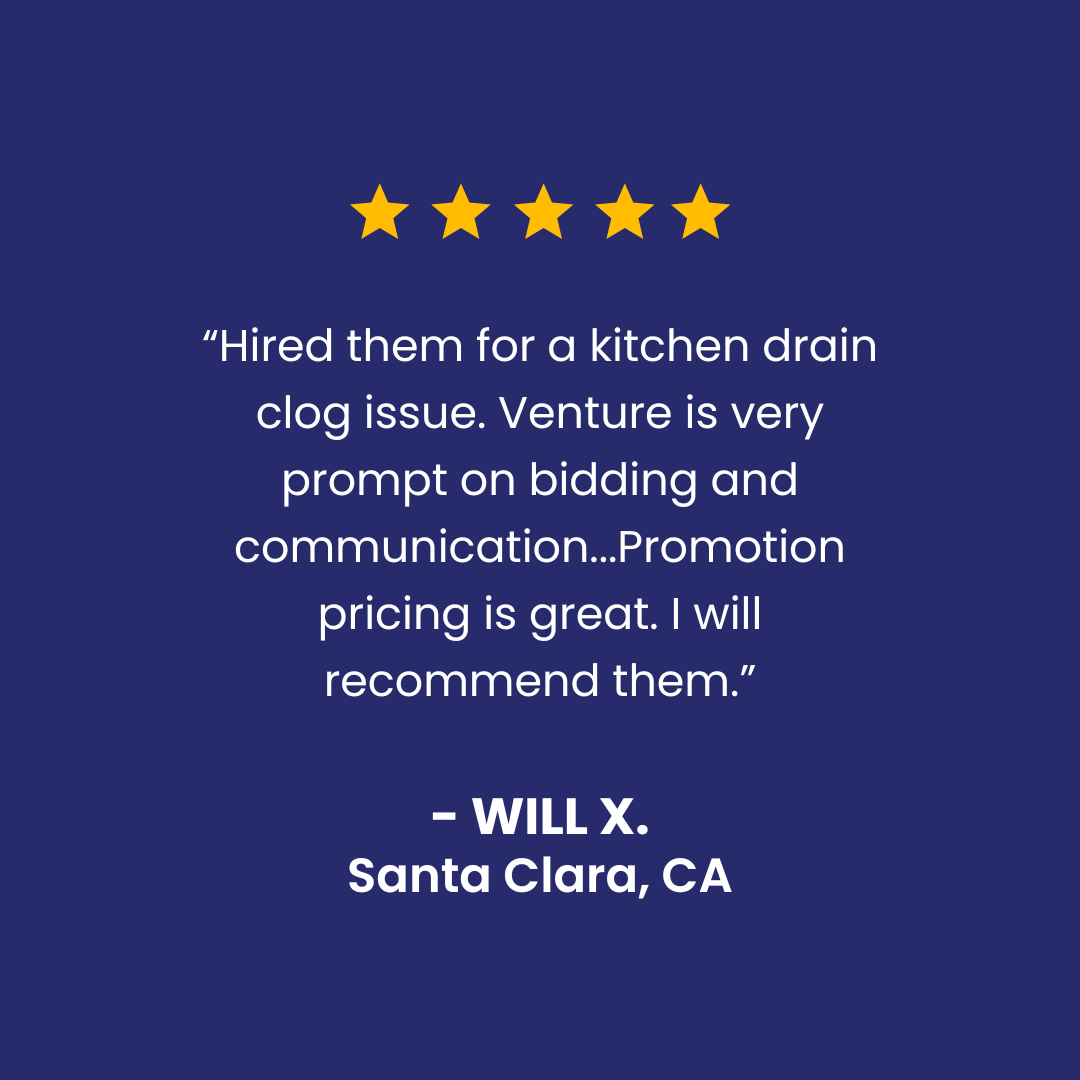
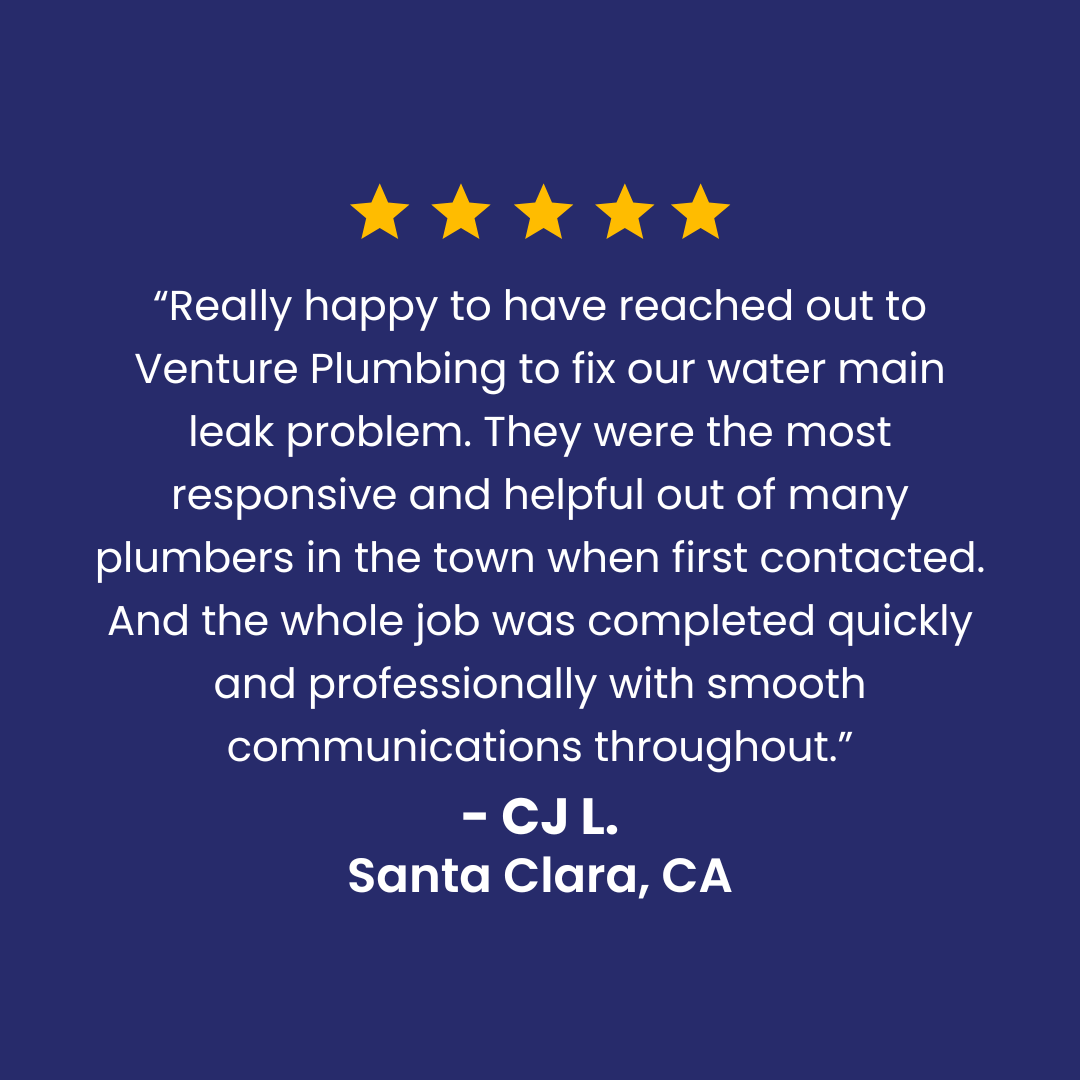
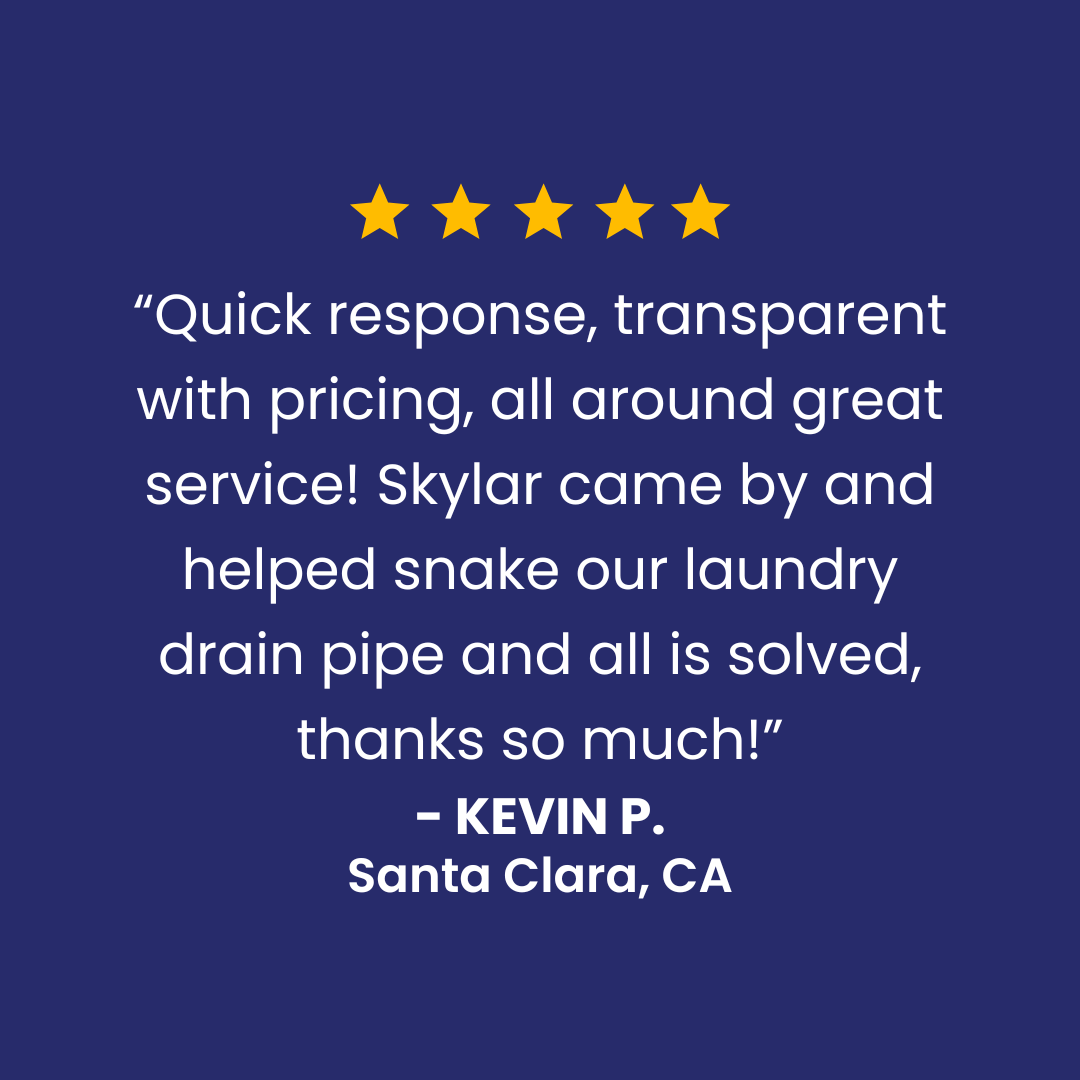


Call us today at (408) 898-2500 or contact us online to discover what sets Venture Plumbing apart from the competition in the Silicon Valley.
Family owned & operated since 2009.
We've been serving Santa Clara homeowners since 2009. We already know what's behind your walls.
Same-Day Service
Same-day service is standard, not a special request.
Upfront Pricing
We present multiple solutions at different price points before starting any work.
Clean & Respectful
We leave your home better than we found it.
Serving Santa Clara and the Surrounding South Bay
We provide plumbing service across all of Santa Clara, including:
Downtown & Old Quad (95050): Including Westwood, Briarwood, Killarney Farms, and Bowers
South & Central Santa Clara (95051): Including Darvon Park, Bonnie Brae, Monastery Gardens, and University Park
North Santa Clara (95054): Including Agnew and Rivermark
Our service area extends throughout the South Bay, which is included on our areas we serve page
Our headquarters at 228 San Jose Ave in San Jose puts us about 10 to 15 minutes from most Santa Clara addresses, with easy access via Highway 87 to 101 or the 280 to Lawrence Expressway. For emergency plumbing situations, we prioritize active leaks and sewer backups to get to you as quickly as possible.
Frequently Asked Questions
How do I know if my Santa Clara home needs a water softener?
If you see white mineral buildup on faucets and showerheads, spots on dishes after running the dishwasher, or if your water heater is losing efficiency or failing sooner than expected, hard water is likely the cause. Most Santa Clara homes south of Highway 101 receive groundwater that averages over 250 mg/L of calcium carbonate, well into the "very hard" range. We test your water on-site and recommend the right softener system for your household.
Why does my water heater seem to fail faster than expected?
Santa Clara's hard groundwater causes mineral scale to accumulate inside your water heater tank and on heating elements. This scale acts as an insulator, forcing the unit to run longer and hotter to reach temperature. Over time, this leads to metal fatigue, reduced efficiency, and early failure. Annual flushing and anode rod replacement can extend the life of your water heater, and installing a water softener addresses the root cause.
My 1950s home has low water pressure. What causes that?
In most mid-century Santa Clara homes, the culprit is corroded galvanized steel supply lines. Over 60 to 70 years, mineral deposits build up inside galvanized pipes, gradually narrowing the interior diameter and restricting flow. This is especially noticeable at second-floor fixtures or when multiple fixtures run simultaneously. A whole-house repipe to copper or PEX is the permanent solution.
What causes recurring sewer backups in Santa Clara?
The two most common causes are tree root intrusion and pipe deterioration. Many Santa Clara homes built before 1970 have original clay sewer laterals that develop cracks as they age. Tree roots are drawn to the moisture and grow inside those cracks, eventually blocking the line. A camera inspection through our sewer services team identifies the exact cause, so repair decisions are based on what's actually happening underground.
Does my zip code affect my water quality in Santa Clara?
Yes. Santa Clara draws water from three different sources, and your location determines which source you primarily receive. Homes in the 95054 zip code (north of Highway 101) get softer Hetch Hetchy water from SFPUC. Homes in 95050 and 95051 primarily receive harder groundwater from the city's well system. The difference is significant enough to affect water heater lifespan, fixture maintenance, and whether a softener makes sense for your home.
How quickly can you get to my Santa Clara home for an emergency?
Santa Clara is one of the closest cities in our service area. Most addresses in the 95050 and 95051 zip codes are 8 to 15 minutes from our headquarters. North Santa Clara (95054) is typically 15 to 20 minutes. For emergencies like burst pipes, sewer backups, and water heater failures, we offer same-day dispatch. Call (408) 898-2500.
Is your plumbing work up to Santa Clara building code?
Every job we complete meets current California Plumbing Code requirements. We're licensed (Lic# C934775), insured, bonded, and all technicians are background-checked. For work that requires permits, we handle the full process through the City of Santa Clara.
Does Venture Plumbing handle ADU plumbing in Santa Clara?
Yes. We handle complete plumbing installations for Accessory Dwelling Units, including water supply, drainage, gas connections, and water heater installation. We coordinate permits and inspections through the City of Santa Clara Building Division.

Need a Plumber in Santa Clara?
Whether it's a routine repair, a whole-house repipe, or an emergency that can't wait, the Venture Plumbing team is ready. Family-owned in the South Bay since 2009.