


San Jose PEX Repipe Experts
PEX Repiping in San Jose, Done Right the First Time






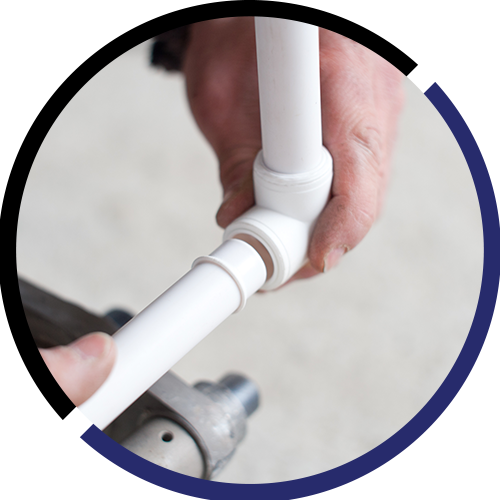
PEX Repipe in San Jose, CA
If you're looking at a PEX repipe for your San Jose home, you're almost certainly in one of two situations: you've been told your galvanized supply lines are finally failing after six or seven decades behind the walls, or you've been watching pinhole leaks show up in your copper system and the plumber you trust has told you it's time to replace the whole thing rather than keep patching it. Either way, the decision you're actually trying to make isn't whether to repipe, it's whether PEX is the right material for your specific home, and that question has a real answer that depends on factors most repiping companies aren't willing to walk you through honestly.
We've been installing PEX and copper repipes across San Jose and the South Bay since 2009, and one of the things we've learned from fifteen years of doing this is that the right material for your home depends on the age of the house, the water chemistry coming into it, the accessibility of the walls, your long-term plans for the property, and a handful of other factors that most repiping quotes don't even ask about. PEX is the right answer for a lot of San Jose homes, but's not the right answer for all of them. This page walks you through how we think about that decision, and what a PEX repipe actually involves when we do one.
Call (408) 898-2500 or schedule online for PEX repiping service in San Jose, CA
Signs Your San Jose Home Needs a Repipe
Most San Jose homeowners don't wake up one morning convinced they need to repipe. The decision usually creeps in over a year or two of small problems that continue to add up, and the tricky part is recognizing the pattern before it turns into an emergency.
Here's what we see most often on the calls where the honest answer turns out to be "it's time."
The Warning Signs Worth Paying Attention To
- Water pressure that's been gradually dropping for years, usually more noticeable at upstairs fixtures or when two fixtures run at once. Galvanized pipe rusting from the inside gradually restricts flow, and the change is slow enough that homeowners adapt to it without realizing what's happening.
- Brown, rust-colored, or discolored water, especially first thing in the morning or after the house has sat unused for a weekend. This is rust flaking off the inside of galvanized supply lines, and it's one of the clearer signs that the pipe is failing from the inside.
- Pinhole leaks in copper, showing up as small water stains on ceilings, inside cabinets, or in the garage. If you've had one, there are probably more developing elsewhere in the same system.
- Multiple separate leak repairs in the last 18 to 24 months, which is usually a definitive tell. Once a supply system starts failing in multiple places, patching individual spots stops making financial sense.
- Metallic taste or smell in the water, particularly in the hot water. This tells you minerals and corrosion products are leaching from the pipe into the water supply.
- Visible rust, pitting, or green corrosion on exposed pipe sections in the garage, attic, or crawlspace.
- You're in a pre-1970 home and you're planning to stay for another decade or more. At some point, proactive is cheaper than reactive.
What Happens If You Don't Repipe
The question of when to repipe is also the question of what happens if you don't, and the honest answer is that failing supply systems continue to get worse over time. The most common failure mode is a burst pipe behind a wall, discovered when water damage starts showing through the drywall, which turns a planned repipe into an emergency repair plus water damage restoration plus, sometimes, mold remediation. Insurance will usually cover the damage but not the underlying pipe replacement, and some carriers have started denying claims on gradual leaks from aging systems. Repiping before failure is almost always the cheaper path while repiping after failure is almost always the more expensive one.
PEX vs. Copper: Which Is Right for Your San Jose Home
Here's a comparison at a glance. Most homeowners making this decision want to see the tradeoffs side by side before reading the reasoning behind them.
| Factor | PEX (Uponor) | Type L Copper |
|---|---|---|
| Expected lifespan | 40 to 50 years | 50+ years, shorter in hard water |
| Install time for average home | 2 to 4 days | 4 to 6 days |
| Material and labor cost | Significantly lower | Significantly higher |
| Hard water resistance | Excellent | Degrades over decades in SJ water |
| Flexibility through older walls | Excellent | Poor, needs more wall access |
| Freeze resistance | Flexes without bursting | Bursts when frozen |
| Earthquake tolerance | Flexes | Rigid, can fracture |
| HOA and historic district restrictions | Sometimes disallowed | Universally accepted |
| UV resistance for exterior runs | Not suitable outdoors | Suitable outdoors |
| Antimicrobial properties | Inert | Naturally antimicrobial |
Why PEX Makes Sense for Most San Jose Homes
PEX, which stands for cross-linked polyethylene, has been the dominant material for new residential plumbing installations in California for close to two decades now, and the reasons it's dominant are specific and practical. It's flexible, which means we can route it through existing wall cavities with fewer access openings than copper requires, it resists corrosion, which matters in a valley where hard water eats copper from the inside out over time, it doesn't freeze and burst the way rigid pipe does, it costs less to install because it requires fewer fittings and less labor, and when it's properly installed with quality fittings it lasts 40 to 50 years, which is longer than most homeowners will own the house.
For a typical 1,500 to 2,500 square foot home in Willow Glen, Rose Garden, Cambrian Park, or Almaden Valley, PEX is usually the right answer. The combination of lower material cost, faster install, less wall damage, and genuine long-term durability makes it the practical choice for homeowners who aren't solving for a specific reason to prefer copper.
When Copper Is the Right Call Instead
We install PEX and Type L copper, and we install the one that's right for the home. Copper makes sense in a handful of specific situations, including historic homes where inspectors or HOAs require it, homes with exposed supply runs that will stay visible, properties where the homeowner plans to stay 40+ years and wants the longest-lived option available, and Eichler homes and other mid-century builds where specific routing or code considerations favor rigid pipe. If copper is the right answer for your situation, we'll tell you, even when PEX would be the faster sale.
What a PEX Repipe Actually Costs in San Jose
We don't publish fixed pricing because repipe costs vary meaningfully based on house size, number of fixtures, wall access, permit requirements, and the condition of what we're replacing. What we will tell you is how to think about the cost honestly.
For a typical single-family home in San Jose, PEX repiping generally runs in a range that's meaningfully less than an equivalent copper repipe, which is one of the main reasons most homeowners choose PEX when it's appropriate for their home. Smaller homes under about 1,500 square feet with straightforward wall access sit at the lower end of the range. Mid-sized homes between 1,500 and 2,500 square feet are the most common job size and tend to fall in the middle of the range. Larger homes, homes with three or more bathrooms, homes with limited wall access, and homes with older layered plumbing that requires more careful work all push the cost higher. Sheetrock repair, painting, and finish work through our partners are included in the written estimate, not quoted as a surprise add-on after the plumbing is done.
Our initial estimate covers a licensed plumber coming out, inspecting your existing system, and giving you a full scope of work with a fixed price before anything starts.
What's Actually Involved in a PEX Repipe
The job itself runs in a sequence that's predictable once you've done a few hundred of them, and understanding the sequence helps homeowners plan around the disruption rather than discover it as they go.
Initial Inspection and Scope
We send one of our expert technicians out, inspect the existing system, identify every supply run and fixture we'll need to replace, assess wall access, and walk through any complications specific to your home. Older Willow Glen homes frequently have partial updates from past work, and understanding what's actually behind the walls matters before we commit to a scope. You get written estimates with fixed pricing.
Permits Pulled Through City of San Jose
Repiping requires a City of San Jose permit in nearly all cases, which we pull through sjpermits.org as part of the job. You don't need to navigate the permit portal yourself, and we schedule the inspection with the city as part of the project timeline.
Wall Access Planned to Minimize Cosmetic Impact
We plan wall openings carefully, because one of the biggest differences between a good PEX repipe and a bad one is how much drywall damage you're left with. Good planning reduces the openings we need by 40 to 60 percent versus a less careful approach, and it's one of the places fifteen years of experience actually shows in the finished work.
Full Supply System Replacement
All hot and cold supply lines, from the main line into the house out to every fixture, get replaced with new Uponor PEX, new shutoffs, new angle stops, and updated connections at every fixture. Typical single-family timeline is two to four days, and we work on a consistent schedule so you know when the team will be there and when they'll be done for the day.
Pressure Testing and Inspection
Every PEX installation gets pressure tested before walls close up, then tested again after connections are restored. City inspector comes through to sign off on the work, and only then do we do sheetrock repair and finish work start.
Sheetrock, Paint, and Finish
Patching, taping, texturing, and painting to match your existing walls. We coordinate this through partners we've worked with for years, and we stay involved until you sign off on the finish work, not just the plumbing.
Final Walkthrough
We walk you through what we did, where the shutoffs are, and how to reach us if anything needs follow-up.
What to Expect in the First Week
For the first week or two after a repipe, you may notice slightly different water pressure at fixtures as the system settles, and the water itself should taste and look noticeably cleaner because you're no longer pulling it through decades of scale and rust. Air in the lines is normal for the first 24 to 48 hours and clears out as you run each fixture a few times. If anything feels off in the first 30 days, you call us and we come back.
Why Homeowners Choose Venture Plumbing for PEX Repipes
A PEX repipe is one of the bigger plumbing investments most homeowners will make, and the quality of the job you get back depends almost entirely on who you hire and how they approach the work. Here's how we approach it, and what fifteen years of doing this across the South Bay has taught us actually matters.
We're Full-Service Plumbers, Not Just Repipe Specialists
A repipe specialist company sells repipes, that's the product, that's the margin, and that's the pressure every salesperson is under when they walk into your home. We do repipes, but we also do water heater work, drain services, sewer line repair, fixture installs, and everything else, which means when you call us about your plumbing, we're giving you the right answer rather than the one that matches the product we were hired to sell. If a partial repipe makes more sense than a full repipe, or if the issue is actually a pressure regulator rather than failing pipes, we'll tell you that.
Permits Pulled, Not Skipped
Some repiping companies skip permits to keep pricing lower or speed up the job. We pull every required City of San Jose permit through sjpermits.org and schedule the inspection as part of the project. An unpermitted repipe saves a few hundred dollars up front and creates real problems later, it comes up during home inspections when you sell, it can void insurance claims, and it can force retroactive permitting at much higher cost.
Sheetrock and Finish Work Coordinated, No Surprise Bills
The drywall cutting, patching, texturing, and painting that a repipe requires is a real part of the job and a real part of the cost, and we quote it in the original estimate rather than leaving it out to make the repipe itself look cheaper than it actually is. Our finish work partners have been doing this with us for years, and the handoff between plumbing and drywall is planned rather than improvised.
Family-Owned, Owners Involved
Our owners Derek and Norah Smith founded Venture Plumbing in 2009 and still operate it to this day with the same local, family-owned values they had 15 years ago. On larger jobs like a whole-home repipe, you'll meet them or someone from the core team during the project. That's meaningfully different from a specialist company where the salesperson you meet on the estimate won't be the one running the work
San Jose Neighborhoods We Serve for PEX Repiping
We've worked on plumbing systems in every part of San Jose, and fifteen years of doing this has given us a specific understanding of what each neighborhood's housing stock actually needs. PEX repiping in Willow Glen is a different job than PEX repiping in Almaden Valley, and knowing the difference saves homeowners real money and frustration. Here's how we think about PEX repipes across the major San Jose neighborhoods we serve.
Willow Glen
One of the oldest residential neighborhoods in San Jose, Willow Glen has a concentration of Craftsman, Spanish Revival, and 1920s through 1940s homes along Lincoln Avenue and the tree-lined side streets. Most of these homes were originally built with galvanized steel supply lines, which means nearly all of them are now 70+ years past their service expectation. PEX is almost always the right material for Willow Glen repipes because flexibility lets us route through older wall cavities without the kind of structural demolition rigid copper would require, and it's the reason we do a meaningful share of our repipe work in this neighborhood.
Rose Garden
The Rose Garden neighborhood around The Alameda and Naglee Avenue has homes dating back to the 1910s and 1920s, with one of the highest concentrations of historic architecture in San Jose. The plumbing profile here is similar to Willow Glen, with the added consideration that some historic properties have restrictions around exposed runs in finished areas, and a handful of homes benefit from copper routing for that reason. We walk you through which category your specific home falls into before recommending a material.
Naglee Park
Adjacent to San Jose State University, Naglee Park is historic district territory, with early 1900s homes that have often had multiple rounds of renovation over the decades. What that means practically is layered plumbing systems, with original cast iron drains sitting alongside partial copper updates from the 1970s and spot replacements done at various points since. PEX repipes here start with a careful inspection to map what's actually behind the walls before committing to a scope, because surprises in Naglee Park are common and worth planning around.
Almaden Valley
Almaden Valley is largely 1960s and 1970s slab-on-grade construction, with copper supply lines laid in the slab when the homes were built. Slab leaks are common here, and the repipe approach is specific, we'll route new PEX through the attic and down to fixtures rather than trying to rework the slab itself. This is one of the clearest examples of a neighborhood where PEX's flexibility isn't just a preference, it's a practical requirement for the job to make sense.
Cambrian Park
Cambrian Park sits between Willow Glen and Almaden and shares characteristics with both. Older sections have the same galvanized pipe issues as Willow Glen, while newer sections have the slab-on-grade and clay soil challenges of Almaden. Cambrian also has a strong mid-century housing stock with plumbing that was good construction for its era but is now reaching the end of its original life expectancy, making it a neighborhood where we see a steady flow of repipe work.
Evergreen and Silver Creek
Evergreen is newer construction, primarily 1980s through 2000s, with modern plumbing materials and modern drain systems. The repipe work we do in Evergreen is usually copper systems that are failing early due to hard water chemistry, or early PEX installs from the late 1990s that are showing age. These jobs tend to go faster than older-neighborhood repipes because wall cavities are cleaner and access points are easier.
Berryessa and North San Jose
North San Jose and Berryessa span a wide range of housing eras, from mid-century ranches near Piedmont Road to newer tech-corridor construction closer to 237. PEX repipe work in these areas tends to come from two sources: older homes that were previously updated with poor-quality materials that are now failing, and homeowners doing proactive upgrades before resale. The material decision is usually straightforward here, and PEX is the default for most jobs.
Downtown San Jose and the Older Central Neighborhoods
Downtown San Jose has a mix of historic single-family homes near San Pedro Square and Japantown, newer high-rise residential, and older apartment conversions. PEX repipes in this part of the city come with their own complications, including HOA permit coordination on condo properties and careful routing through older building layouts, and experience in the specific property type matters more than the specific neighborhood.
ADU Projects and New Construction
Accessory dwelling units are one of the fastest-growing categories of plumbing work in San Jose, and PEX is almost always the right material for an ADU supply system. Clean wall cavities, new construction routing, and the flexibility to run through tight spaces make PEX the obvious default. We handle full plumbing for ADU builds from rough-in through fixture installation, coordinate with your general contractor, and pull ADU-specific permits through sjpermits.org as part of the job.
Surrounding Communities:
- We also serve surrounding cities such as Campbell, Santa Clara, Saratoga, Los Gatos, Los Altos, Palo Alto, Cupertino, Atherton, Sunnyvale, Mountain View, Menlo Park, and throughout the South Bay.
Looking for a PEX repipe in San Jose? Contact us to schedule service in your area.
Real PEX and Copper Repipes We've Done Recently
Saratoga Whole-Home Repipe with Hard Water and Failing Copper
A Saratoga homeowner had been getting small pinhole leaks in her copper supply lines for over a year before calling us, and by the time we inspected the system, the underlying cause was clear: hard water chemistry had been eating the copper from the inside for long enough that the leaks weren't going to stop on their own. We did a full whole-home repipe and installed a whole-home softener to protect the new system from repeating the same failure pattern. Read the Saratoga repipe case study.
Campbell Full Repipe and Gas System Overhaul
A Campbell homeowner's 1950s home still had original galvanized supply lines and an aging gas system that wasn't going to pass modern code inspection, so we repiped the whole house and rebuilt the gas distribution at the same time. One project, one permit cycle, one team coordinating the whole thing. Read the Campbell repipe case study.
What Our Clients Say

Why Venture Plumbing for PEX Repiping in San Jose?
Proudly serving San Jose, CA. since 2009.
We've worked in thousands of homes across Los Gatos. We already know what's behind your walls.
Same-Day Service
We are often able to complete service within the same day
Upfront Pricing
No hidden fees. $99 dispatch credited toward repair work if you proceed.
Clean & Respectful
We leave your home better than we found it.
FAQ
How much does PEX repiping cost in San Jose?
PEX repipe costs vary based on home size, fixture count, wall access, and the condition of the existing system, so any company giving you a firm price without seeing the home is guessing. In general, PEX repipes run meaningfully less than copper for comparable scope, and the savings usually go back into sheetrock and finish work. Our service call is $99 flat, which includes a full inspection and written estimate with fixed pricing, and the $99 is credited toward the job if you move forward.
Is a PEX repipe worth it?
For most San Jose homes, yes. PEX installs faster, costs less, resists the hard water chemistry that shortens copper's life in this valley, and carries a 40 to 50 year expected lifespan when properly installed. The cases where PEX isn't worth it are typically specific: historic homes with exposed runs, properties where HOA or insurance requirements mandate copper, or situations where the homeowner genuinely plans to stay 40+ years and wants the longest-lived material available. For most homeowners in most situations, PEX is the practical choice.
What are the downsides of PEX pipe?
PEX has three real downsides that honest plumbers will tell you about. First, it can't be installed outdoors in direct sunlight because UV exposure degrades it, so any exterior runs still need to be copper or properly sleeved. Second, some municipalities and some HOAs specifically require copper, which overrides any cost or performance argument. Third, early PEX formulations from the 1990s and early 2000s had quality issues that have been fully resolved in modern products but occasionally show up as concerns from homeowners who remember the early problems. Modern PEX, particularly from brands like Uponor, has a strong track record and none of those early issues apply.
How long does PEX repiping last?
Modern PEX from quality manufacturers is rated for 40 to 50 years when properly installed, and the 25-year warranties that most repiping companies offer reflect a reasonable midpoint rather than a hard limit. In practice, PEX that's installed well, protected from UV exposure, and connected with quality fittings will often outlast the warranty by a significant margin. Copper, by comparison, is rated for 50+ years but can fail earlier in hard water regions like the South Bay, which is part of why the comparison between the two materials isn't as simple as "copper lasts longer."
How long does a PEX repipe take to complete?
A typical single-family PEX repipe completes in two to four days from start to finish. Day one is usually demolition and rough-in, day two is the main installation, day three is pressure testing and inspection, and day four if needed is sheetrock and finish work. Larger homes or homes with complicated wall access can take longer. We work consistent 8 AM to 4:30 PM hours and let you know exactly when the team will be on site.
Do I need to move out during a PEX repipe?
No. We work around your household, we maintain water service through most of the project with brief shutoffs at specific points, and we communicate clearly about when water will be off so you can plan around it. Most homeowners stay in the house for the entire job.
How do I choose a repiping company in San Jose?
A few things worth checking before you sign a contract with anyone. Verify the active California contractor license through the CSLB website, not just whatever number they print on their truck. Ask whether permits are pulled and inspections scheduled as part of the job, and whether sheetrock and finish work is included in the written quote or billed separately after the fact. Ask what brand of PEX they install and whether they're a full-service plumber or a specialist that only does repipes. Read long-form reviews that describe the actual work rather than one-line five-star ratings, and look for reviews that mention specific job details rather than generic praise. The company that gives you clear answers to all of those questions is almost always the one to hire.
Do you pull permits for PEX repipes?
Yes. We pull all required City of San Jose permits through sjpermits.org and schedule inspections with the city as part of the job.
Can I repipe just part of my house instead of the whole thing?
Sometimes, yes. A partial repipe makes sense when only one section of the system is failing and the rest of the plumbing is in genuinely good shape, which is more common than the repipe specialist companies want you to believe. It doesn't make sense when the underlying system is old enough that failure in other areas is predictable within a few years. We'll tell you honestly which situation you're in during the estimate, even when that means recommending a smaller job than the one you called about.
Will a PEX repipe affect my home value when I sell?
Yes, positively. Updated plumbing with a modern material and pulled permits shows up favorably in home inspections and removes a point of friction during the sale process. Buyers and inspectors consistently flag old galvanized and aging copper as concerns during due diligence, and a documented repipe with permit records eliminates that conversation entirely. The investment doesn't fully return dollar-for-dollar in resale, but it meaningfully reduces the risk of a deal falling through or getting renegotiated after inspection.

Schedule Your PEX Repipe Estimate in San Jose
A PEX repipe is a real investment in your home, and the decision deserves a real conversation rather than a quick phone quote. We come out on a $99 service call, inspect your existing system, walk through PEX versus copper for your specific home, and give you a written scope and fixed price before any work begins. Two-year labor warranty on the installation, permits pulled and passed, finish work coordinated, and a family-owned team that has been doing this across the South Bay since 2009.