
★★★★★ Most Reliable In the South Bay






What Size Water Heater Does Your Home Need?
Answer three questions and we will recommend the right capacity for your San Jose home.
This is a general recommendation. San Jose's groundwater temperature (around 57 degrees) requires a higher temperature rise than warmer climates, which affects tankless sizing. We confirm the right size during every in-home assessment.
Water Heater Replacement in San Jose, CA
When a tank fails in San Jose it usually fails one of a few ways. It starts weeping into the drain pan, or the burner assembly rusts through, or the bottom of the tank corrodes and there's suddenly water spreading across the garage floor. None of that gets repaired. Once a tank is leaking from the bottom the steel is done, and the only real question left is what goes in its place and how fast we can get it there.
We replace water heaters across San Jose every week, from the hillside homes up in Evergreen to the older streets over near the Santa Clara border in 95117, and the section below walks through how a few of those recent jobs actually went.
How You Know the Tank Is Actually Done
A water heater that's merely acting up and one that's finished look different once you've pulled enough of them, and the clearest sign it's finished is water pooling in the drain pan. We had a member in the Berryessa area of 95133 whose 50-gallon tank was leaking into the emergency pan at roughly eight ounces an hour, and the part that had thrown him off was that it did the same thing a year earlier, stopped on its own, then started again. That "stopped on its own" stretch fools a lot of homeowners into thinking it healed. It didn't, it meant the bottom of the tank had corroded through, and once a tank rusts out from the bottom there is no repair, only replacement.
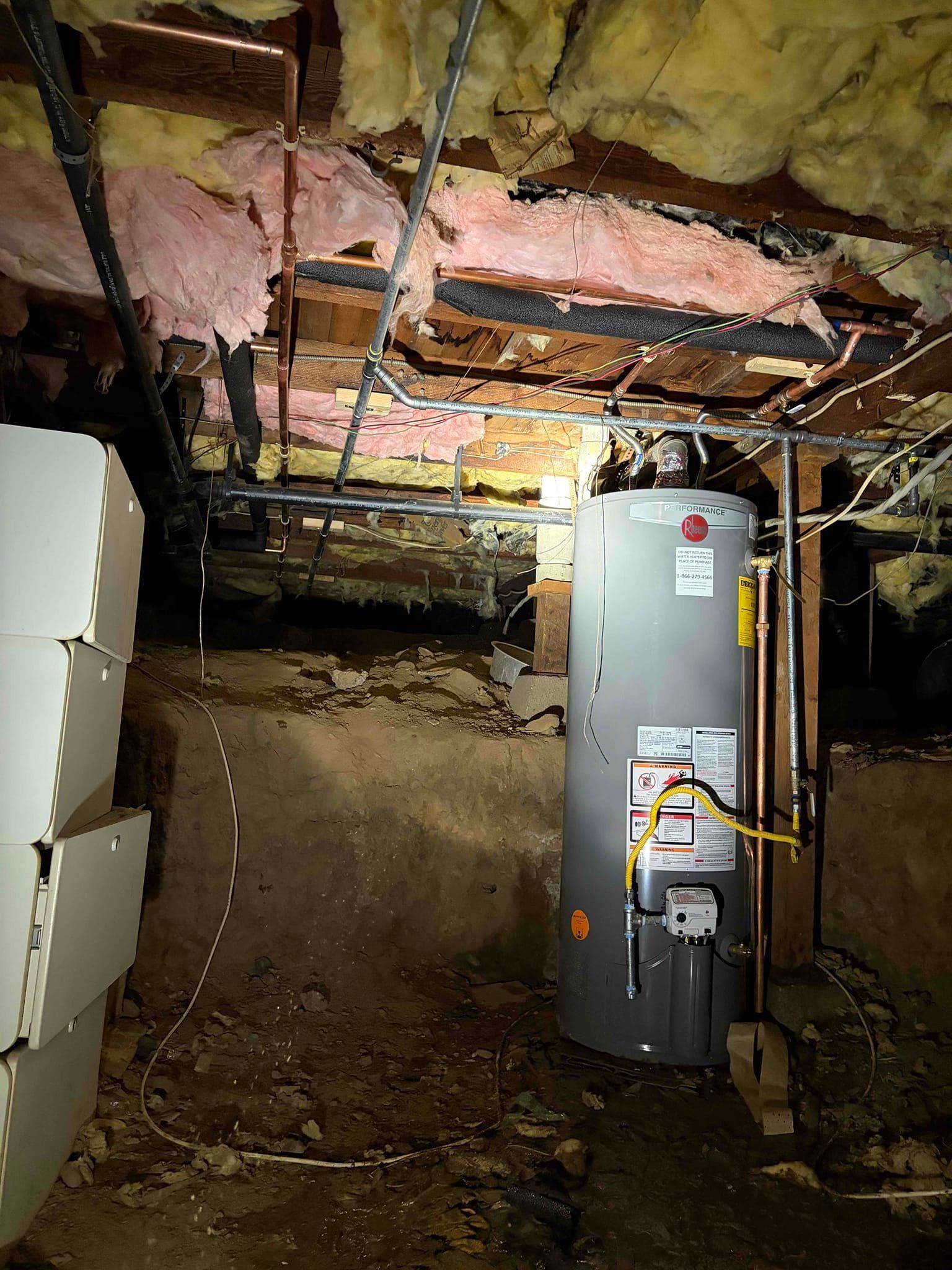
Sometimes the leak shows up lower, right down at the burner. On a West San Jose job the homeowner's Rheem 40-gallon was seeping at the burner assembly, which isn't a fitting you snug back up, it's the tank telling you it's spent.
Then there's the noise. Rumbling or popping while the unit heats is sediment, and in San Jose that sediment comes straight out of our hard water, somewhere between 11 and 26 grains per gallon depending on your supply. It hardens on the floor of the tank, insulates the burner from the water above it, and the unit slowly cooks itself trying to keep up.
If your unit is past ten years old and you're on your second or third repair call, you're funding a failing tank instead of replacing it. Most of the San Jose tanks we pull are right in that 8-to-12 year window, and the homeowners who keep patching them almost always end up calling on the worst possible morning.
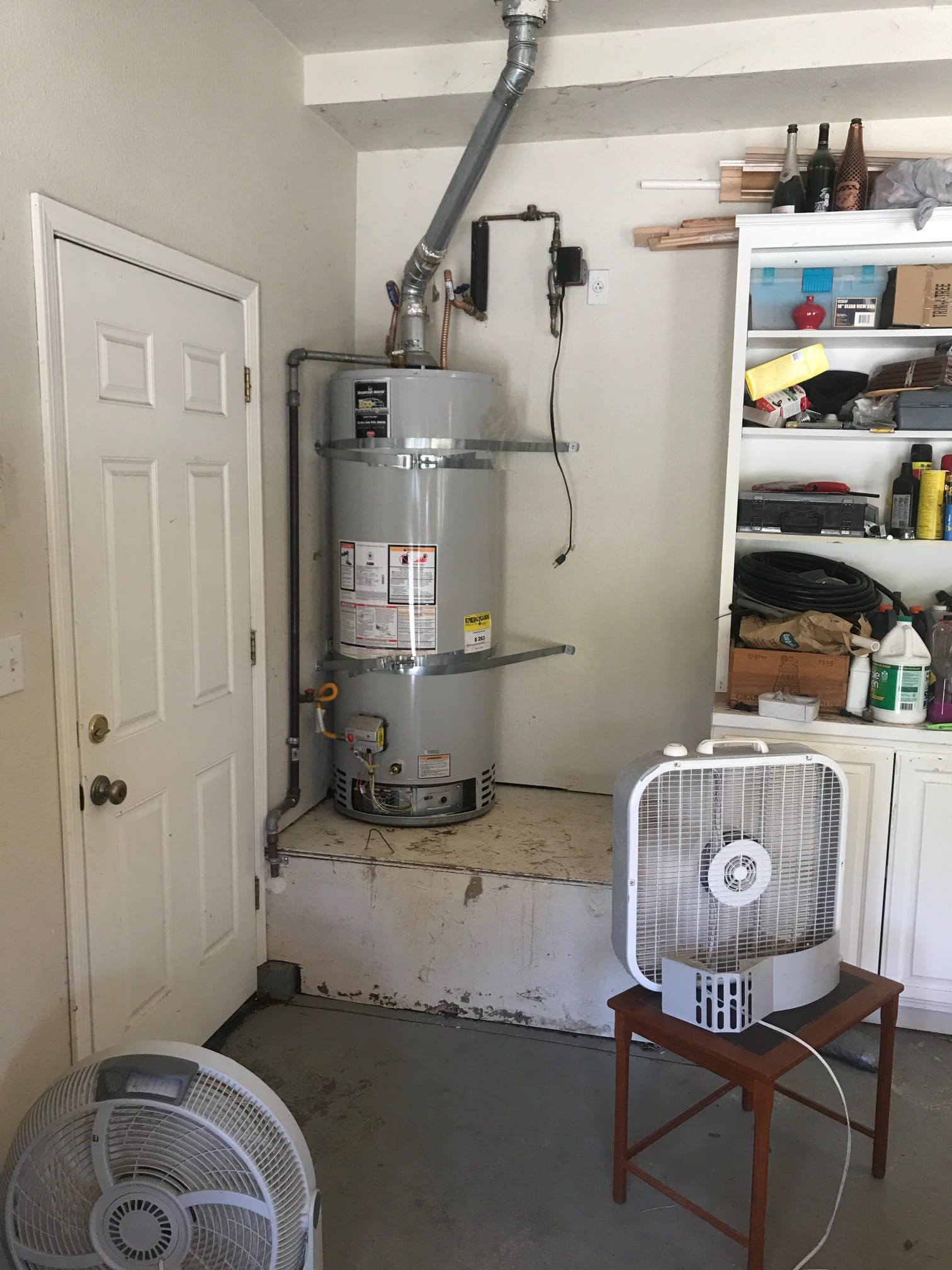
The failed Bradford White unit we pulled from a home up in Evergreen (95135), replaced same-day
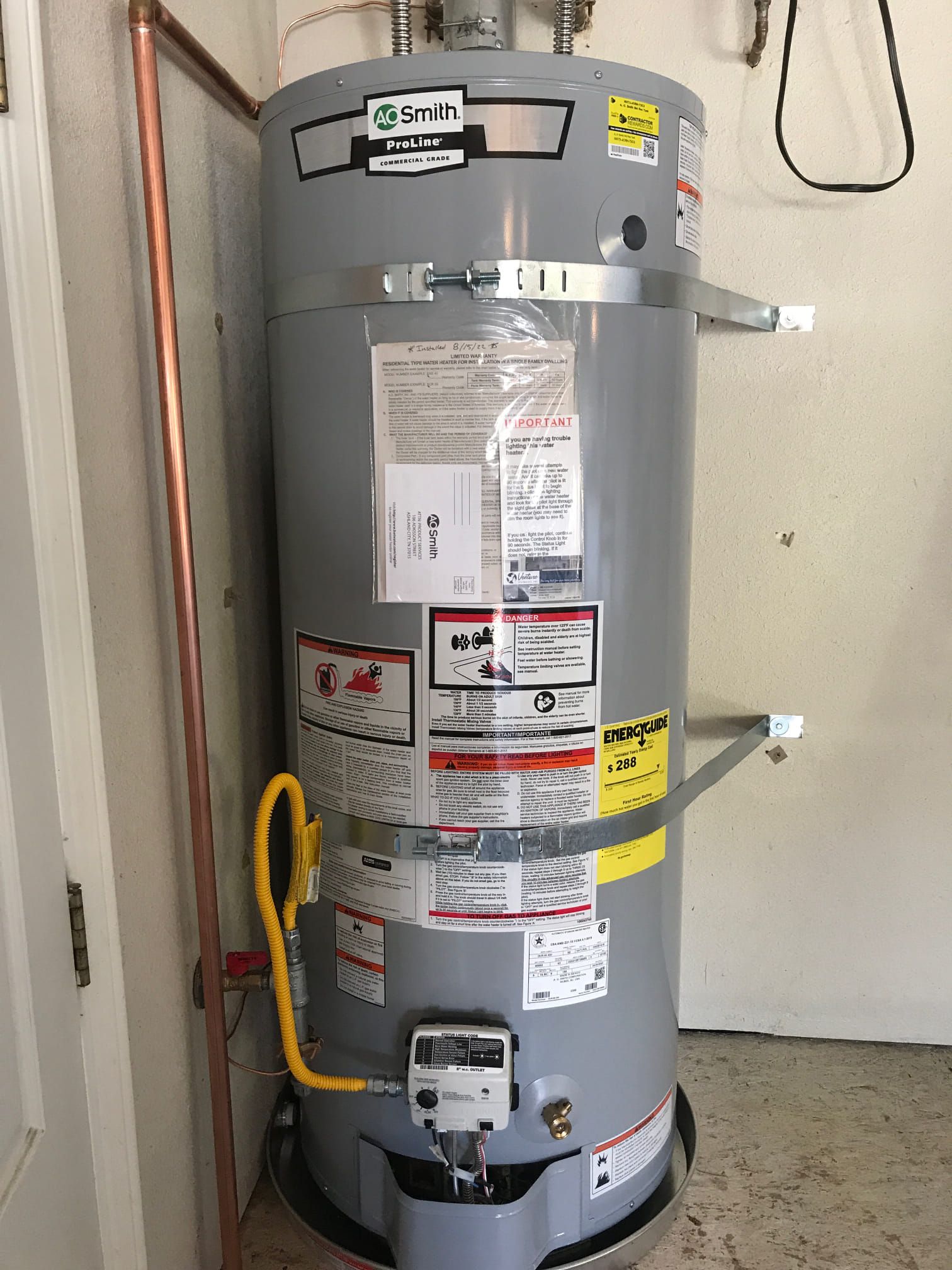
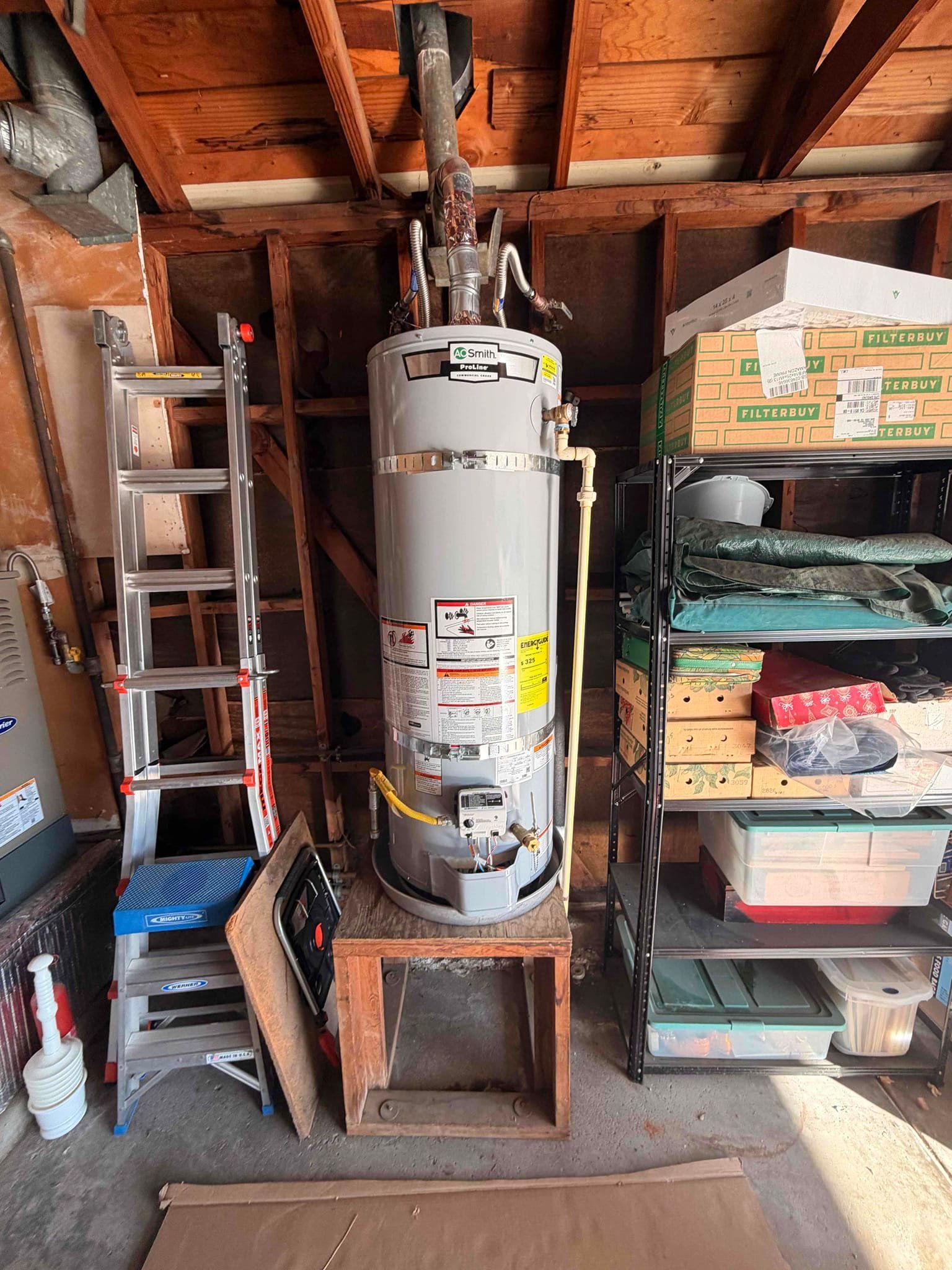
After: The new 50-gallon A.O. Smith we set in its place that same afternoon, permitted through the city with the pan, T&P line, and sediment trap all brought up to current California code.
What Actually Goes Into the Replacement
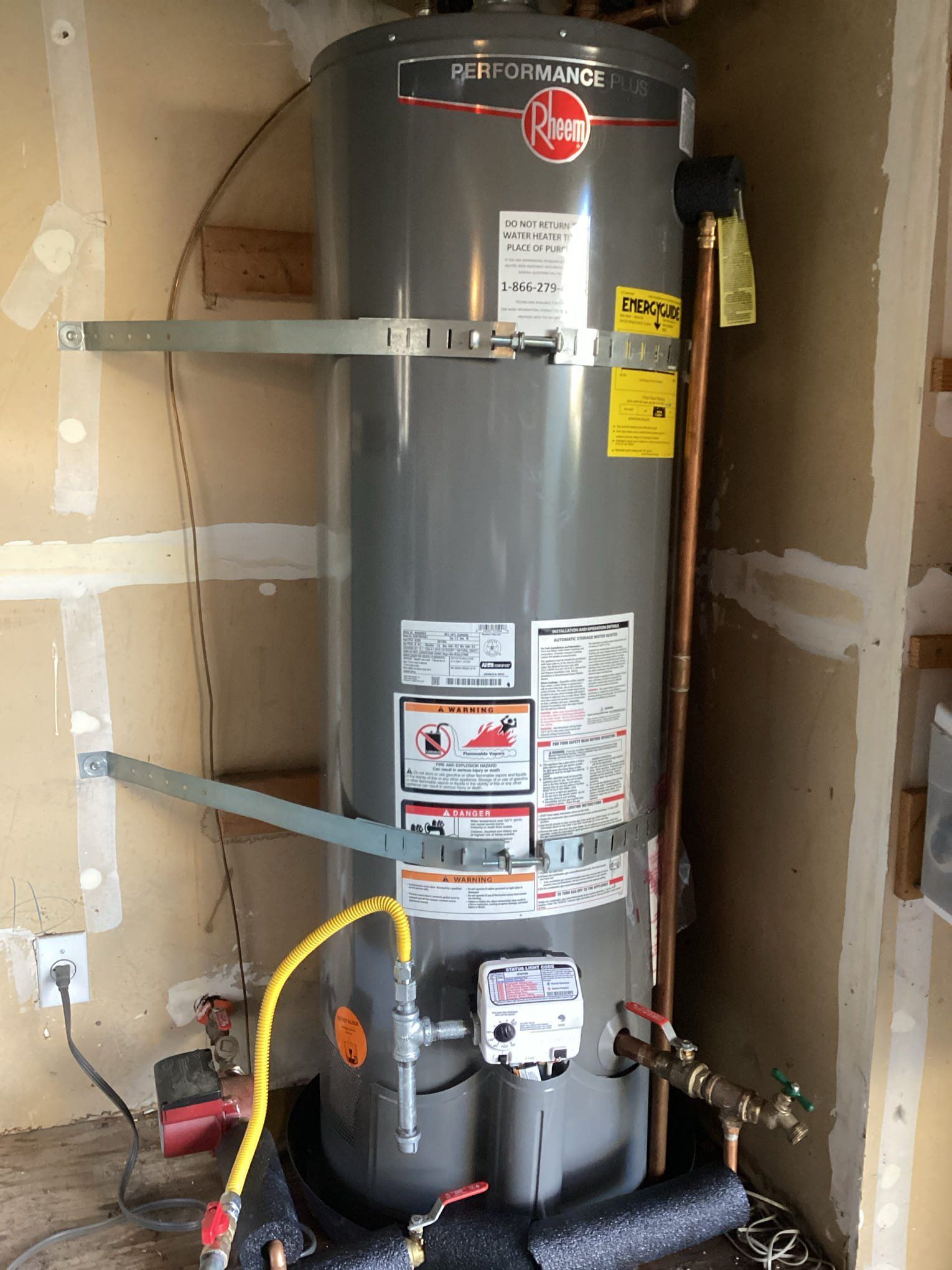
A water heater swap done to California code is a good deal more than unhooking the old tank and hanging a new one, and the recent Evergreen job is a good example of the full scope. We pulled the city permit first, since it's required, then set a new 50-gallon Bradford White. From there the install triggers a stack of code upgrades that come with it. The new tank sits on a fresh pan with a 1-inch PVC drain line run out to the exterior, and the T&P discharge line gets a union and terminates outside where it's supposed to. We add the bonding wire and clamps, put a proper gas sediment trap on the supply, and set backing behind the tank so it isn't just floating. Then it's two new 3/4-inch full-port IPS ball valves on the hot and cold, two new braided supply lines, and the existing vent re-attached. On that one we also caught a corroded recirculating pump check valve the old unit had killed and swapped it while we were in there.
That last detail matters more than it sounds. Plenty of homes over in Evergreen and Silver Creek run a recirculating line so hot water reaches the far bathrooms quickly, and when the tank goes the check valve on that loop is often shot along with it. Miss it and the new install underperforms from the first shower.
The scope shifts when a house has a pressure regulator on the main. At an American Oak Drive install the home had a PRV, which makes the plumbing a closed system with nowhere for thermal expansion to go, so we added a 2-gallon expansion tank. On a setup like that it's a code requirement on any tank up to 75 gallons, not an add-on, and skipping it means building pressure against the new tank every single heating cycle.
Every one of these ends the same way. We fill the tank, purge the air out of the lines and the recirculating loop, fire it, test for leaks, and stand in for the city inspection so the homeowner isn't stuck babysitting it.
Tank, Tankless, or Heat Pump
Homeowners ask us which one to get, and the honest answer depends on the house, not on what carries the biggest margin.
A standard tank is still the right call for most San Jose homes already plumbed for one. A 40-gallon covers a household of three to five, a 50 handles a larger one, and the swap is straightforward with lower cost up front. You'll get 8 to 12 years out of it, closer to 8 here if it never gets flushed, because our hard water lays down sediment the whole time. We install Bradford White, A.O. Smith, and Rheem on the tank side, which are the three we've watched hold up in these conditions.
Tankless gets you endless hot water off a wall-mounted unit that runs 15 to 20 years with an annual descale. The catch is the conversion. Going tank to tankless usually means resizing the gas line to feed the higher BTU demand, new venting, and a condensate drain, so it's more labor and more money up front in exchange for roughly double the lifespan. When the American Oak Drive homeowner asked about tankless while standing over a leaking tank, we laid out both paths honestly and let them make the call rather than steering them.
A heat pump is the electric path, and the one the 2027 rules point toward. It's more efficient, but it needs room, roughly 700 cubic feet of surrounding air per San Jose Building Bulletin #293, along with a 240V circuit, and some older San Jose homes still on a 100-amp panel need an electrical upgrade before one will work.
The gas line is where we find the most quietly dangerous problems on old installs. On the Berryessa job the gas supply feeding the control valve was configured wrong, an active code fault, with no proper sediment trap and no correct flex connector, the kind of thing that sits wrong for fifteen years until someone who knows what they're looking at opens the closet.
What Our Water Heater Replacement Covers
The 2027 Gas Ban Changes Your Timing
Starting January 1, 2027, BAAQMD Rule 9-6 bans the sale and installation of new gas water heaters under 75,000 BTU across all nine Bay Area counties, Santa Clara included, and it covers both tank and tankless.
In practice this comes down to timing. If your gas tank is aging and you want to stay on gas, 2026 is the last year you can do a straight gas-to-gas replacement, and a gas tank installed now buys you 10 to 15 years while a gas tankless buys close to 20. Either one gives you a long runway before the electric transition becomes mandatory. If the unit instead dies after that date, the replacement has to be a zero-emission model, which for most homes means a heat pump and possibly electrical work on top of the install.
We walked the Berryessa homeowner through exactly that choice, install a code-compliant gas unit now for a decade of runway, or future-proof to a heat pump before the 2027 rush drives up demand and permit wait times. Our
guide to the Bay Area gas water heater ban lays out the whole picture, and if your tank is over eight years old it's worth reading before you decide.
SAME-DAY SOLUTIONS AVAILABLE ACROSS SAN JOSE AND THE SOUTH BAY
GET EXPERT WATER HEATER REPLACEMENT IN SAN JOSE TODAY

San Jose Permits and Inspection
The city requires a building permit on every water heater install or replacement. It applies no matter who does the work, and we pull it as part of the job.
The inspector is checking specific things: two seismic straps anchored into framing, upper and lower; a T&P relief line draining to the exterior, 6 to 24 inches above grade and pointed down; the gas connections and venting on gas units; and a drain pan with a run outside. On the Evergreen job we stood in on that inspection ourselves, up to a couple of hours, so the homeowner didn't have to take the day off to meet the city.
Unpermitted installs tend to surface at the worst time, flagged during a home sale or denied by an insurer during a claim, and the permit costs very little against that kind of exposure.
Real Water Heater Replacements We Have Completed In & Around San Jose
Los Gatos: Water Heater Replacement + Halo 5 Water Softener Installation
A Los Gatos homeowner needed a water heater replacement after years of hard water damage. We replaced the water heater and installed a Halo 5 whole-house water treatment system to protect the new investment from the hard water conditions in their area.
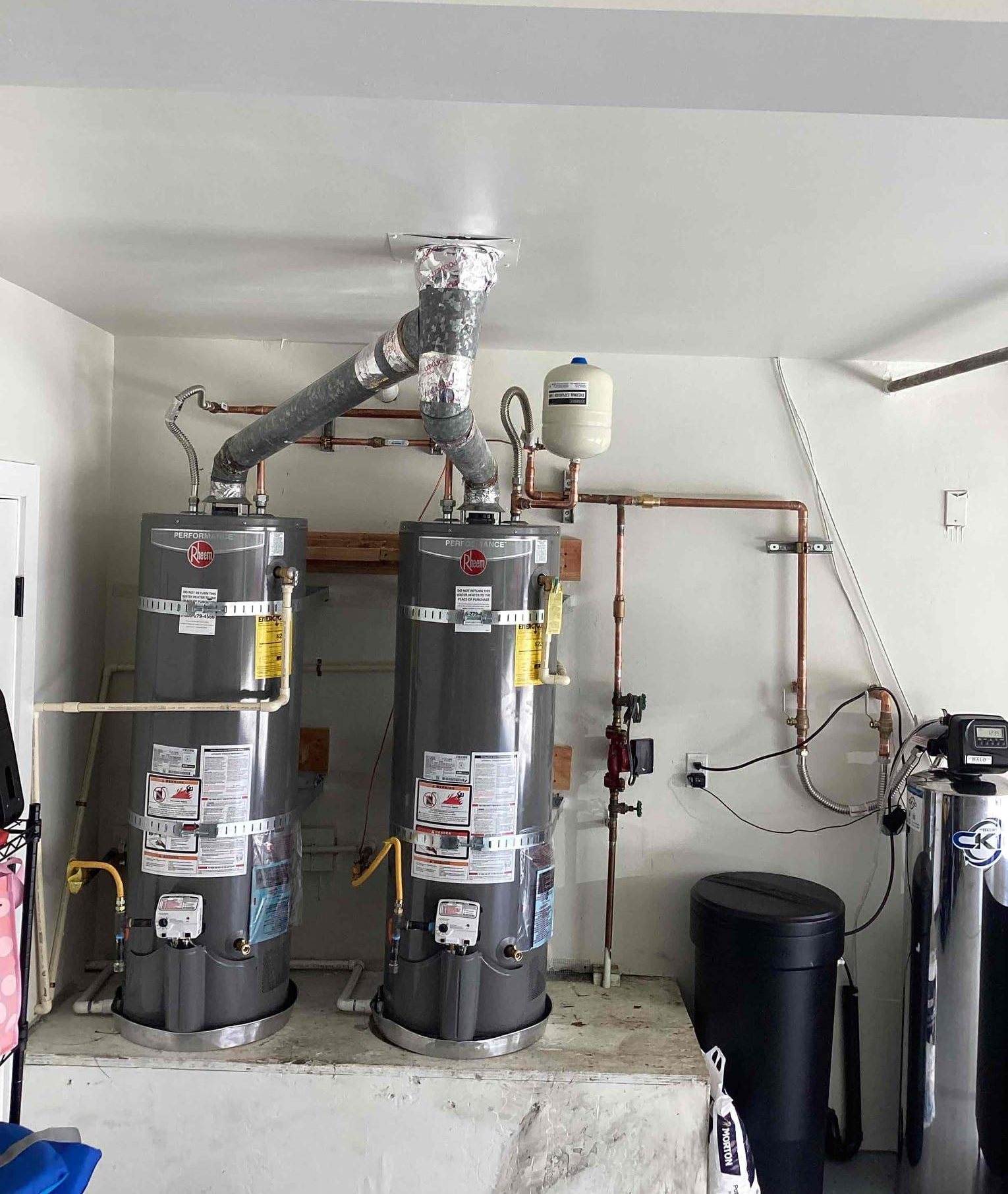
San Jose: 50-Gallon Upgrade With Full System Overhaul
WHY SAN JOSE HOMEOWNERS CHOOSE VENTURE FOR WATER HEATER REPLACEMENT
Reviews
Service
& Operated
Local Experience
Service
Respectful
Insured
Options
Serving San Jose and the Surrounding South Bay
We replace water heaters across every part of San Jose, including Evergreen, Silver Creek, Willow Glen, Almaden Valley, Cambrian Park, Rose Garden, Naglee Park, Berryessa, and Downtown. Whether
Our service area extends throughout the South Bay, including:
San Jose, Campbell, Santa Clara, Saratoga, Cupertino, Los Altos, Menlo Park, Atherton, Milpitas, Mountain View, Palo Alto
FAQ
How long does a water heater replacement take?
Most standard tank water heater replacements take 3-5 hours from start to finish. This includes removing your old unit, installing the new water heater, ensuring code compliance, and testing the system. Tankless water heater installations typically take 6-8 hours since they often require gas line upgrades, new venting, and electrical work. We'll give you an accurate timeline during your free assessment. Our team works efficiently and cleans up completely before we leave.
Should I choose a tank or tankless water heater?
It depends on your household's needs and budget. Tank water heaters cost less upfront ($1,500-$3,000 installed) and work well for most families, but they store 40-50 gallons of hot water whether you're using it or not. Tankless systems cost more initially ($3,000-$6,000 installed) but provide endless hot water on demand, last 15-20 years instead of 8-12, and can cut your water heating costs by about 20-30%. For San Jose's hard water, tankless units also resist mineral buildup better than tanks, which is important to know for local San Jose homeowners, especially with older homes. We'll help you weigh the pros and cons based on your home size, hot water usage patterns, and long-term goals.
Do you offer financing for water heater replacements?
Yes, we offer financing options to make water heater replacement more affordable. This is especially helpful when upgrading to a high-efficiency tankless system or if your water heater failed unexpectedly. Contact our office at (408) 898-2500 to discuss available financing terms and find a payment plan that fits your budget.
How does San Jose's hard water affect my new water heater?
San Jose's moderately hard water (11-26 grains per gallon) accelerates sediment buildup inside tank water heaters and can reduce their lifespan if not maintained properly. We recommend annual flushing to remove mineral deposits and extend your water heater's life. For tankless systems, descaling every 1-2 years prevents hard water scale from damaging the heat exchanger. Many homeowners also install water softeners, which protect not just your water heater but all your plumbing fixtures and appliances.
What water heater brands do you recommend?
We install and recommend brands known for reliability and strong warranties: Rheem, Bradford White, and A.O. Smith for tank water heaters, and Rinnai, Navien, and Noritz for tankless systems. We'll discuss specific model recommendations based on your household size, budget, and whether you prioritize energy efficiency, warranty length, or upfront cost savings.
Do you handle permits and inspections?
Absolutely. We pull all necessary permits with the City of San Jose and ensure your installation meets current building codes. This includes proper earthquake strapping, venting requirements, thermal expansion tanks, and safety shut-off devices. After installation, we schedule the required inspection and make sure everything passes. You don't have to deal with any of the paperwork or wait times.
What happens if my water heater fails after the 2027 ban?
After January 1, 2027, your replacement must be a zero-emission model (heat pump water heater), which may require electrical upgrades, permitting, and potentially weeks of wait time. Proactively replacing an aging gas unit before the deadline avoids this scenario entirely.
Are there rebates available for a new water heater?
Several programs exist for heat pump water heaters, including the federal 25C tax credit (up to $2,000), BayREN, TECH Clean California, SVCE, and PG&E Golden State Rebate. Availability changes frequently. We help you navigate current incentives during your assessment.
What size water heater do I need?
For tanks: 40 gallons for 2 to 3 people, 50 gallons for 3 to 5 people, 75+ gallons for larger households. Tankless units are sized by flow rate (GPM). We evaluate your peak demand during the in-home assessment and recommend the right size.
Need A New Water Heater?
Don't wait for the tank to let go across your garage floor. Whether it already failed this morning or you're getting ahead of a unit on borrowed time, we'll get hot water back and do it to code.
Call (408) 898-2500 or
schedule online
to book your same-day appointment.