Hard Water in San Jose: What San Jose Homeowners Need to Know
April 10, 2026
If you live in San Jose, you have hard water. Full Stop.
San Jose Water Company's own data shows that the groundwater serving most of the valley floor tests between 11 and 26 grains per gallon, which puts it firmly in the "very hard" category by any standard classification. Even the softer surface water sources serving parts of the service area test in the "hard" range.
Most San Jose homeowners notice the effects long before they know the cause: white residue on shower doors and faucets, spotty dishes out of the dishwasher, dry skin and dull hair after showering, and a water heater that loses efficiency every year. These are the direct, measurable result of dissolved calcium and magnesium moving through your plumbing system every time you turn on the tap.
This guide explains where San Jose's hard water comes from, how hard it actually is (the answer depends on your neighborhood), what it does to your plumbing over time, and what options exist to address it.
We are Venture Plumbing, and we have been working inside San Jose homes since 2009 installing water softeners and filtration systems, we replace water heaters damaged by years of hard water sediment, and we repipe homes where scale buildup has compromised the supply lines. Hard water is the throughline in most of the plumbing problems we see in this city.
If you already know you need help, call (408) 898-2500. If you want to understand the problem first, keep reading.
How Hard Is San Jose's Water? Let's Look At The Numbers
Not all San Jose water is the same hardness. San Jose Water Company draws from three primary source types, and the hardness varies dramatically between them.
Groundwater (Valley Floor Wells):
Hardness ranges from approximately 183 to 440 mg/L, which converts to roughly 11 to 26 grains per gallon. This is classified as "very hard" water, anything over 10.5 grains per gallon falls into the very hard category. Groundwater in the Santa Clara Valley picks up calcium and magnesium as it percolates through the limestone and sedimentary rock layers beneath the valley floor. The deeper and longer the water has been underground, the more minerals it has dissolved.
Imported Surface Water (Sacramento-San Joaquin Delta via Valley Water):
The hardness typically ranges from 77 to 153 mg/L, or roughly 4.5 to 9 grains per gallon. This is classified as "moderately hard" to "hard." Imported surface water has had less contact with mineral-rich underground geology, so it carries fewer dissolved solids.
Local Surface Water (Reservoirs in the Santa Cruz Mountains):
Hardness varies but generally falls between the groundwater and imported water ranges. Water from reservoirs like Lexington and other local watershed sources tends to be softer than deep valley groundwater but harder than some imported supplies.
The key variable is which source feeds your home. SJW blends water from these sources and distributes it through a complex system of treatment plants, storage facilities, and distribution mains. Which source predominantly serves your address depends on your location within the service area, the time of year, and current supply conditions. SJW publishes a water supply map on their website that shows the predominant source type by zone.
For comparison, the Santa Clara Valley Water District (Valley Water), which manages the wholesale water supply for the region, reports that groundwater in Santa Clara County averages over 250 mg/L (about 15 grains per gallon), while treated surface water averages less than 120 mg/L (about 7 grains per gallon).
What This Means by Neighborhood
Because your water source affects your hardness level, where you live in San Jose determines how aggressively hard water impacts your plumbing:
Valley Floor Neighborhoods (Highest Hardness):
Willow Glen (95125, 95126), Cambrian Park (95124), Rose Garden (95126), Naglee Park (95112), Berryessa (95132, 95133), Evergreen (95135, 95148), Silver Creek (95138), North San Jose (95131, 95134) are mostly served primarily by valley floor groundwater, which tests at the high end of the hardness range (15 to 26 grains per gallon in many zones). If your home is in one of these areas, you are living with some of the hardest residential water in California. Scale buildup on fixtures, inside water heaters, and within supply lines is a daily occurrence.
Hillside and Foothill Neighborhoods (Variable Hardness):
Almaden Valley (95120), parts of south San Jose near the hillside transition, and the east foothills may receive a blend of groundwater and surface water, resulting in moderate to high hardness. If your home sits at a higher elevation or near a reservoir supply zone, your water may be softer than the valley floor, but still hard enough to cause noticeable effects.
Surrounding Cities:
Campbell, Santa Clara, and Cupertino are also served by SJW or have their own municipal water supplies that draw from the same valley aquifer. Hardness in these cities is comparable to San Jose's valley floor neighborhoods.
Los Gatos and Saratoga receive a mix of mountain surface water and valley groundwater through SJW, with hardness varying significantly by zone. The mountain surface water from the Los Gatos Creek watershed (fed by Lexington Reservoir) averages around 133 mg/L, which is considerably softer than what valley floor homes receive.
What Hard Water Does to Your Plumbing System
Hard water is not a health hazard. Calcium and magnesium are safe to drink, and San Jose Water Company's water meets all EPA and state drinking water standards. The issue that lies with hard water is mechanical. It affects the physical infrastructure of your home's plumbing over time, and the effects are cumulative.
Water Heaters:
This is where hard water causes the most expensive damage. Every time your water heater heats a tank full of hard water, dissolved minerals precipitate out and settle as sediment at the bottom of the tank. In San Jose, where groundwater can deliver 15 to 26 grains per gallon, this process deposits a meaningful layer of calcium and magnesium every month.
Over years without consistent flushing, that sediment hardens into a concrete-like layer that insulates the burner (on gas units) or heating elements (on electric units) from the water above. The unit has to run longer and hotter to achieve the same temperature, which increases your PG&E bill, overworks the tank components, and accelerates corrosion of the tank lining. A water heater rated for 12 years may fail at 8 in San Jose's water conditions, and we see this all the time.
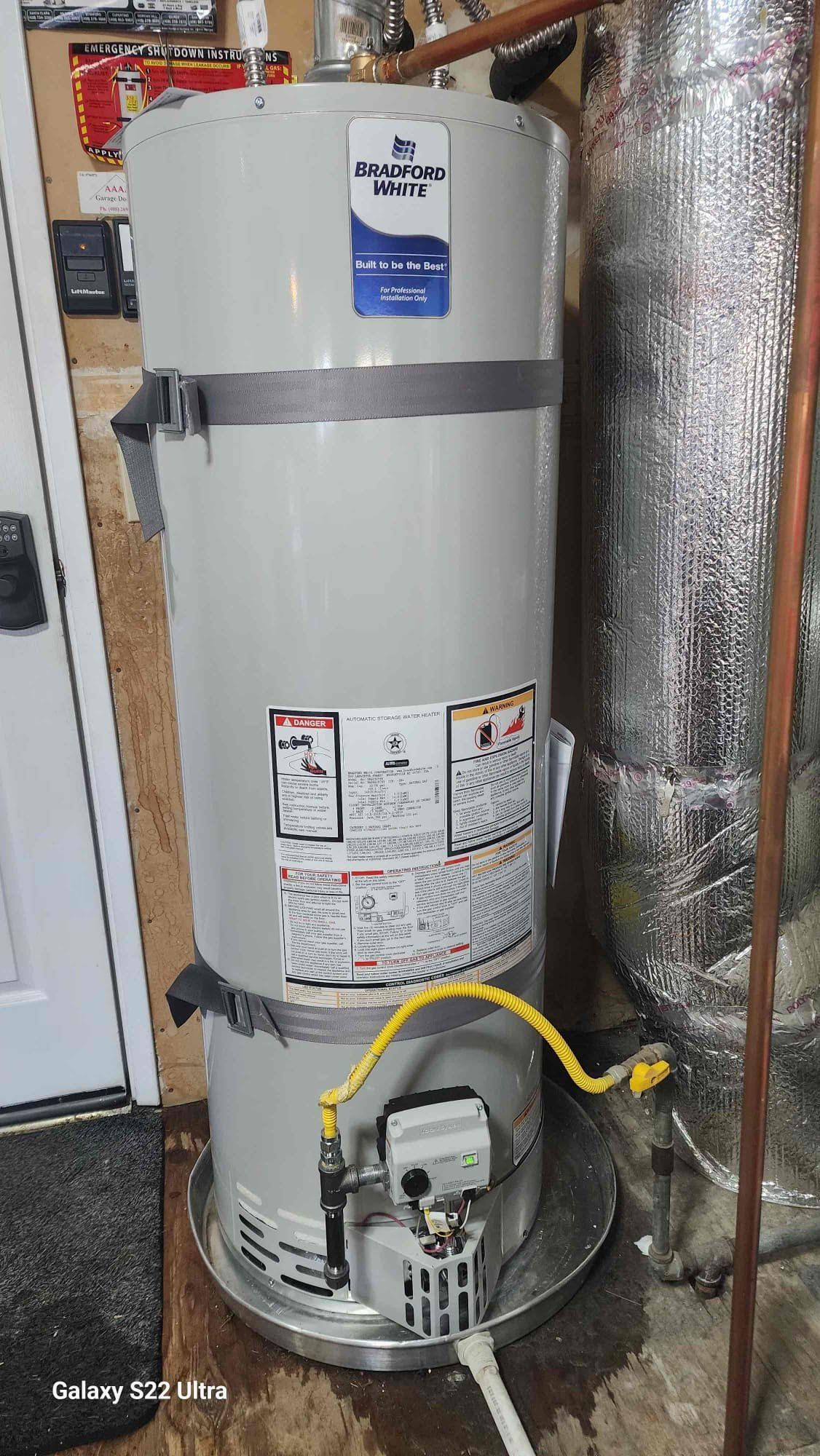
We recently completed a water heater replacement for a San Jose homeowner whose 8-year-old tank had never been flushed. The sediment had migrated throughout the plumbing system, clogging faucet aerators at multiple fixtures and restricting water flow throughout the home. That is not an unusual case, and it is what happens to a water heater in San Jose when maintenance gets skipped.
For tankless water heaters, hard water forms scale on the heat exchanger, the internal component that heats the water as it flows through the unit. Scale buildup reduces the heat exchanger's efficiency, lowers hot water output, and can eventually trigger error codes that shut the unit down. Annual descaling is essential for any tankless system in San Jose to avoid this.
Your Pipes:
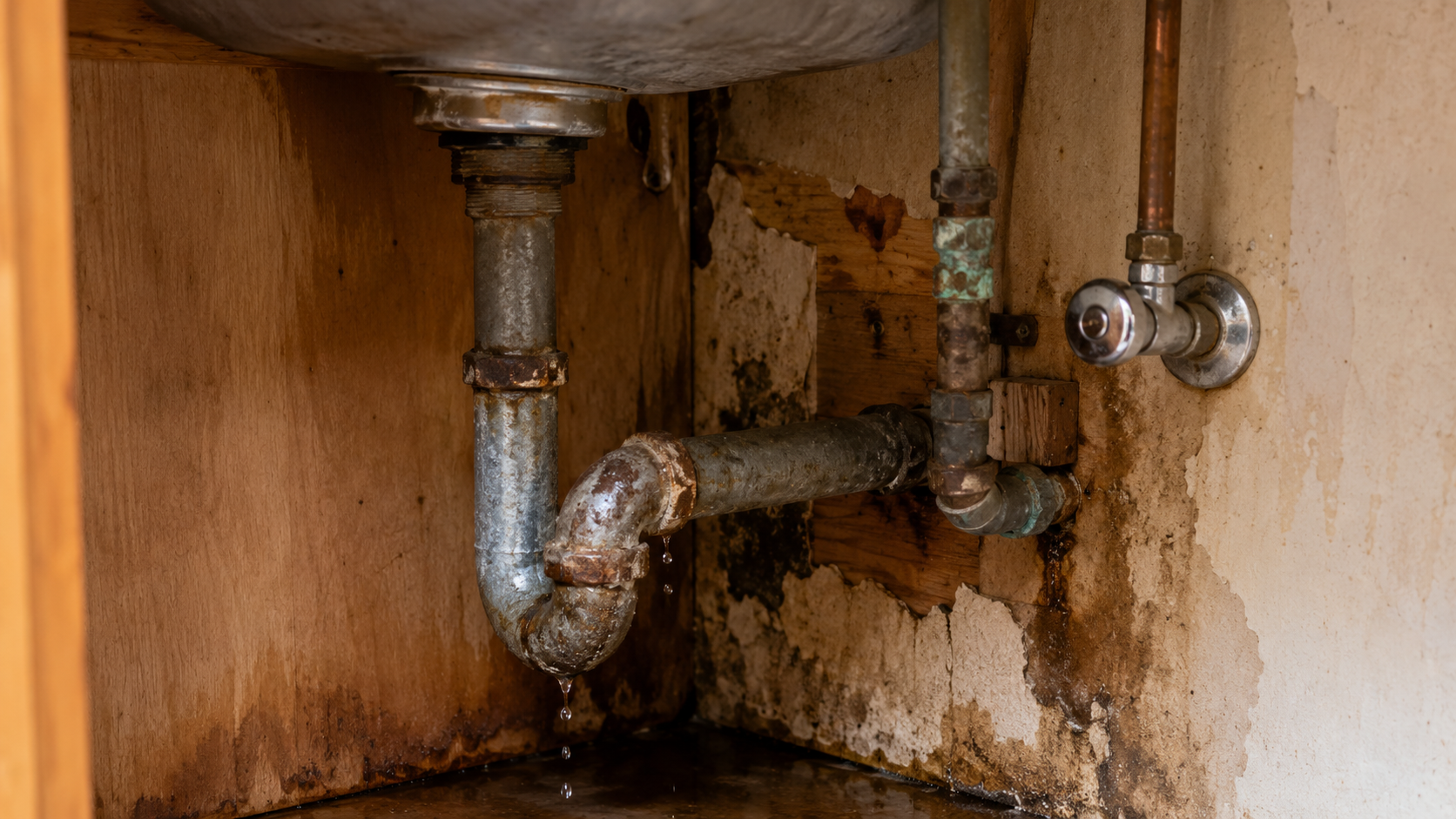
Hard water deposits scale inside supply lines over time, gradually narrowing the effective diameter of the pipe. In homes with copper supply lines (common in Cambrian Park, Almaden Valley, and homes built from the 1960s through the 1990s), this scale reduces water flow to fixtures and increases pressure on the remaining opening. In homes with older galvanized steel lines (Willow Glen, Rose Garden, Naglee Park, pre-1960 construction), hard water accelerates the corrosion process that is already eating through the zinc coating and the steel underneath.
The result is lower water pressure at faucets and showerheads, reduced flow to appliances like dishwashers and washing machines, and in advanced cases, pinhole leaks where the combination of corrosion and scale has thinned the pipe wall past its structural limit. If you are experiencing gradually declining water pressure throughout your home, hard water scale is a likely contributor, and a plumbing inspection can confirm it.
Fixtures and Appliances:
The white film on your shower doors, the crusty deposits around your faucet aerators, and the spots on your dishes and glasses are all hard water mineral deposits. These indicate what is happening inside the fixtures you cannot see. Scale builds up inside faucet cartridges, showerhead nozzles, dishwasher spray arms, and washing machine valves, reducing performance and shortening the lifespan of every water-touching component in your home.
Skin and Hair:
Hard water makes it harder for soap and shampoo to lather and harder to rinse fully. The mineral residue left on your skin can clog pores and contribute to dryness. On hair, hard water leaves a mineral film that makes it feel stiff, dull, and harder to manage. While these effects are not dangerous, they are among the first things homeowners notice, and often the reason they start researching water softeners.
Water Softeners, Filtration, and Maintenance
Whole-House Water Softener:
A water softener is the most direct and common solution to hard water in San Jose. It uses an ion exchange process to remove calcium and magnesium from the water before it enters your home's plumbing system. The softened water then flows through your water heater, your supply lines, and out of your fixtures without depositing scale.
- What it solves:
Scale buildup in water heaters and pipes, mineral deposits on fixtures, spotty dishes, soap efficiency, and the skin and hair effects of hard water.
- What to know in San Jose:
Size matters. A softener needs to be matched to your household's water usage and the specific hardness level coming into your home. A unit sized for 10 grains per gallon will be overwhelmed by a 20-grain supply. A qualified plumber should test your water at the tap and size the system accordingly.
San Jose does not currently have a ban on water softeners, though some California communities have explored restrictions due to the salt discharge from regeneration cycles. Salt-free water conditioners are an alternative that reduces scale without adding sodium to the water or producing brine discharge. They do not technically "soften" the water (they do not remove minerals), but they change the mineral structure so it is less likely to form hard scale on surfaces.
Whole-House Water Filtration:
A filtration system addresses a different set of concerns. While a softener targets hardness minerals, a filter removes contaminants like chlorine, chloramines, sediment, and potentially other substances from your water supply. Many San Jose homeowners install both: a softener to protect the plumbing system and a filter to improve the taste and quality of drinking water.
- Common filtration types for San Jose homes:
Carbon filtration for chlorine and taste, sediment filters for particulate matter, and reverse osmosis systems for point-of-use drinking water with the highest level of contaminant removal.
Annual Water Heater Maintenance:
Even if you install a water softener, annual maintenance on your water heater is still important. For tank units, this means flushing the tank to remove accumulated sediment. For tankless units, it means descaling the heat exchanger with a vinegar solution. These are the two most effective maintenance steps you can take to extend the life of your water heater in San Jose's water conditions.
If your water heater is more than 5 years old and has never been flushed, the sediment inside the tank is already significant. A professional flush can restore some efficiency, but if the sediment has hardened, you may be looking at a replacement rather than a flush.
How a Water Softener Protects Your Biggest Plumbing Investments
The practical case for a water softener in San Jose is straightforward math:
Water heater lifespan:
A tank water heater in untreated San Jose hard water typically lasts 8 to 10 years. With softened water and annual flushing, the same unit can last 12 to 15 years. That is 4 to 5 extra years before a replacement is needed, worth $2,000 to $4,000 or more in avoided replacement costs.
Tankless water heater performance:
Hard water scale on a tankless heat exchanger reduces efficiency every year and can cause shutdowns. A softener virtually eliminates scale formation, keeping the unit running at peak efficiency for it's full 15 to 20 year lifespan.
Pipe longevity:
Softened water slows the scale buildup that narrows supply lines and accelerates corrosion in older pipe materials. For homes that are not yet ready for a full repipe, a softener can extend the functional life of the existing piping.
Fixture and appliance life:
Dishwashers, washing machines, faucets, and showerheads all last longer and perform better with softened water. Less scale means fewer repairs, less replacement, and lower maintenance costs.
Energy savings:
The Department of Energy has found that scale buildup on water heater heating surfaces creates an insulating effect that reduces efficiency. Even a thin layer of scale can increase energy consumption measurably. Softened water keeps heating surfaces clean, which translates directly to lower PG&E bills.
We have seen the difference firsthand. In our
Los Gatos water heater and Halo 5 installation case study, the homeowner paired a new water heater with a whole-house water treatment system specifically to protect the investment from the hard water conditions in their area. That combination is increasingly common among South Bay homeowners who have watched hard water destroy a previous water heater and do not want to repeat the experience.
2027 Gas Water Heater Ban: Why Hard Water Matters Even More Now
With the BAAQMD gas water heater ban taking effect on January 1, 2027, the cost of a water heater failure is about to increase for every San Jose homeowner. After that date, any new water heater installation must be a zero-emission model (most likely a heat pump water heater), which is significantly more expensive than a standard gas tank replacement, especially if your home needs electrical upgrades to accommodate the new unit.
Hard water is the number one reason water heaters fail early in San Jose. A water softener installed now protects whatever water heater you currently have, extends its life, and delays the point at which you need to navigate the more expensive and complex electric transition. If your current gas water heater is relatively new, a softener could buy you several additional years of service before you need to deal with the ban at all.
FAQ
How hard is the water in San Jose?
It depends on the source. San Jose Water Company's groundwater ranges from 11 to 26 grains per gallon (very hard). Imported surface water ranges from 4.5 to 9 grains per gallon (moderately hard to hard). Most valley floor neighborhoods receive primarily groundwater, which is at the high end of the scale.
Is San Jose water safe to drink?
Yes. Hard water is not a health hazard, the issue is mechanical. San Jose Water Company treats all water to meet or exceed EPA and state drinking water standards. The concerns with hard water are related to plumbing system damage, appliance wear, and household comfort, not health.
Do I need a water softener in San Jose?
If your home receives groundwater (which most valley floor neighborhoods do), a water softener is strongly recommended. At 11 to 26 grains per gallon, hard water causes meaningful scale buildup in water heaters, pipes, and fixtures. A softener removes the minerals before they enter your plumbing system.
What is the difference between a water softener and a water filter?
A water softener removes hardness minerals (calcium and magnesium) to prevent scale buildup. A water filter removes contaminants (chlorine, sediment, etc.) to improve water taste and quality. They solve different problems and many San Jose homeowners install both.
How do I find out how hard my water is?
Check San Jose Water Company's water supply map to see your predominant source type, review their annual water quality report, or test your water at the tap using a home hardness test kit (under $15 at any hardware store). For a precise reading, we can test your water hardness during a service visit.
Will a water softener help my water heater last longer?
Yes. By removing the minerals that cause sediment buildup in tank units and scale on tankless heat exchangers, a softener can extend your water heater's lifespan by several years. In San Jose's hard water conditions, this is one of the best investments you can make.
Does Venture Plumbing install water softeners?
Yes. We install whole-house water softeners, water conditioners, and filtration systems sized specifically for your home's water source and usage. We test your water, recommend the right system, and handle the full installation including any plumbing modifications needed.
Your Water Is Working Against Your Home Every Day In San Jose
San Jose's hard water is not going to get softer. The minerals are in the ground, and they are in your water. What you can control is whether those minerals reach your water heater, your pipes, and your fixtures, or whether they get removed before they do any damage.
Venture Plumbing has been installing water softeners and filtration systems across San Jose and the South Bay since 2009. We test your water, size the system correctly, and install it with the same care we bring to every plumbing project.
Call (408) 898-2500
or
schedule online
for a water quality evaluation.