The San Jose Homeowner's Guide to Water Heaters: Types, Costs, and What Is Changing in 2027
April 1, 2026
Your water heater is probably the most important appliance in your home that you never think about until it stops working. When it does, you are suddenly making a decision involving several thousand dollars with no hot water, limited time, and a lot of conflicting information online about what type to buy, whether to get a water heater repair or water heater replacement, and what all the new regulations mean.
This guide is built for San Jose and South Bay homeowners specifically. And is information shaped by the housing stock, water quality, permit requirements, and upcoming regulatory changes that apply to your home and your city. Whether your water heater just failed and you need to make a decision today, or you are planning
ahead before the BAAQMD gas water heater ban takes effect on January 1, 2027, this covers what you need to know.
We are Venture Plumbing. We have been installing, replacing, and repairing water heaters across San Jose and the South Bay since 2009. If you need help now, call (408) 898-2500 for same-day service. If you have time to read first, everything below will help you make a better decision.
The Three Types of Water Heaters (And Which One Makes Sense for Your Home)
Tank Water Heaters: The Standard
A tank water heater stores and continuously heats a reservoir of water, typically 40 to 50 gallons for most San Jose homes, though sizes range from 20 to 80+ gallons. When you turn on a hot water tap, heated water flows from the top of the tank while cold water enters at the bottom to be heated.
- What homeowners like: Often a lower upfront cost ($1,500 to $3,000 installed for a quality unit), straightforward installation, widely available, and familiar technology. Most San Jose homes are already plumbed for a tank water heater, which means a like-for-like replacement is a relatively simple job.
- Lifespan: 8 to 12 years. Often closer to 8 in San Jose without regular maintenance.
What to watch out for in San Jose: Tank water heaters are more affected by hard water than any other type. San Jose Water Company delivers water that tests between 7 and 10 grains per gallon, and homes served by valley groundwater wells can see significantly higher hardness. Those minerals settle as sediment at the bottom of the tank every day. Over years, that sediment hardens, reduces heating efficiency, makes the unit work harder (which drives up your PG&E bill), and corrodes the tank lining from the inside. This is exactly why so many San Jose water heaters fail earlier than their rated lifespan. Without annual flushing, a 12-year tank often becomes an 8-year tank.
We recently completed a water heater replacement for a San Jose homeowner whose 8-year-old, 40-gallon A.O. Smith tank had never been flushed. The sediment had migrated throughout the entire plumbing system, clogging faucet aerators and restricting flow at every fixture. The project included upgrading to a 50-gallon tank, replacing the garbage disposal, installing new faucets, and overhauling shut-off valves and supply lines. It is a textbook example of what happens when San Jose's hard water meets a neglected tank water heater.
Tankless Water Heaters: On-Demand Hot Water
A tankless water heater heats water only when you turn on a faucet. Cold water flows through a heat exchanger (powered by gas or electricity) and comes out hot on the other side. There is no storage tank, which means no standby energy loss and no limit on how long you can run hot water, as long as you are not exceeding the unit's flow capacity.
- What homeowners like: Continuous hot water (no running out mid-shower), 15 to 20 year lifespan (roughly double a tank unit), smaller physical footprint (wall-mounted, freeing up floor space in your garage or utility area), and lower monthly energy costs. The Department of Energy estimates tankless systems are 24% to 34% more energy efficient than tank units for homes using 41 gallons or less per day.
- Lifespan: 15 to 20 years with proper maintenance.
- Major brands commonly installed in San Jose: Rinnai, Navien, Noritz, and Rheem.
What to watch out for in San Jose: The upfront cost is higher ($3,000 to $6,000+ installed depending on the unit and any gas line or venting modifications needed). Switching from a tank to a tankless system is not a straight swap. It typically requires resizing the gas line, modifying the venting configuration, and potentially adding a condensate drain. These modifications add to the installation cost and timeline. San Jose's hard water is also a factor with tankless units. Scale builds up on the heat exchanger over time, reducing efficiency and eventually causing error codes or shutdowns. Annual descaling (a flush with a vinegar solution circulated through the unit) is essential. Pairing a tankless system with a whole-house water softener is the best way to protect the investment long term.
Heat Pump Water Heaters: The Electric Future
A heat pump water heater uses electricity to move heat from the surrounding air into a water storage tank, similar to how a refrigerator works but in reverse. It does not generate heat directly, which makes it two to three times more energy efficient than a traditional electric resistance water heater.
- Why this matters now: Starting January 1, 2027, the BAAQMD ban on gas water heaters means any new water heater installed in the Bay Area must meet zero-emission standards. For most homeowners, that means a heat pump water heater. Whether you plan to install one now or want to understand what you will be dealing with when your current gas unit eventually fails, it is worth knowing the basics.
- What homeowners like: Significantly lower operating costs than gas (up to 70% energy savings according to Department of Energy data), qualification for federal tax credits (up to $2,000 under the 25C Energy Efficient Home Improvement Credit), and future regulatory compliance.
- Lifespan: 10 to 15 years.
What to watch out for in San Jose: Heat pump water heaters need space. The unit requires at least 700 cubic feet of surrounding air to operate efficiently (roughly a 10x10x7 room, per San Jose Building Bulletin #293). A tight water heater closet or a small utility alcove will not work without modification or a louvered door. They are also taller than standard tank units, which can create clearance issues in garages with low ceilings.
The bigger concern for many San Jose homes is electrical capacity. Heat pump water heaters typically require a dedicated 240-volt, 30-amp circuit. Homes with older 100-amp electrical panels (common in Willow Glen, Rose Garden, Cambrian Park, and other pre-1980 neighborhoods) may need a panel upgrade to accommodate the new circuit. That upgrade alone can cost several thousand dollars and requires a separate electrical permit and coordination with PG&E, potentially adding weeks to the project timeline.
However, 120-volt "plug-in" heat pump models are now entering the market. These units connect to a standard household outlet and avoid the panel upgrade entirely. Capacity and recovery rates are lower than 240-volt models, but for smaller households or homes where a panel upgrade is cost-prohibitive, they represent a viable path to compliance.
Repair or Replace: How to Make the Call
This is the decision most homeowners agonize over, and it is the one where bad advice costs the most money. Here is a straightforward framework:
When Repair Makes Sense:
- The unit is under 8 years old: If the water heater is relatively young, many common failures (thermocouple, heating element, pressure relief valve, pilot assembly) can be fixed for a fraction of the cost of a new unit. A water heater repair in the $200 to $500 range on a 5-year-old unit is almost always worth it.
- The issue is a single component failure: A broken thermocouple on a gas unit, a failed heating element on an electric unit, or a faulty gas valve are all repairable problems that do not indicate the tank itself is compromised.
- The tank is not leaking: If the water heater is producing hot water but has a specific operational issue (pilot won't stay lit, temperature is inconsistent, pressure relief valve is dripping), repair is usually the right first step.
When Replacement Is the Better Call:
- The unit is 10+ years old: At this age, especially in San Jose's hard water conditions, the tank has accumulated years of sediment and internal corrosion. Repairing a specific component does not address the underlying deterioration.
- The tank is leaking from the body: A leak from the tank itself (not from a fitting or valve) means the inner lining has corroded through. There is no repair for this. The unit needs to be replaced before the leak becomes a flood.
- You have had multiple repairs in the past two years: If you are on your second or third service call, you are investing in a failing system. That money is better put toward a new unit with a full warranty.
- The water is consistently rusty or sediment-heavy: This means corrosion or sediment inside the tank has reached the point where it is affecting water quality throughout the home. Flushing may help temporarily, but if the problem returns quickly, water heater replacement is the answer.
- Your energy bills have been climbing: An inefficient water heater working overtime to heat through sediment layers can account for up to 20% of your home's energy costs. A new, properly sized unit will lower your PG&E bill immediately.
- You want to upgrade from a 40-gallon to a 50-gallon tank, or from tank to tankless: If you are already calling a plumber because of a problem and the unit is aging, it is the right time to evaluate an upgrade rather than putting money into a like-for-like repair on an outdated system.
How San Jose's Hard Water Affects Your Water Heater
San Jose's hard water is the single most important local factor that every homeowner should understand about their water heater.
San Jose Water Company supplies water from three primary sources: local groundwater, imported water from the Sacramento-San Joaquin Delta, and treated surface water from local reservoirs. Depending on where your home sits and which source is feeding your area at any given time, hardness levels range from about 7 grains per gallon on the lower end to well over 10 grains per gallon in zones served primarily by valley groundwater.
What that hardness does to your water heater is straightforward: minerals (primarily calcium and magnesium) precipitate out of the water as it is heated and settle at the bottom of the tank as sediment. Over time, that sediment layer thickens, hardens, and creates a barrier between the burner and the water it is trying to heat. The unit has to run longer and harder to reach the set temperature, which drives up energy costs and accelerates wear on the tank lining.
In tankless units, the same minerals form scale on the heat exchanger, the core component that heats the water. Without annual descaling, scale buildup reduces flow, lowers efficiency, and can eventually cause the unit to shut down with an error code.
What you can do about it:
- Flush your tank water heater annually: Draining the tank through the drain valve at the bottom removes accumulated sediment before it hardens. This is the single most effective maintenance step you can take. If you have never flushed a tank that is more than five years old in San Jose, the sediment is likely already significant.
- Descale your tankless unit annually: A vinegar flush circulated through the heat exchanger dissolves mineral buildup and restores performance. Most manufacturers recommend this annually, and some warranties require it.
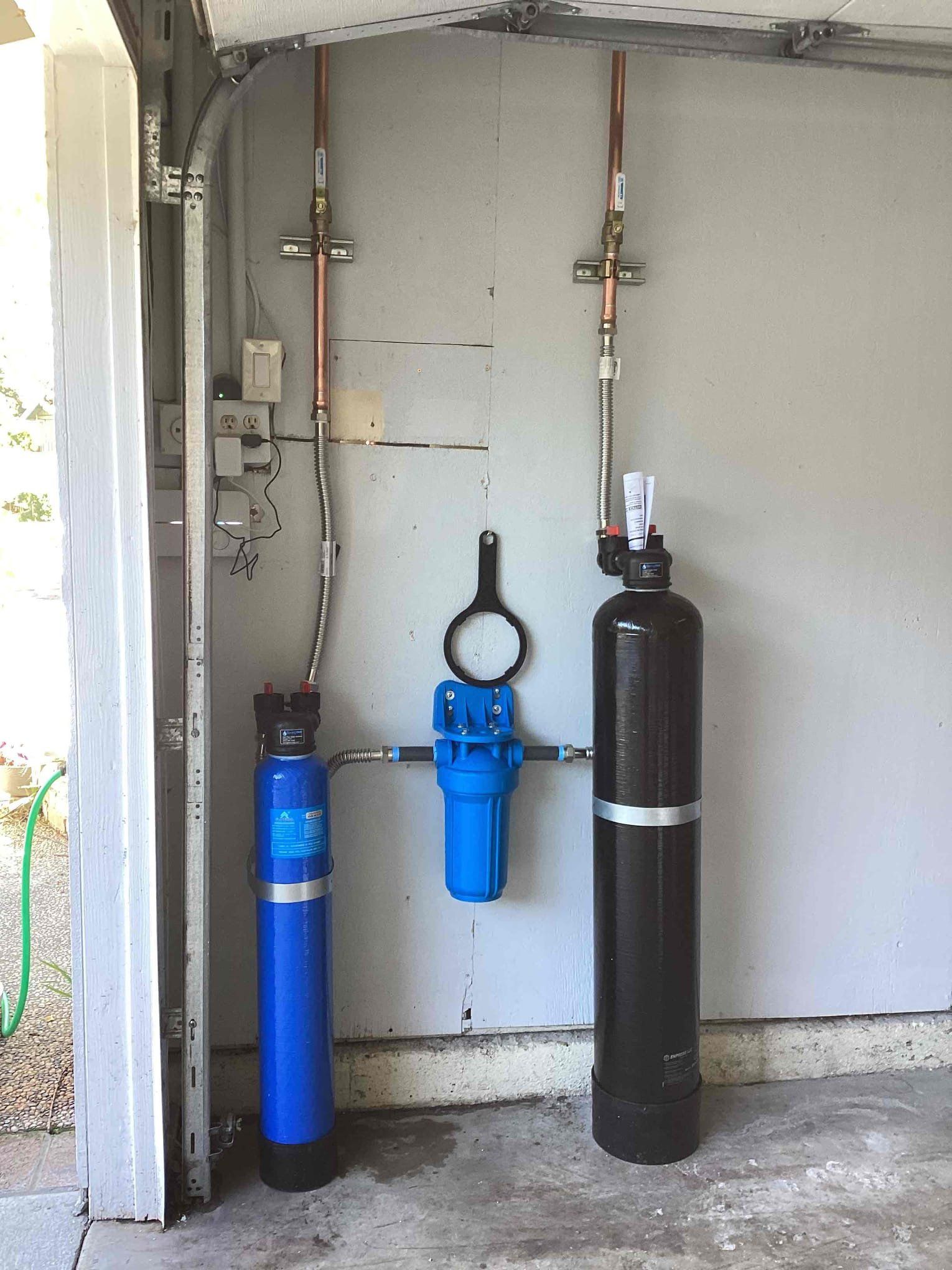
- Install a water softener: A whole-house water softener treats the water before it enters the water heater, removing the minerals that cause scale and sediment. This extends the life of your water heater, protects your faucets and fixtures, and reduces the white residue on shower glass and dishware. It is one of the best investments you can make for a San Jose home's plumbing system.
San Jose Permits and Code Requirements
Every water heater installation or replacement in San Jose requires a building permit. This is not optional, and it applies whether you hire a licensed plumber or attempt the work yourself.
Where to Get The Permit:
Single-family homeowners can obtain an express permit online through sjpermits.org. Most licensed plumbers handle the permit application as part of the installation, so you do not have to deal with the paperwork yourself.
What the inspection covers:
After installation, a city inspector verifies seismic strapping (two straps, upper and lower, secured to wall framing per California earthquake safety requirements), T&P (temperature and pressure) relief valve drainage (must terminate outside the building, pointing downward, 6 to 24 inches above grade), gas venting and connections (for gas units), electrical connections (for electric and heat pump units), and drain pan installation and drainage.
Why this matters:
An unpermitted water heater installation can create problems during a home sale (inspectors flag it), an insurance claim (coverage may be denied if the installation was not to code), or a future plumbing project (a plumber may refuse to work on a system that was installed improperly). The permit fee is a small cost relative to the protection it provides.
Heat pump water heaters have additional requirements:
Per San Jose Building Bulletin #293, heat pump units must be in a space of at least 700 cubic feet (or have a louvered door of at least 2x3 feet for airflow). They require both a plumbing permit and an electrical permit. Your plumber should coordinate both.
At Venture Plumbing, we pull permits and schedule inspections as part of every water heater installation. You do not have to manage any part of the permitting process.
The 2027 Gas Water Heater Ban: What It Means for Your Next Water Heater Decision
Starting January 1, 2027, the Bay Area Air Quality Management District (BAAQMD) Rule 9-6 prohibits the sale and installation of new gas water heaters under 75,000 BTU/hr across all nine Bay Area counties, including Santa Clara County. This covers virtually every residential tank and tankless gas water heater.
The ban does not require you to rip out your existing gas water heater. It only applies to new installations. But once your current gas unit fails after the ban date, your replacement must be a zero-emission model, which currently means an electric heat pump water heater.
We wrote a comprehensive guide to the BAAQMD gas water heater ban that covers the full regulatory timeline, what it costs to switch, available rebates, and what your options are right now. If your gas water heater is aging and you want to understand how this affects your decision, that guide is worth reading.
If your gas water heater is 8+ years old and has not been maintained, 2026 is the last year you can proactively replace it with a new gas unit on your own terms. A new gas tank installed this year can carry you 10 to 15 years. A new gas tankless unit can last 20 years. Either buys you significant time before the electric transition becomes mandatory.
What to Look for in a Water Heater Installer
Choosing the right plumber for a water heater installation matters more than choosing the right water heater. A quality unit installed incorrectly will underperform, fail prematurely, or create safety issues. A properly installed mid-range unit will serve you reliably for its full rated lifespan.
Licensed & Insured
This is non-negotiable. Verify the C-36 plumbing license through the CSLB at cslb.ca.gov. The plumber should carry both general liability insurance and workers' compensation coverage.
Local Experience
A plumber who has installed water heaters in Eichler homes knows the access challenges. A plumber who works regularly in Willow Glen knows the galvanized piping context. A plumber familiar with Almaden Valley understands the hard water conditions. This local knowledge affects everything from how the installation is routed to what additional work they recommend alongside the water heater.
Handles Permits
A qualified installer should pull the permit, schedule the inspection, and ensure the installation passes on the first review. If a plumber suggests skipping the permit, find a different plumber.
Provides Multiple Options
A good installer evaluates your home, discusses your hot water demand, and presents options at different price points. Not one pre-determined recommendation, but a range of choices with the tradeoffs explained clearly. Tank, tankless, or heat pump. 40-gallon or 50-gallon. Budget-friendly or premium. You should be making the decision with full information.
Transparent Pricing Before Work Begins
You should know exactly what the installation will cost, including the unit, labor, any necessary modifications (gas line resizing, venting changes, valve replacements), permit fees, and old unit haul-away, before the plumber starts work.
Warranty On Parts
The unit itself typically carries a manufacturer warranty (6 to 12 years on tank units, 10 to 15 years on tankless heat exchangers). The installer should also provide a labor warranty covering their workmanship in writing.
What We See Most Often in San Jose Homes
After 15+ years of replacing and repairing water heaters across San Jose, Campbell, Los Gatos, Saratoga, and the rest of the South Bay, these are the patterns we see most consistently:
Tank units that were never flushed:
By far the most common situation. A homeowner calls because hot water is inconsistent, faucets are clogging, or the water looks off. When we inspect the tank, it is full of sediment from years of San Jose hard water with zero maintenance. Sometimes a flush restores performance temporarily, but more often than not, the tank is too far gone and replacement is the right call.
Undersized tanks in growing households:
A 40-gallon tank that was fine for two people is not going to keep up when the household grows to four or five. Upgrading to a 50-gallon tank or switching to tankless during a replacement gives the homeowner more capacity without repeat issues.
Aging shut-off valves that fail during water heater emergencies:
When a water heater springs a leak, the first thing you need to do is shut off the water supply to the unit. If the shut-off valve above the water heater is a 15-year-old gate valve that has seized open, you cannot stop the water. This is why we recommend replacing shut-off valves with quarter-turn ball valves whenever we install a new water heater. It adds a small amount to the project cost and prevents a minor leak from becoming a flood.
Homeowners who do not know the BAAQMD ban is coming:
Many San Jose homeowners are still unaware that after December 31, 2026, they will not be able to install a new gas water heater. We bring this up during every water heater service call now because it directly affects whether the homeowner should replace now or plan for an electric transition later.
FAQ
How long do water heaters last in San Jose?
Tank water heaters typically last 8 to 12 years, but San Jose's hard water shortens that range for units that are not flushed annually. Without maintenance, 8 years is a realistic expectation. Tankless units last 15 to 20 years with annual descaling. Heat pump water heaters have a 10 to 15 year expected lifespan.
Should I repair or replace my water heater?
If the unit is under 8 years old, has a single component failure, and the tank is not leaking, repair usually makes sense. If it is over 10 years old, has had multiple repairs, is leaking from the tank, or is producing rusty/sediment-heavy water, replacement is the better investment.
Do I need a permit to replace a water heater in San Jose?
Yes. Every water heater installation or replacement in San Jose requires a building permit. Express permits are available online through sjpermits.org. A post-installation inspection covers seismic strapping, T&P valve drainage, venting, and code compliance.
Can I still install a gas water heater in San Jose?
Through December 31, 2026, yes. Starting January 1, 2027, the BAAQMD Rule 9-6 ban prohibits new gas water heater installations across the Bay Area. After that date, replacements must be zero-emission (heat pump). Read our full guide to the gas water heater ban for details.
What size water heater do I need?
For tank units: 40 gallons for 1 to 3 people, 50 gallons for 3 to 5 people, 75+ gallons for larger households. For tankless units, sizing is based on flow rate (GPM) and temperature rise. A qualified plumber should evaluate your peak demand and simultaneous fixture use to recommend the right size.
Is a tankless water heater worth it in San Jose?
For many homeowners, yes. Continuous hot water, 15 to 20 year lifespan, and lower energy costs make tankless an attractive option. The higher upfront cost is offset by longevity and efficiency savings. Annual descaling is essential in San Jose's hard water, and pairing with a water softener maximizes the unit's lifespan.
What should I do if my water heater is leaking?
Shut off the cold water supply valve above the unit, turn off the gas or electrical power to the water heater, and call a plumber for same-day service. A leaking tank can release 40 to 80 gallons of water and should be treated as an emergency. Read our emergency plumber guide for step-by-step instructions.
Does hard water really affect my water heater that much?
In San Jose, yes. Hard water deposits sediment inside tank water heaters and scale on tankless heat exchangers every day. Without annual maintenance, this buildup reduces efficiency, shortens lifespan, and can cause premature failure. A whole-house water softener is the most effective way to protect your water heater and the rest of your plumbing system.
Your Water Heater Deserves Better Than a Guess
Whether you are deciding between repair and replacement, comparing tank vs. tankless, or trying to figure out how the 2027 gas ban affects your home, the best next step is a conversation with a plumber who knows San Jose's water, housing stock, and code requirements.
Venture Plumbing has been replacing and servicing water heaters across the South Bay since 2009. We work in every neighborhood from Willow Glen to Almaden Valley to Los Gatos, and we present honest options at every price point so you can make the right decision for your home.
Call
(408) 898-2500
or
schedule online
for water heater service in San Jose.