Clogged Drain in San Jose: Should You Fix It Yourself or Call a Pro?
August 26, 2026
There is a real answer to this question, and it is not the one most articles give you, which is either buy our nineteen-dollar gadget or call a plumber immediately for everything. The truth sits in between, because some clogs are a five-minute fix that any homeowner can handle with a tool they already own, and others are a warning that trying harder will turn a small problem into a much larger and more expensive one. The whole skill is knowing which is which before you reach for anything, and that comes down to a couple of signals you can read in about a minute.
We have cleared thousands of drains across San Jose over fifteen years, and a fair number of those calls were homeowners who did everything right, and an unlucky few were homeowners who poured something caustic down an old cast iron line or whipped a rented cable through a pipe that was already brittle. This is the honest version of when to grab the plunger and when to put the phone in your hand instead, written for the homes we actually work in, from the pre-1970 galvanized systems in Willow Glen to the slab-routed lines in Almaden Valley.
First, What to Do Right Now
If you are reading this with a sink full of water or a drain that just stopped, do a few things before you decide anything. Stop running water into the fixture, because adding more only raises what has nowhere to go. Do not keep flushing a toilet that did not clear on the first flush, since a second and third flush is how a clogged bowl becomes an overflowing one. If you have already poured a chemical product in and it did not work, do not add a second kind on top of it, because mixing drain products can create dangerous fumes, and it leaves a caustic mess for whoever works on the line next. Give it a minute, let any standing water settle, and then work through the rest of this calmly, because almost no clog gets worse from waiting ten minutes and plenty get worse from panicking.
The One Question That Settles It
Before you decide whether to fix a clog yourself, there is one question that answers most of it, and it is not what is clogged, it is how many things are clogged. A single slow drain with nothing else going on in the house is almost always a local, reachable clog, and that is the kind you can reasonably try yourself. The moment more than one fixture is involved, the situation changes completely, because that points at the shared line every drain empties into, and nothing you can do from a single sink or tub will touch a blockage in the main.
So before anything else, run the quick test. Run water in a fixture far from the problem, flush a toilet, run the washer, and watch whether anything else reacts. If the clog stays put in its one drain and the rest of the house behaves, you are cleared to try a DIY fix. If running one fixture makes another gurgle or back up, if several drains are slow at once, or if you see any sign of sewage, stop, because that is a main-line problem and it is a call, not a project. We break down exactly why fixtures affect each other in our companion piece on
why San Jose drains keep clogging, which is worth reading if this is a clog that keeps coming back.
| Situation | Try It Yourself First | Call a Pro | Why |
|---|---|---|---|
| Single slow bathroom sink or shower drain | Yes | If it returns within weeks | A shallow hair and soap clog is usually reachable with a hand tool and safe to attempt once |
| Hair clog you can see near the drain | Yes | Only if it will not come out | A drain stick or a bent hanger reaches most visible hair mats without risk to the pipe |
| Kitchen sink draining slowly over time | Maybe once | Yes if grease is the cause | Grease coats the horizontal run beyond reach of anything you can push in from the sink |
| Toilet clogged with an obvious blockage | Yes with a flange plunger | If plunging fails twice | A proper flange plunger clears most single-toilet clogs, and repeated failure points at the line beyond the bowl |
| Toilet gurgles or is slow with nothing visible | No | Yes | A gurgle with no visible clog is a main-line or vent signal, not a toilet problem, and nothing you do at the bowl fixes it |
| More than one fixture slow at the same time | No | Yes | Multiple slow fixtures mean the shared main line is blocked, which is not a DIY job and not reachable from any one drain |
| Any drain backing up with sewage or water rising | No | Yes, call now | Standing sewage is a health issue and a sign of a main-line blockage or failure that needs equipment and expertise |
| Recurring clog in the same spot | No | Yes | A clog that keeps returning has a cause a plunger cannot touch, whether roots, grease, scale, or a failing pipe, and needs a camera to diagnose |
| Older home with a history of pipe problems | No | Yes | Aggressive DIY methods can crack or separate the brittle cast iron and galvanized pipe common in pre-1970 San Jose homes |
When It Is Fine to DIY
There is a specific category of clog that you should feel free to tackle. If it is a single fixture, the clog is fresh, and the blockage is close to the drain opening, you have a good shot at clearing it with a plunger or a simple hand tool, and you will save yourself a service call.
A bathroom sink or shower that has slowed down over a few weeks is almost always hair bound up near the drain, and a two-dollar plastic drain stick pushed down and pulled back out will bring most of it up. A kitchen sink that has gotten sluggish can sometimes be helped by clearing the P-trap under the cabinet if you are comfortable with a bucket and a wrench. These are reasonable, low-risk moves on a first attempt.
The one rule that matters here is the first-attempt rule. Try the safe method once. If it works and stays working, great, you saved the money. If it works and then comes back on a schedule, that is not a DIY win, that is a recurring clog telling you the cause is deeper than any home tool reaches.
The Toilet Situation
Toilets deserve their own section, because a clogged toilet is the single most common thing a homeowner tries to fix themselves, and the most common reason it does not work is the wrong plunger. The flat cup plunger that most people own is designed for flat surfaces like a sink or tub, and it cannot form a seal against the curved opening of a toilet. The tool that actually works is a flange plunger, the kind with an extended rubber sleeve that folds out to seat into the toilet drain, and with a proper seal and a few firm pushes it clears the large majority of single-toilet clogs. If a flange plunger does not clear it after a couple of honest attempts, stop there, because a toilet that will not clear with a good plunger usually is not a toilet problem at all, it is a sign the blockage is further down the line, and that is where plunging stops mattering and diagnosis starts.
When Trying Harder Is the Expensive Mistake
Here is where homeowners get into trouble, and it is almost always the same story, the safe method did not work, so they escalated, and the escalation is what caused the damage. The two escalations that cause the most grief are chemical drain cleaner and rented power equipment.
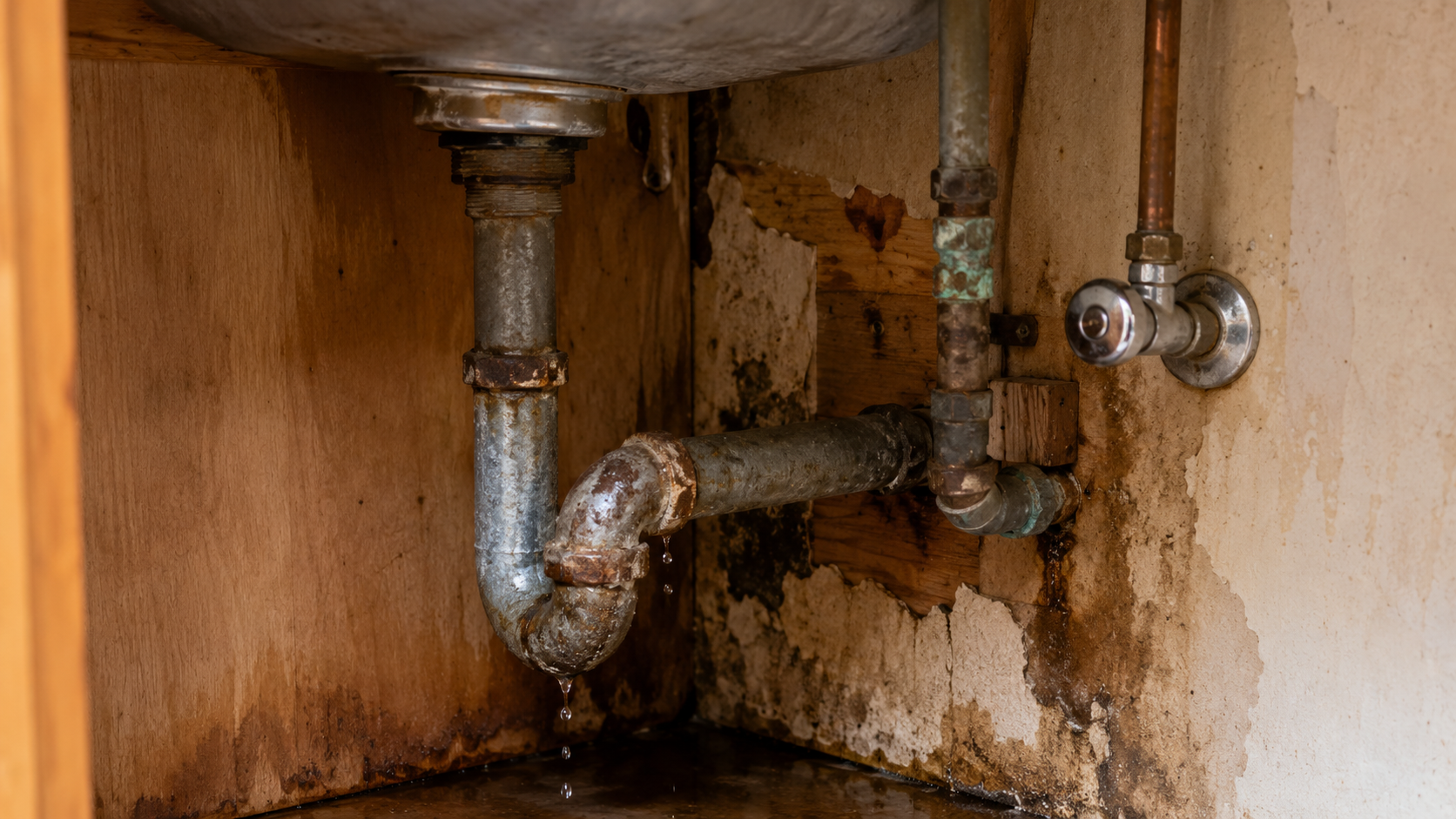
Chemical drain cleaner is the one we plead with people to skip on a recurring clog. The caustic and acidic products generate heat as they work, and on the aging cast iron and galvanized pipe common in older San Jose homes, that heat and chemistry accelerate the corrosion that is already narrowing the pipe. They rarely clear the real cause of a stubborn clog, because roots, hardened grease, and a bellied pipe are all immune to them, and when they fail, the plumber who comes next is now working in a line full of dangerous chemical. Used once on a fresh, shallow, organic clog it is fine. As a repeat solution it does real harm.
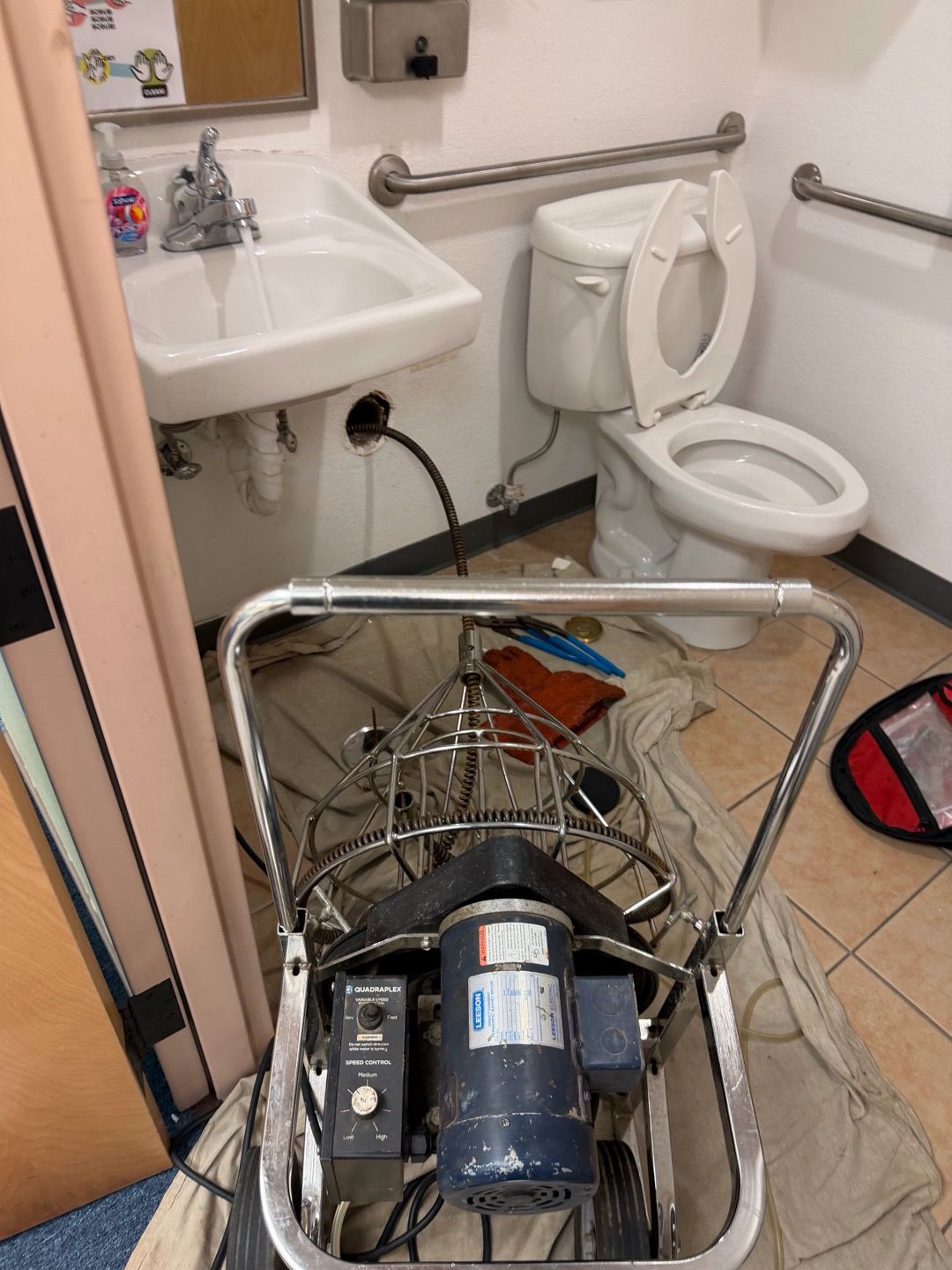
Renting a powered drain machine is the other one. A drain cable under motor power is a genuinely dangerous tool in unpracticed hands, it can whip, bind, and crack a pipe, and in an older home with brittle lines it can turn a clog into a broken pipe under your slab. There is a reason this is the tool we are trained on and homeowners generally should not be. If the plunger and the drain stick did not do it, the next step is a professional, not a rental.
| DIY Method | What It Actually Does | When It Is Reasonable | The Risks |
|---|---|---|---|
| Flange plunger | Uses sealed pressure to shift a nearby blockage in a toilet or sink | A single fixture with a fresh clog and no other symptoms | Very low, the safest DIY method, though it does nothing for a main-line clog |
| Hand auger or drain stick | Physically hooks or pulls a reachable hair or debris clog near the opening | A visible or shallow clog in one bathroom fixture | Low if gentle, though forcing it can scratch finishes or push the clog deeper |
| Boiling water | Can loosen a light soap or grease film in a metal drain | A slow kitchen drain with no standing water | Do not use on PVC or on a porcelain fixture, and never with a full sink of standing water |
| Baking soda and vinegar | Creates a mild fizzing reaction that can help a very minor organic film | Light maintenance on an already-flowing drain | Nearly useless on a real clog, harmless but not a fix |
| Store-bought chemical drain cleaner | Uses caustic chemicals to dissolve the surface of a soft clog | A one-time shallow organic clog, used once and only once | Damages older cast iron and galvanized pipe, and is dangerous if it sits and a pro has to work in it later |
| Renting a powered drain machine | Runs a motorized cable to break through a deeper clog | Rarely a good idea for a homeowner | High, an unpracticed operator can whip the cable, crack a pipe, or get injured |
| Removing and cleaning the P-trap | Clears a clog trapped in the U-bend under a sink | A confident DIYer with a bucket and basic tools | Moderate, easy to cross-thread or fail to reseal, causing a slow leak under the cabinet |
What San Jose Homes Add to the Equation
The DIY-or-pro line moves depending on the house, and San Jose has a lot of houses where it moves toward pro sooner than it would elsewhere. Older neighborhoods like Willow Glen, the Rose Garden, and Naglee Park have homes built before 1970 with original galvanized supply lines and cast iron drains, and those materials are corroded and brittle enough that aggressive DIY methods do more harm than good, because the pipe itself is fragile. The mature trees in those same neighborhoods send roots into aging sewer laterals, and a root clog is never a DIY fix, it is a camera-and-hydro-jetting job.
Hard water is the other local factor, because San Jose water runs 11 to 26 grains per gallon depending on your source, and that mineral scale narrows drains and builds up faster here than in soft-water regions, which means the clog you clear today comes back faster if scale is the underlying cause. And in the slab-on-grade homes across Almaden Valley and Cambrian Park, the drain lines run under the concrete where nothing you push in from above can reach a problem that has developed down the line. None of this means you can never touch your own drain, it just means the threshold for calling sooner is lower in these homes, and pushing a DIY fix too hard has a higher cost.
What a Pro Actually Does That You Cannot
It is worth being clear about what you are paying for when you call, because it is not just a bigger plunger. A professional starts by diagnosing rather than guessing, and for a recurring clog that usually means a camera down the line to see whether the cause is grease, roots, scale, or a failing pipe, and where it sits. A homeowner near Naglee Park called us out convinced he had roots, because his drains kept slowing down and roots are what everyone assumes, and the camera showed something a plunger would never have revealed, the line was clear of roots but had started to sag in one section, quietly collecting everything that drained past it. We corrected the low spot rather than clearing a clog that was never going to stay cleared. No amount of DIY effort finds a problem like that, because you cannot fix what you cannot see, and that is the real line between clearing a clog and ending it. You can see how those methods fit together on our main drain cleaning page, and if the clog has already become a backup, our emergency plumber page covers how fast we can reach you.
What Calling Costs
Part of what keeps people plunging a drain for the fifth time is not knowing what a call will cost, so here is the straight version, at least for us. We charge a $99 dispatch fee to come out and diagnose the problem, and give you multiple custom relevant solutions at different price points, and that fee is credited toward the repair if you move forward with any service, which means a real technician with real diagnostic equipment shows up, tells you exactly what is happening, and you are not paying separately for the visit and the fix. That structure exists on purpose, because it means you are getting a senior technician and an honest diagnosis rather than a rushed commodity clearing, which is the whole point of hiring someone to solve the problem instead of just moving it down the line. If your drains clog often enough that this is a recurring line item, our VIP membership waives the dispatch fee during regular hours and adds an annual whole-home inspection that catches drain issues before they become emergencies, which tends to pay for itself in a home with aging pipes.
FAQ
Can I unclog my own drain, or do I need a plumber?
It depends on how many fixtures are affected. A single slow drain with a fresh, reachable clog is a reasonable DIY attempt with a plunger or a hand tool. If more than one fixture is slow, if a toilet gurgles with nothing visibly blocking it, or if anything is backing up, that points at the main line and needs a professional, because no home tool reaches a blockage in the shared line.
Will a plunger make a clog worse?
A plunger used correctly on a single fixture rarely makes anything worse, it is the safest DIY method there is. Where people get into trouble is plunging hard right after pouring in chemical drain cleaner, which can splash caustic liquid back up, or plunging a toilet repeatedly to the point of overflow. Use it once or twice with a proper seal, and if it does not clear, stop rather than escalating.
Why won't my toilet unclog with a plunger?
The most common reason is the wrong plunger. A flat cup plunger cannot seal against a curved toilet opening, so it never builds the pressure it needs. A flange plunger, with the extended rubber sleeve, seats properly and clears most single-toilet clogs. If a flange plunger still does not work after a couple of tries, the blockage is likely further down the line, which is a plumber's job rather than a plunger's.
Is it safe to use store-bought drain cleaner?
Once, on a fresh and shallow organic clog, it is generally fine. As a repeat solution it does real harm, because the caustic chemicals accelerate corrosion in the older cast iron and galvanized pipe common in pre-1970 San Jose homes, and they rarely clear the actual cause of a recurring clog. If a drain keeps clogging, chemicals are the wrong tool.
Should I rent a drain snake and do it myself?
For a shallow hand auger, that is low risk. For a powered drain machine, no, a motorized cable is dangerous in unpracticed hands and can crack a brittle older pipe, turning a clog into a much bigger repair. If a plunger and a hand tool did not clear it, the next step is a professional rather than a rental.
When is a clog actually an emergency?
When it is backing up. Standing sewage, water rising in a tub when you flush, or multiple fixtures backing up at once are all signs of a main-line blockage that needs immediate attention, both because it is a health issue and because it usually will not resolve on its own. A single slow drain can wait for a scheduled visit.
Final Thoughts
The honest line between DIY and calling a pro is not about how tough you are or how much you want to save, it is about reading two signals before you touch anything, how many fixtures are involved and how old the pipe is, and letting those tell you whether this is a five-minute job or a warning. Plunge the single clogged toilet with the right plunger, pull the hair out of the one slow shower, clear the P-trap if you are handy, those are yours to win.
But the moment a second fixture joins in, the moment something backs up, or the moment you find yourself reaching for something caustic or something with a motor to force a clog that will not give, that is the pipe asking for someone who can see what is actually happening before making it worse. If you are at that point, or you are just tired of clearing the same drain twice a year, we can run a camera, tell you exactly what is going on, and give you the honest version of what will fix it.