Snaking vs Hydro Jetting vs Camera Inspection: Which Drain Cleaning Method Does Your San Jose Home Need?
August 26, 2026
When a plumber talks about clearing your drain, they are not describing one thing, they are describing at least three different tools that do genuinely different jobs, and the reason this matters is that paying for the wrong one is how you end up clearing the same drain twice. Snaking, hydro jetting, and camera inspection are not competing products where one is simply better, they are answers to different questions, and the honest version of this decision is less about which is best and more about which one your specific clog, in your specific pipe, actually calls for.
We have run all three across San Jose for fifteen years, in the pre-1970 galvanized and cast iron systems of Willow Glen and Naglee Park, in the slab-routed lines of Almaden Valley, and in newer construction out toward Evergreen, and the right method changes house to house. This is a plain-language walk through what each one does, when it is the right call, and when it is the wrong one, written around the pipes we actually work in here rather than a generic national explainer, because the material behind your walls matters more to this decision than most homeowners realize.
Drain Snaking
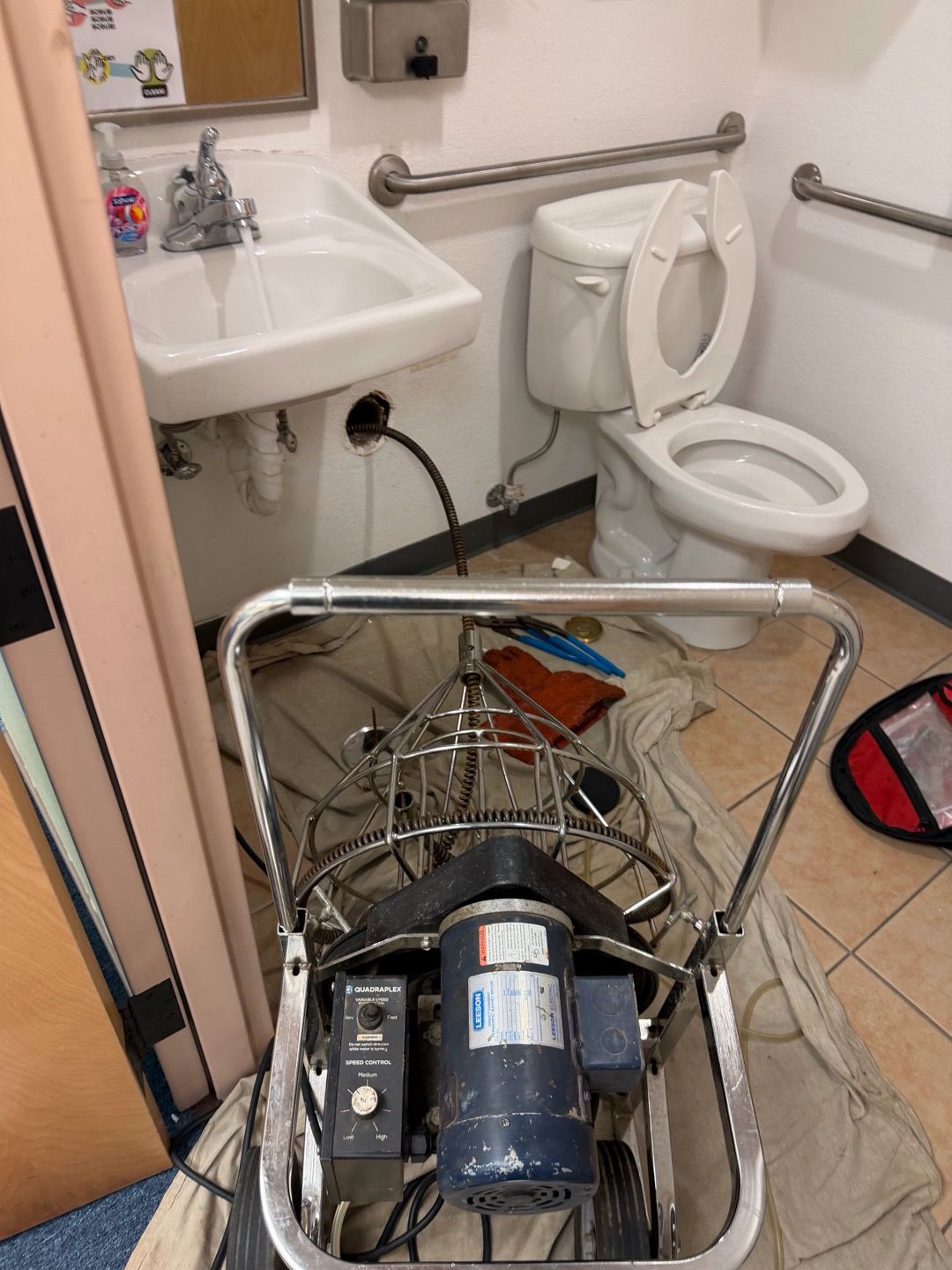
Snaking, also called cabling or rooting, is the method most people picture when they imagine a plumber clearing a drain. A flexible steel cable is fed into the line, and at the end of it a blade or a hooked head either breaks through the blockage or pulls it back out. The cable is driven by a motorized drum for the tougher jobs, or turned by hand for a small fixture, and a good technician can feel through the cable what kind of clog they are hitting, whether it gives like a soft hair mass or resists like a root or a solid obstruction.
For a single localized clog, snaking is fast, effective, and gentle on the pipe, which is exactly why it is usually the right first move and why it has been the workhorse of the trade for decades. It shines on a hair clog in a bathroom line, a food clog in a kitchen drain, or an isolated obstruction you want cleared today. It's limitation is not a flaw, it is simply the nature of the tool, a cable clears a path through a blockage rather than cleaning the whole pipe, so on a line coated in grease or scale it bores a hole through the center and leaves the walls lined. That is why a snaked drain can run beautifully the day it is cleared and then slow down again a few weeks later, the path closed back up because the coating was never removed. On a single fresh clog that is not an issue at all. On a recurring one, it is the reason the clog keeps coming back.
Hydro Jetting
Hydro jetting is the answer to the thing snaking cannot do, which is clean the full pipe rather than punch through the blockage. A specialized hose feeds a nozzle down the line, and that nozzle sprays water at very high pressure, forward to cut through the blockage and backward to pull the hose along and scour the pipe walls as it goes. The result is a pipe brought back close to its original interior diameter, with the grease, scale, and root matter actually removed rather than merely penetrated.
That makes jetting the right tool for the buildup a cable leaves behind, hardened kitchen grease that has ringed the horizontal run, mineral scale from years of hard water, and tree roots that have worked into a sewer lateral. Where a snake nicks a root mass and buys a few months, jetting cuts and flushes it, which is a longer-lasting result on the kind of recurring clog that has a real cause behind it. The tradeoff is straightforward and worth being honest about, jetting is more force, and force is not always what an older pipe wants. A responsible plumber does not jet a line blindly, especially not in an older home, which is the reason the third method exists and often comes first.
Camera Inspection
Camera inspection is the odd one out, because it clears nothing. It is a waterproof video camera mounted on a flexible push rod, fed down the drain so that the plumber, and you looking over their shoulder, can see the actual inside of the pipe in real time, what the blockage is, where it sits, and what shape the pipe itself is in. Many setups include a locator that marks exactly where the camera head is under the yard or slab, so if a repair is needed, there is no guessing about where to dig.
It is not a cleaning method, it is a diagnosis, and it is the single most underused step in drain work. Homeowners tend to think of the camera as something reserved for a major sewer job, when in practice it is often the smartest first move on a recurring clog, because it replaces guessing with seeing. It tells you whether the honest answer is a cable, a jetter, or a repair, before anyone spends money clearing the wrong thing. In an older San Jose home it does something more, it tells you the true condition of a sewer lateral that might be fifty or seventy years old, which is information worth having before it becomes an emergency.
The Three Methods, Side by Side
The clearest way to hold these three in your head is to see them next to each other, because the decision is rarely about one method in isolation, it is about which fits the clog and the pipe in front of you.
| Method | What It Is | Best For | Not the Right Call When | San Jose Angle |
|---|---|---|---|---|
| Drain snaking (cabling) | A flexible metal cable fed into the line to break through or hook out a blockage | A single localized clog, a slow bathroom or kitchen fixture, a first-time clog you want cleared fast | The clog keeps coming back, or the line is coated in grease, scale, or roots that a cable only punches through | Gentler on the brittle galvanized and cast iron common in pre-1970 homes, which is often why it is the right first step here |
| Hydro jetting | High-pressure water that scours the full interior wall of the pipe back to its original diameter | Recurring clogs, hardened grease, mineral scale, and tree root intrusion in a main line | The pipe is already cracked, collapsed, or badly corroded, since pressure can worsen a failing line | Well suited to root intrusion from mature trees and to hard-water scale in the 11 to 26 grain range, but only after a camera confirms the pipe can take it |
| Sewer camera inspection | A waterproof video camera fed down the line to see the actual condition and cause | Diagnosing a recurring clog, checking an older home's sewer lateral, deciding which of the other two methods you actually need | You have a simple one-time clog in a single fixture that cleared on the first try | The only way to know whether an old San Jose lateral has roots, a sag, or a break before choosing a fix, rather than guessing |
Why the Method Matters More in an Older San Jose Home
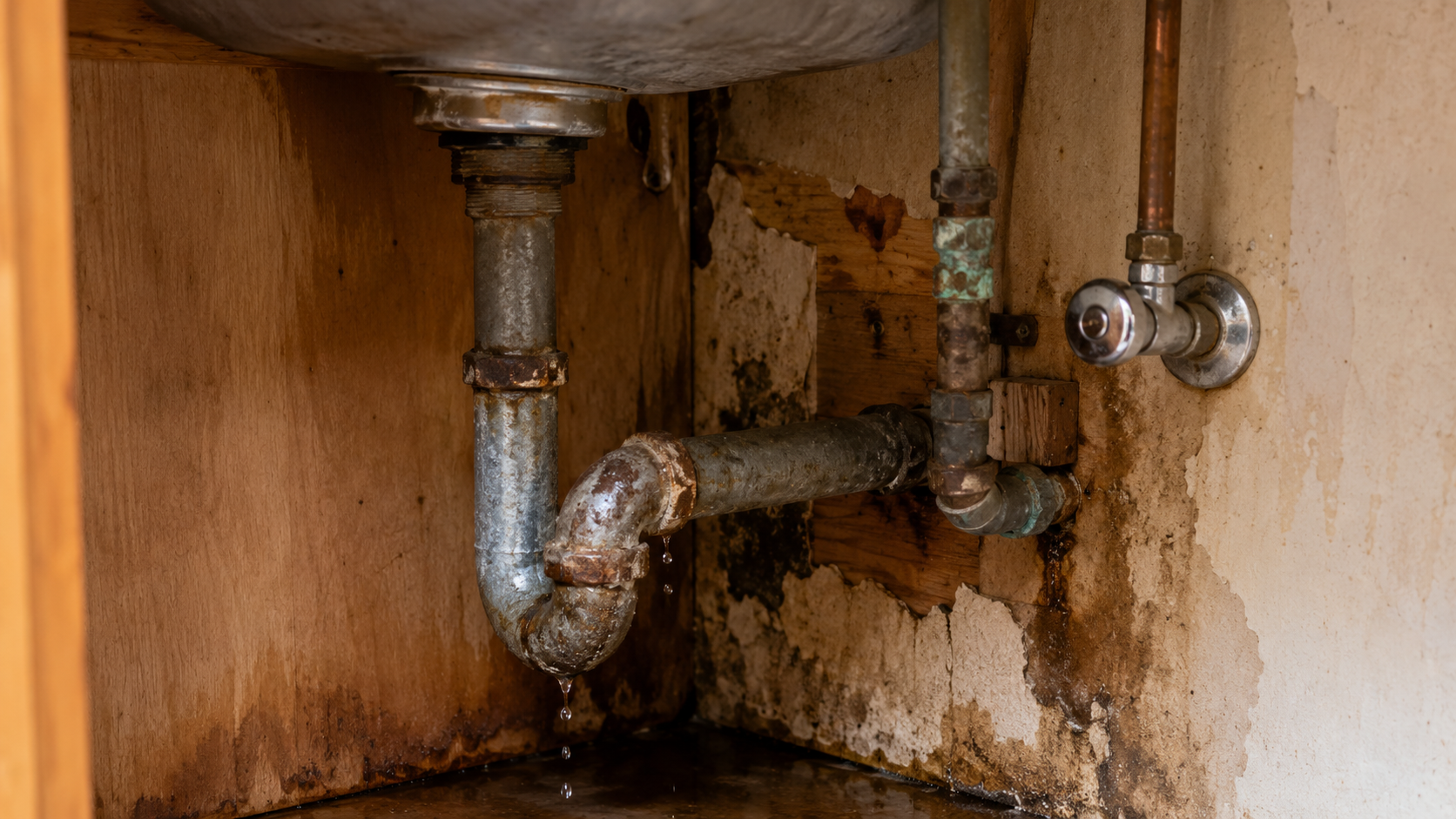
Here is where the generic advice stops being useful, because the right method depends heavily on what your pipes are made of, and a lot of San Jose housing stock changes the answer. The older neighborhoods each carry their own version of the problem. In Willow Glen and the Rose Garden, much of the pre-1940 craftsman and Spanish revival stock still runs original galvanized supply lines and cast iron drains that are past their service life, corroded rough on the inside and brittle enough that aggressive force is a genuine risk. In Naglee Park, the SJSU-adjacent historic district, the plumbing is often layered from decades of piecemeal renovation, so a single line can be cast iron in one section and something newer in the next, and the method has to respect the weakest part. Out in Almaden Valley and Cambrian Park, the 1960s slab-on-grade homes route drains under the concrete, where a problem down the line is completely out of reach of anything you push in from a fixture above.
On brittle older pipe, this is exactly why snaking is often the sensible first move and why jetting an old line without looking first can turn a clog into a crack. But the same older neighborhoods are also where jetting earns its place, because the mature trees that make those streets beautiful send roots into aging clay and cast iron laterals, and roots are the one thing a cable genuinely struggles with. This is the classic South Bay situation where the method has to match not just the clog but the cause behind it, and where seeing the pipe first changes the plan entirely.
Hard water is the third local factor, because San Jose water runs 11 to 26 grains per gallon depending on your source, harder from local groundwater than from imported surface water, and that mineral scale builds up on the inside of drain lines faster here than in soft-water regions. Scale is another buildup a cable cannot remove, so a home with heavy scale and recurring slow drains is often a jetting candidate, ideally paired with a conversation about softening so the scale does not simply rebuild. You can read more about what that hardness does across your whole system in our
San Jose hard water guide.
What Happens When the Wrong Method Gets Used
It is worth being blunt about this, because it is the whole reason the choice matters. Snake a line whose real problem is grease, and you get a few good weeks before it clogs again, so you pay twice for a result that never had a chance to last. Jet a pipe that is already cracked or badly corroded, and the pressure can widen the damage instead of cleaning it, which turns a cleaning bill into a repair bill. Skip the camera on a clog that keeps returning, and you can spend three or four service calls clearing a symptom while the actual cause, a sag, a root intrusion, a broken section, sits there untouched. None of these are hypothetical, they are the exact situations that bring homeowners to us frustrated after paying someone else to clear the same drain repeatedly. The method is not a detail, it is the difference between fixing the problem and renting a temporary reprieve from it.
Why Camera Inspection Comes First More Often Than People Expect
For a recurring clog, the camera is frequently the smartest first step, and the clearest way to show why is with a job that went differently than everyone expected. That is the real value of looking first, it tells you whether the honest answer is a cable, a jetter, or a repair, and it keeps you from paying for the wrong one. For anything that keeps coming back, or any older home where you simply want to know the condition of the line, our sewer camera inspection page covers what the scope shows and how it works.
Which One Your Situation Actually Calls For
Method names are abstract until you match them to the problem in your house, so here is the practical version, the common situations we see and which method actually fits each one.
| Your Problem | Likely Cause | Method That Fits | Why |
|---|---|---|---|
| One slow bathroom or kitchen drain, first time | Local hair, soap, or food clog near the fixture | Snaking | A cable reaches and clears a single localized clog quickly and gently |
| Kitchen line that clogs again every few weeks | Hardened grease coating the horizontal run | Hydro jetting | Snaking only punches a hole through grease, jetting scours the full pipe wall so it does not rebuild |
| Whole-house slowdown, worse after rain | Tree roots intruding through joints in the sewer lateral | Camera inspection, then hydro jetting | The camera confirms roots and location, jetting cuts and clears them where a cable only nicks them |
| Recurring clog in the same spot with no obvious cause | Could be scale, a sag, or a failing pipe section | Camera inspection first | You cannot match a fix to a cause you have not seen, and guessing is how the same drain gets cleared four times |
| Older home, buying or selling, want to know the line's condition | Unknown, often aging clay or cast iron lateral | Camera inspection | A scope documents the true condition of a pre-1970 lateral before it becomes an emergency or a negotiation point |
| Slow drains plus mineral scale on fixtures | Hard-water scale narrowing the pipe interior | Hydro jetting, and consider a softener | Jetting clears the scale, softening slows how fast it comes back in San Jose's hard water |
The pattern underneath all of this is simple enough to state plainly. A one-time clog in a single fixture is usually a snaking job. A recurring clog, especially grease, scale, or roots, is usually a jetting job, but only after a camera confirms the pipe can handle it. And anything that keeps coming back with no obvious cause is a camera job first, because you cannot match a fix to a cause you have not seen. You can see how all three fit into the full range of what we do on our main drain cleaning and services page.
What It Costs, and Why the Cheapest Method Is Not Always the Cheapest Choice
Cost is usually the quiet question underneath all of this, so here is the straight version. Snaking is the least expensive of the three because it is the fastest and simplest, jetting costs more because it is more equipment, more time, and a more thorough result, and a camera inspection is its own line item because it is a diagnostic rather than a cleaning. We charge a $99 dispatch fee to come out and diagnose the problem, and that fee is credited toward the work if you move forward, so you are getting a real technician with real diagnostic tools rather than a guess over the phone.
The part worth understanding is that the cheapest method up front is not always the cheapest outcome. Snaking a recurring grease clog for less money three times in a year costs more than jetting it properly once, and clearing a drain repeatedly without a camera can cost more than the single inspection that would have found the real problem on the first visit. The goal is not to sell you the most expensive tool, it is to match the method to the cause so you pay once. If your drains clog often enough that this is a recurring line item, our VIP membership waives the dispatch fee during regular hours and includes an annual whole-home inspection that tends to catch these issues before they become emergencies.
What to Expect When We Come Out
If you have never had drain work done beyond a plunger, here is roughly how a visit goes. We start by understanding the symptom, which drain, how often, whether more than one fixture is involved, because that already narrows the method. For a straightforward single clog we will often snake it on the spot. For a recurring clog or an older home, we will usually recommend putting the camera in first, so the decision to snake, jet, or repair is based on what the pipe actually shows rather than a guess, and you see the same screen we do. From there the method matches the finding, and you get the honest version of what will fix it for good rather than what merely clears it for now.
FAQ
What is the difference between snaking and hydro jetting?
Snaking runs a metal cable into the line to break through or pull out a blockage, which restores flow quickly but leaves the pipe walls coated. Hydro jetting uses high-pressure water to scour the full interior of the pipe back to its original diameter, removing grease, scale, and roots rather than tunneling through them. Snaking suits a single localized clog, jetting suits a recurring one where buildup is the cause.
Is hydro jetting safe for old pipes?
It can be, but not blindly, which is why a good plumber inspects the line with a camera before jetting an older home. On sound pipe, jetting is safe and thorough. On a pipe that is already cracked, badly corroded, or collapsing, which is a real possibility in pre-1970 San Jose homes, the pressure can worsen the damage, so seeing the pipe first is the responsible step.
Is a clog worse after snaking?
It should not be, and usually it is not, but a clog can seem to return quickly after snaking when the real cause is grease, scale, or roots, because the cable cleared a path without removing the coating that caused the clog. That is not the snake making it worse, it is the clog rebuilding because the wrong method was used for a buildup problem. A recurring clog like that is a sign the line needs jetting or a camera, not another snaking.
Do I really need a camera inspection?
For a simple one-time clog in a single fixture, no. For a clog that keeps returning, for multiple slow fixtures, or for an older home where you want to know the condition of the sewer lateral, yes, because it turns guessing into seeing. It often saves money by matching the fix to the actual cause instead of clearing the same drain repeatedly.
Will snaking damage my older pipes?
Used correctly on the right clog, snaking is gentle and is often the safest first method for older galvanized or cast iron lines. The risk comes from forcing a cable aggressively against a badly corroded or fragile pipe, which is one more reason a plumber who knows older San Jose homes will assess the line rather than just power through it.
How do I know which method I need?
The clog tells you. A single fresh clog points to snaking, a recurring clog from grease, scale, or roots points to jetting, and a clog with no obvious cause or an older line you want to understand points to a camera inspection first. When it is not obvious, a camera settles it, which is exactly why it exists.
Final Thoughts
The honest way to think about drain cleaning is not to ask which method is best, because that question has no answer, it is to ask which method fits the clog in front of you and the pipe carrying it, and in a place like San Jose the pipe is often the deciding factor, because so much of the housing stock is old enough that force and material actually matter. Snaking clears the single stubborn clog, jetting ends the recurring one that buildup is causing, and the camera is what tells you which of those you are actually dealing with before anyone spends a dollar clearing the wrong thing.
If your drains keep clogging and you are tired of guessing which method will finally fix it, we can look first, tell you exactly what is happening in the pipe, and match the method to the problem.