Why Your San Jose Drains Keep Clogging (And How to Stop It)
August 25, 2026
If you have cleared the same drain three times this year, plunged the same toilet more Sundays than you can count, or watched the kitchen sink back up two weeks after a plumber left, the problem is not that you keep getting unlucky, the problem is that the clog is a symptom and nobody has fixed what is causing it. A drain that clogs once is a clog, a drain that clogs on a schedule is telling you something about the pipe behind the wall, and in most South Bay homes that something falls into a short list of causes that repeat for very specific reasons.
We have spent fifteen years pulling apart drains across San Jose, from the pre-1940 craftsman homes in Willow Glen and the Rose Garden to the 1960s slab-on-grade tracts in Almaden Valley and Cambrian Park, and the pattern is consistent enough that we can usually guess the cause before the camera confirms it. This is a guide to why drains keep clogging here specifically, because the water, the soil, and the age of the housing stock in this valley all push drains toward failure in ways that a generic plumbing article written for the whole country will never explain.
A Clog That Comes Back Is a Different Problem Than a Clog That Happens Once
The single most important thing to understand is the difference between a clog and a recurring clog, because they are not the same problem and they do not have the same fix. A one-time clog is usually something that fell into the drain, a wad of hair, a rush of grease, a kid's toy, and once it clears the drain works fine again. A recurring clog is a clog that comes back to the same spot on a predictable timeline, and that timeline is the clue, because it means the clearing you paid for removed the symptom and left the cause sitting in the pipe.
When a plumber snakes a grease-clogged kitchen line, the cable punches a hole straight through the grease, water rushes through the hole, everyone sees the sink drain and calls it fixed, and then over the next few weeks the grease closes back around that hole until you are standing over a full sink again. Nothing was removed. A path was cleared through the blockage, which is a real and useful thing when you have standing water at 8pm on a weeknight, but it is not the same as taking the pipe back to its full diameter, and confusing the two is why so many homeowners think they have bad luck when what they actually have is an unfinished job.
So the first question worth asking is not what is clogging the drain, it is how often, and where. Those two answers narrow the cause faster than anything else.
The Local Reasons Drains Clog in San Jose
Plumbing is regional whether anyone admits it or not, because the two things that clog a drain are the water running through it and the pipe carrying it away, and both of those are local. Here is what actually drives recurring clogs in this valley.
Hard Water
San Jose has hard water, in the range of 11 to 26 grains per gallon depending on whether your home is fed by imported surface water or by harder local groundwater, and every day that water passes through your drains it leaves a thin film of calcium and magnesium scale on the pipe walls. On the supply side this is what kills water heaters early, and we cover that in depth in our hard water guide for San Jose homeowners. On the drain side, that scale slowly narrows the interior of the pipe and gives soap, hair, and grease a rough surface to grab onto, which is why a bathroom drain in a hard-water home clogs faster and more stubbornly than the same drain would in a city with soft water.
Tree Roots
The mature trees that make neighborhoods like Willow Glen, the Rose Garden, and Naglee Park so appealing send roots looking for water, and the joints in an aging sewer lateral leak just enough vapor to attract them. A root finds a hairline gap at a pipe joint, works its way in, and grows into a fibrous mass that catches everything draining past it. This is the classic cause of a whole-house slowdown that gets noticeably worse after rain, and it is almost always in the main line rather than any single fixture, which is why plunging and snaking individual drains never touches it.
Aging Galvanized and Cast Iron Pipe
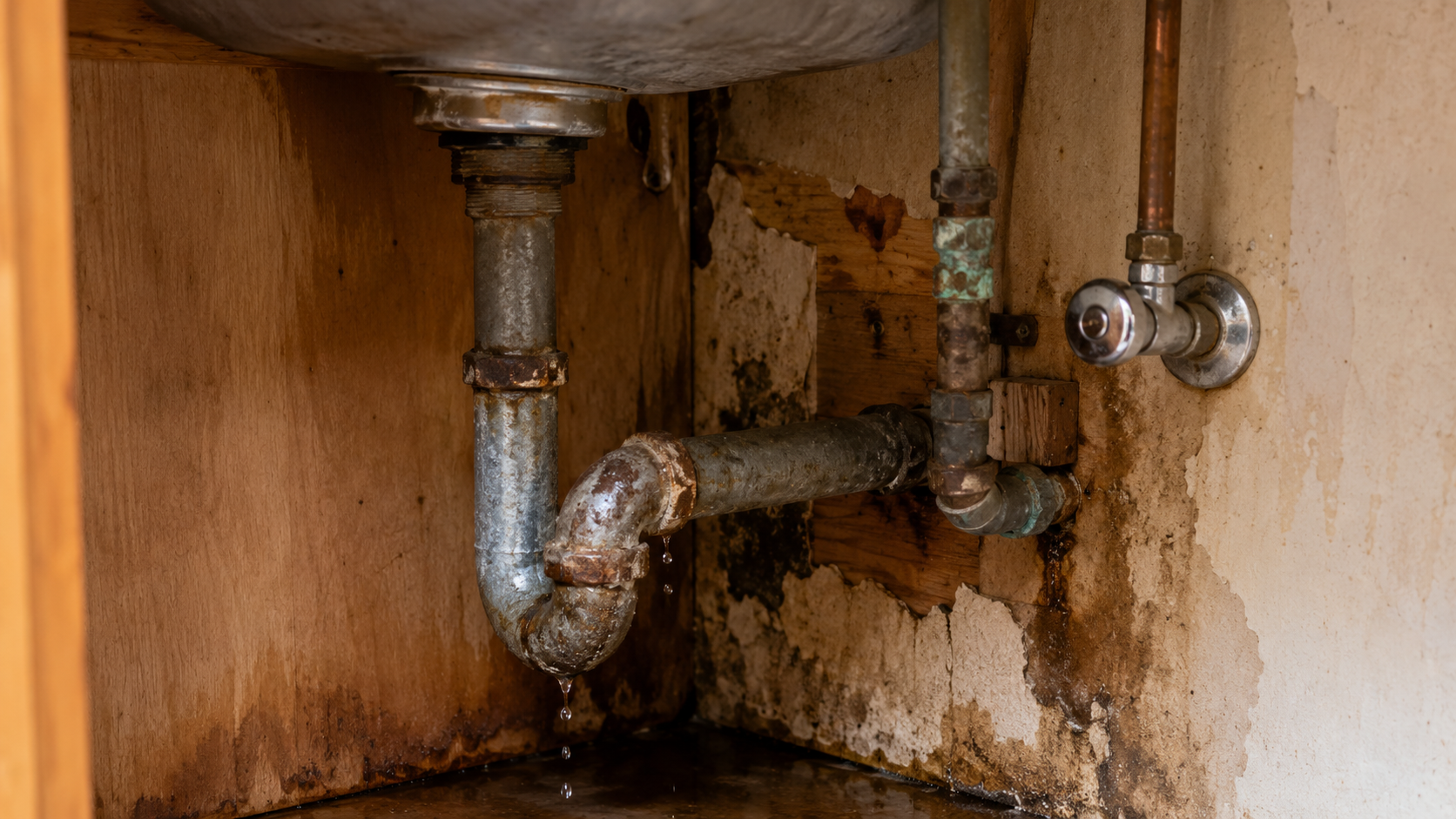
A large share of San Jose homes built before 1970 still run original galvanized steel supply lines and cast iron drain lines, and both corrode from the inside. As cast iron drain walls rust, the interior gets rough and the diameter shrinks, so the pipe itself becomes a snag point that catches debris no matter how carefully you clear it. When a home in an older neighborhood clogs over and over in the same section, the pipe is often the clog. We see this constantly during repipes, and it connects directly to the same corrosion story we lay out in our San Jose repiping guide.
Slab Routing in Older Tracts
In the 1960s slab-on-grade homes across Almaden Valley and Cambrian Park, drain lines run under the concrete, and the clay-heavy soil in those areas shifts enough with the seasons to belly or crack a line under the slab. A low spot in a drain line collects water and solids and becomes a permanent catch point, and no amount of surface clearing fixes a pipe that has physically sagged.
| Where the Clog Keeps Happening | What's Actually Causing It | Why It Comes Back | What Usually Fixes It for Good |
|---|---|---|---|
| Kitchen sink | Grease and cooking fat cooling and hardening on pipe walls plus food and coffee grounds catching on it | Liquid drain products soften the top layer but leave the hardened base ring behind so it rebuilds within weeks | Hydro jetting to scour the full pipe wall back to bare diameter |
| Single bathroom sink or shower | Hair binding with soap scum and hard water mineral scale into a dense mat | Snaking punches a hole through the mat instead of removing it so water flows briefly then reclogs | Full cabling or jetting plus a hair catcher going forward |
| Toilet gurgling or slow flush | A partial blockage further down the line or a blocked vent pulling air through the trap | The gurgle is a symptom of a main line issue not a toilet issue so plunging never lasts | Camera inspection of the main line to find the real restriction |
| Multiple fixtures backing up at once | A clog in the main sewer lateral not any single drain | No amount of work on individual drains touches the actual blockage in the shared line | Main line clearing and a camera inspection to check the lateral condition |
| Whole house draining slowly after rain | Tree roots intruding through joints in an aging clay or cast iron lateral | Roots regrow into the same joint every season until the pipe section is addressed | Camera inspection then root cutting or spot repair of the compromised section |
| Recurring clogs in a pre-1970 home | Corroded galvanized or rough cast iron drain walls that catch debris | The rough and narrowed interior grabs everything that passes so clearing is always temporary | Assessment for drain line replacement since the pipe itself is the problem |
Kitchen Drains Versus Bathroom Drains Clog for Completely Different Reasons
It is worth separating these, because homeowners often treat every clog the same way and then wonder why the fix that worked in the bathroom did nothing in the kitchen.
Kitchen clogs are almost always grease. Not just the fat you pour off a pan, but the grease that rides down in dishwater every single day, cooling as it goes and coating the horizontal run of pipe under the floor. It hardens into a ring, the ring narrows the pipe, food and coffee grounds catch on the ring, and eventually the sink stops draining. This is the clog that liquid drain products are worst at, because the caustic chemical softens the top skin of the grease and washes it away, which looks like progress, while the hardened base of the ring stays exactly where it was and rebuilds within weeks.
Bathroom clogs are almost always hair bound up with soap scum and, in a hard-water house, mineral scale. Hair on its own would flush through, but soap and scale cement it into a dense mat that grabs the next strand and the next, until the shower stands in an inch of water. Snaking a hair mat tends to punch a clean hole through the middle and leave the mat clinging to the walls, which is why the shower drains great for a month and then slows again on almost the same schedule.
Two different causes, two different right answers, and one very common wrong answer, which is a bottle of drain cleaner poured down both.
Why the Bottle of Drain Cleaner Keeps Failing You
There is a reason plumbers quietly wince when a homeowner mentions liquid drain cleaner, and it is not a sales pitch. Caustic and acidic drain products generate heat as they work, and on an older cast iron or a partially corroded pipe that heat and chemistry accelerate the very corrosion that is narrowing the pipe in the first place. They rarely clear the actual cause of a recurring clog, because roots, hardened grease, scale, and a bellied pipe are all completely immune to them. And when they do not work, the plumber who eventually snakes or jets the line is now working in a pipe full of caustic chemical, which is a genuine safety issue for the person doing the work.
They earn their place in exactly one situation, a fresh, shallow, organic clog close to the drain opening, used once. For anything that keeps coming back, they are treating a structural problem with a chemical bandage, and the drain keeps clogging because the cause was never in reach of the bottle.
Reading the Signs Before It Becomes a Backup
Recurring clogs usually announce themselves well before a full backup, and learning to read the early signals is the difference between a scheduled visit and an emergency at the worst possible time. A single slow drain points at that fixture. Several slow drains at once, or a toilet that gurgles when the washing machine drains, points at the main line, because fixtures that are physically separate should not affect each other unless they share a blocked line downstream.
A sewer smell drifting up from a drain, water pooling around the base of a toilet, or a gurgle that travels from one fixture to another are all main-line signals, and they are worth acting on early, because a main line that is 80 percent blocked becomes 100 percent blocked at the least convenient moment. If it has already reached that point, our
emergency plumber page covers how fast we can reach you and what to do while you wait.
What Actually Stops a Drain From Clogging Again
Ending the cycle means matching the fix to the cause instead of to the symptom, and that starts with actually seeing what is in the pipe.
Camera Inspection
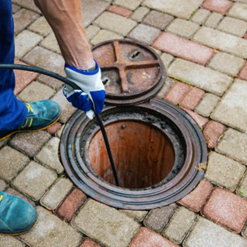
For any clog that keeps returning, a camera down the line ends the guessing. We can see whether it is grease, roots, scale, a bellied section, or a cracked pipe, and where it sits, which tells us whether the right answer is a thorough cleaning or a repair. Guessing at a recurring clog is how homeowners end up paying to clear the same drain four times.
Hydro Jetting
Where snaking punches a hole, hydro jetting uses high-pressure water to scour the full interior wall of the pipe back to its original diameter, which is what actually removes a grease ring or a root mass rather than tunneling through it. For recurring kitchen grease and for root intrusion, this is usually the difference between a fix that lasts years and one that lasts weeks.
Addressing the Pipe Itself
When the camera shows corroded cast iron, a bellied line under the slab, or roots exploiting a failing clay joint, the honest answer is that no cleaning will hold, because the pipe is the problem. That is a repair or replacement conversation, not a clearing one, and pretending otherwise just sells the homeowner another temporary clearing. This is the part most homeowners are never told, and it is exactly the moment where an honest diagnosis saves you from paying for the same clearing on repeat.
| Approach | What It Actually Does | When It Helps | Why It Often Fails on a Recurring Clog |
|---|---|---|---|
| Store-bought liquid drain cleaner | Uses caustic chemicals to dissolve the surface of a soft clog | A one-time hair or organic clog close to the drain opening | Never removes hardened grease or scale and the heat and chemicals damage older pipe walls |
| Plunging | Uses pressure to shift a nearby blockage | A single fixture with a fresh shallow clog | Does nothing for a main line clog or a vent issue which is what most recurring clogs actually are |
| Snaking or cabling | Runs a cable to break through or hook out a blockage | Localized clogs and reachable obstructions | Punches a hole through a grease or root mat rather than clearing the full pipe so it rebuilds |
| Hydro jetting | Uses high pressure water to scour the entire interior pipe wall back to full diameter | Grease buildup recurring clogs and root intrusion | Rarely fails when matched correctly though it is not always needed for a minor one-time clog |
| Camera inspection | Sends a video camera down the line to see the actual cause and location | Recurring clogs multiple slow fixtures or before any major work | Not a fix on its own but it is the only way to stop guessing at what keeps coming back |
| Enzyme drain maintenance | Uses biological cultures to slowly break down organic buildup | Ongoing prevention in a clean or freshly cleared drain | Too slow to clear an existing clog and useless against roots scale or a collapsed pipe |
You can see how these pieces fit together, along with maintenance and inspection scheduling, on our main drain cleaning page.
What You Can Do to Keep Drains Clear
Prevention is real, it just has to match the actual causes rather than the myths. A few things genuinely help in a South Bay home. Keep grease out of the kitchen sink entirely, wipe pans before washing and pour cooking fat into a can, because grease is the number one recurring kitchen clog and it is almost entirely preventable. Put a hair catcher over every shower and bathroom sink drain, since hair is the number one bathroom clog and a two-dollar screen stops most of it. Run plenty of hot water after the kitchen sink sees any oily load to help carry it past the horizontal run. And if you are in a home with hard water and aging pipes, an annual camera inspection catches root intrusion and pipe deterioration while they are still cheap problems, which is exactly the kind of proactive step we recommend in our smart plumbing tips for Bay Area homeowners.
What does not work, and it is worth saying plainly, is a monthly pour of chemical drain cleaner as prevention, because it damages older pipes and does nothing about the roots, scale, and grease that cause the clogs that actually recur.
FAQ
Why does my drain keep clogging even after a plumber cleared it?
Because clearing a clog and removing its cause are two different things. Snaking punches a path through grease, hair, or roots and restores flow, but it leaves most of the blockage on the pipe walls, so it rebuilds on a predictable schedule. A recurring clog usually needs hydro jetting to fully clear the pipe or a camera inspection to find a structural cause like roots or a bellied line.
Why do all my drains clog at the same time?
Fixtures that are physically separate should not affect each other, so when several drains slow down together or a toilet gurgles while another fixture drains, the blockage is almost always in the shared main line rather than in any single drain. That is a main-line problem, and it usually calls for a camera inspection of the sewer lateral rather than clearing individual fixtures.
Is liquid drain cleaner bad for my pipes?
For a recurring clog, yes, it does more harm than good. The caustic chemicals generate heat and accelerate corrosion in the older cast iron and galvanized pipes common in pre-1970 San Jose homes, and they rarely touch the real cause of a repeat clog, which is usually grease, roots, scale, or a failing pipe. Used once on a fresh, shallow clog it is fine, as a recurring solution it is not.
Could tree roots be why my drains keep clogging?
Very possibly, especially in older San Jose neighborhoods with mature trees like Willow Glen, the Rose Garden, and Naglee Park. Roots enter through joints in aging clay or cast iron sewer laterals and form a mesh that catches everything draining past. The tell is a whole-house slowdown that gets worse after rain. A camera inspection confirms it, and hydro jetting or a spot repair addresses it.
What is the difference between snaking and hydro jetting?
Snaking runs a cable to break through or hook out a blockage, which restores flow quickly but leaves the pipe walls coated. Hydro jetting uses high-pressure water to scour the full interior of the pipe back to its original diameter. Snaking is the right call for a localized one-time clog, hydro jetting is the right call for recurring grease, scale, or roots, because it removes the buildup instead of tunneling through it.
How do I know if I need a camera inspection?
If the same drain clogs repeatedly, if multiple fixtures are slow, or if you have an older home and want to know the condition of the line before a bigger problem forces the decision, a camera inspection is worth it. It turns guessing into seeing, which is the only way to match the fix to the actual cause.
The Takeaway
A drain that clogs once is a nuisance, a drain that clogs on a schedule is information, and the homeowners who stay ahead of it are the ones who stop treating the third clog like the first and start asking what the pipe is trying to tell them.
In this valley the answer usually comes back to the same short list, hard water scale, grease, tree roots, and aging pipe, and once you know which one you are dealing with, the fix stops being a bottle of chemicals and starts being something that actually lasts. If your drains keep clogging and you are tired of clearing the same one twice a year, we can run a camera, tell you exactly what is happening in the pipe, and give you the honest version of what will fix it for good.