Should You Repair or Replace a Water Heater In San Jose?
August 21, 2026
San Jose water is hard, hard enough that the water heater sitting in your garage is aging faster than the calendar says it is, and that single fact quietly shapes the decision almost every homeowner eventually faces, do you pay to repair the unit you have or spend more to replace it? The honest answer depends on a handful of specific things, the age of the heater, what exactly failed, whether it is gas, electric, or tankless, the brand on the tank, and the mineral load in the water it has been heating year after year. We have been handling water heater services across San Jose and the surrounding South Bay since 2009, and this guide walks you through the same framework we use when we are standing in front of your unit, so that by the time you call anyone, you already understand what you are looking at.
There is no universal rule, which is exactly why you may find that so much of what you find online isn't quite helpful. A leaking tank and a bad thermostat are not the same problem, and treating them like one decision is how homeowners end up either throwing good money at a dying unit or replacing a heater that had five good years left in it. Let's break it down properly.
The Short Version, When Repair Wins and When Replacement Wins
If you want the quick decision before the detailed explaination, it comes down to age and what failed.
Repair usually makes sense when the unit is under roughly eight years old and the failure is a specific component, a heating element, a thermostat, a thermocouple, a pressure relief valve, or a gas control valve. These are parts, not the tank itself, and replacing a part on an otherwise healthy heater is almost always the smarter money. A newer unit that suddenly stopped producing hot water is very often a repair, and a fairly quick one.
Replacement usually wins when the tank itself is failing, when the unit is past ten years old, or when the repair cost climbs toward a meaningful fraction of a new install. Water pooling under the tank is the clearest signal of all, because a leak from the tank body is not something you repair, the steel has corroded through and the only fix is a new unit. Age matters too, because a ten or twelve year old heater that needs a major part is telling you the next failure is probably not far behind, and you do not want to pay for two repairs in eighteen months on your way to replacing it anyway.
That is the framework. Everything below tells you which side of the line your specific situation lands on.
Repair or Replace, At a Glance
Before the detail, here is the quick reference. Find the situation that matches yours and it will point you toward the likely answer, though the only way to be certain is to have the actual unit diagnosed.
| Situation | Repair or Replace | Why |
|---|---|---|
| Unit is under 8 years old with a failed part | Repair | A heating element, thermostat, thermocouple, or valve on a healthy tank is a straightforward fix, and there is no reason to replace a young unit over a single part. |
| Water pooling under the body of the tank | Replace | The tank has corroded through from the inside. There is no patch for a leaking tank, and it will only get worse. |
| Leak from a valve or fitting at the top of the unit | Repair | Relief valves, drain valves, and supply connections thread on and off. The tank itself is fine. |
| No hot water on a newer unit | Repair | Usually a failed element or thermostat on electric, or a thermocouple, pilot, or gas valve on gas. Standard same-day parts. |
| Unit is 10 to 12+ years old and needs a major repair | Replace | You would be investing in a heater near the end of its designed life, and the next failure is probably not far behind. |
| Unit is 20+ years old | Replace | Well past its designed life and running on borrowed time, especially on San Jose hard water. Replace before it fails, not after. |
| Rusty or discolored hot water only | Replace | Corrosion is happening inside the tank. The unit is on its way out and worth planning around. |
| Second or third repair on the same aging heater | Replace | The pattern means the unit is failing piece by piece, and continuing to fix it is the more expensive path over time. |
| Noisy tank that still heats fine | Repair or Maintain | Sediment noise on an otherwise healthy unit is usually a flush, not a replacement trigger. |
| Tankless unit losing efficiency or throwing errors | Repair | Usually scale on the heat exchanger. Descaling and component repair is very often the right call on a tankless unit that is otherwise sound. |
| Older gas tank facing a significant repair | Lean Replace | With the 2027 gas water heater phase-out, planning a replacement on your own timeline beats pouring money into a borderline gas unit. |
Use this as a starting point, not a verdict. A heater that looks like a clear repair on paper can still be a replacement once we see how far the tank has actually aged on hard water, which is the part no chart can tell you from a distance.
Signs You're Looking at a Repair
Some failures are annoying but fixable, and on a unit that still has years of service life in it, fixing them is the right call. Whether your heater is gas or electric changes which parts tend to fail, so it helps to know what you are looking at.
No Hot Water on a Newer Unit
If your heater is only a few years old and suddenly goes cold, the tank is almost never the problem. On an electric unit it is usually a failed heating element or a tripped thermostat, and on a gas unit it is more often the thermocouple, the pilot assembly, or the gas control valve, all of which are standard parts we carry on the truck. A newer heater that quits is one of the most common repair calls we run, and it is usually resolved the same day regardless of fuel type.
Not Enough Hot Water, or It Runs Out Fast
When the hot water used to last through two showers and now taps out halfway through one, that is often a repair, especially if the unit is under eight years old. On electric heaters a failed lower element is a classic cause, the upper element still heats the top of the tank so you get some hot water, just not much. On a gas unit the same symptom can point to a burner or gas valve issue. Either way it is worth diagnosing before you assume the whole unit is done.
A Noisy Tank That Still Works
Popping, rumbling, or a kettle-like sound when the burner fires is sediment, not a death sentence. On a unit that is otherwise healthy and not too old, a proper flush can quiet it down and buy back some efficiency. We will come back to sediment because in San Jose it is the single most important part of this whole conversation, but the short version is, noise alone is often a maintenance issue, not a replacement trigger.
A Leaking Valve or Fitting, Not the Tank
Here is a distinction that saves homeowners real money. If water is coming from the temperature and pressure relief valve, a drain valve, or a supply connection at the top of the heater, that is a repair, those are components that thread on and off. It is only when the water is weeping from the body of the tank itself, low on the unit with no fitting nearby, that you are looking at replacement. When we get a leak call, the first thing we do is find out where the water is actually coming from, because the answer changes everything.
When the failure is a part and the unit has life left, water heater repair is almost always the better financial decision, and we will tell you so honestly rather than pushing a replacement you do not need.
Signs You're Looking at a Replacement
The other side of the line is just as clear once you know what to look for. These are the signals that repair money is money you will not get back.
Water Pooling Under the Tank
This is the one that ends the debate. A puddle forming under the base of the heater, once you have ruled out the valves and fittings above it, means the tank has rusted through from the inside. Tanks corrode from the water side out, so by the time it reaches the outside, the steel is gone. There is no patch for this, and a tank that has started leaking will only get worse, sometimes slowly and sometimes all at once in a flooded garage. If you are seeing water under the body of the tank, you are replacing the unit.
The Unit Is Past Ten to Twelve Years Old
Most tank water heaters are built to last somewhere in the eight to twelve year range, and in the South Bay the real number tends to land on the shorter end of that, for reasons we will get into. Once a heater crosses ten years, the calculus shifts, because even if the current problem is repairable, you are investing in a unit that is near the end of its designed life. Paying for a significant repair on an eleven year old heater usually means paying again soon, and most homeowners would rather put that money toward a new unit with a fresh warranty and a decade of service ahead of it.
Rusty or Discolored Hot Water
If the hot water at your taps runs rusty or has a metallic tint, and the cold water is clean, the corrosion is happening inside your water heater. That is a strong sign the interior of the tank is breaking down, and while it is not always an instant replacement, it usually means the unit is on its way out and worth planning around rather than repairing.
Repairs Are Stacking Up
One repair on a healthy unit is good money. A second and third repair on the same aging heater is a pattern, and the pattern is telling you the unit is failing piece by piece. If you have called for the same heater more than once in a year or two, the repair-versus-replace math has quietly flipped, and continuing to fix it is usually the more expensive path over time.
When the tank is the problem or the age has caught up with it, water heater replacement is the honest answer, and a new unit sized correctly for your home will cost you less over its lifetime than nursing a dying one.
How the Brand in Your Garage Changes the Answer
Not every water heater ages the same way, and the brand on the tank actually matters when you are weighing repair against replacement, mostly because of build quality, parts availability, and how the units tend to fail. Here is how the most common brands we service in San Jose homes factor into the decision.
Rheem
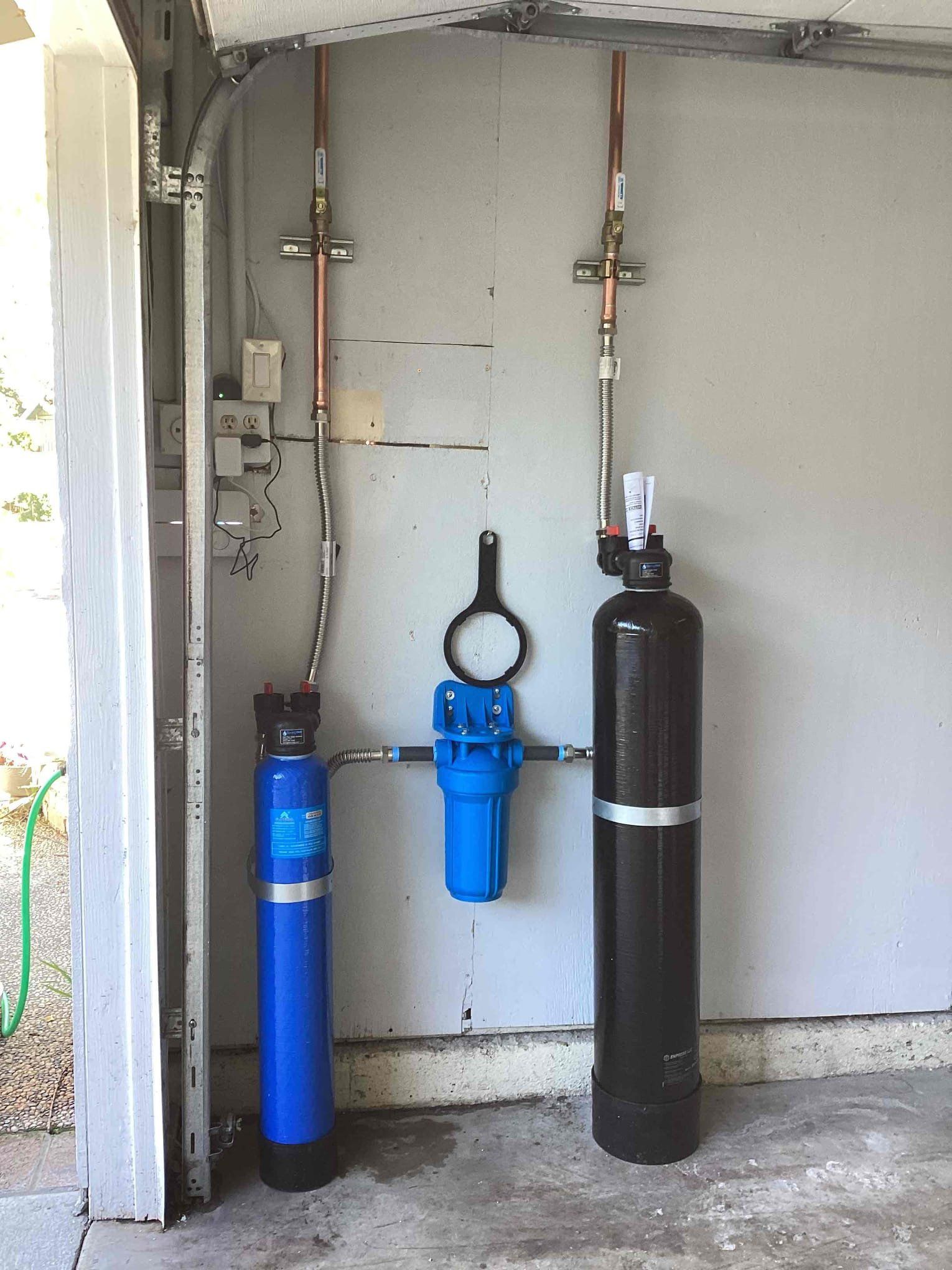
Rheem is one of the most common tanks we see in the South Bay, and it is one of the easier brands to make a repair case for on a mid-life unit, because parts are widely available and the units are straightforward to work on. A component failure on a Rheem that is under eight years old is very often a same-day repair rather than a replacement. Where the decision tips toward replacement is the same as any brand, once the tank itself is compromised or the unit is past its designed life, no amount of parts availability changes the fact that the tank is done. We installed two 40-gallon Rheems alongside a whole-home softener for a San Jose homeowner recently, and the softener is the part that will actually make those tanks last, which is the real lesson buried in the brand question.
A.O. Smith
A.O. Smith builds a lot of tanks and a lot of them end up in Bay Area homes, sometimes under other brand names since they manufacture for several labels. They are solid units and generally repairable during their service life, with parts that are accessible for most common failures. The thing to watch with any high-volume tank brand is that a mid-range unit run hard on hard water without maintenance will still reach the end of its life on schedule, so the repair case holds while the unit is young and healthy, and fades the same way once age and sediment catch up.
Bradford White
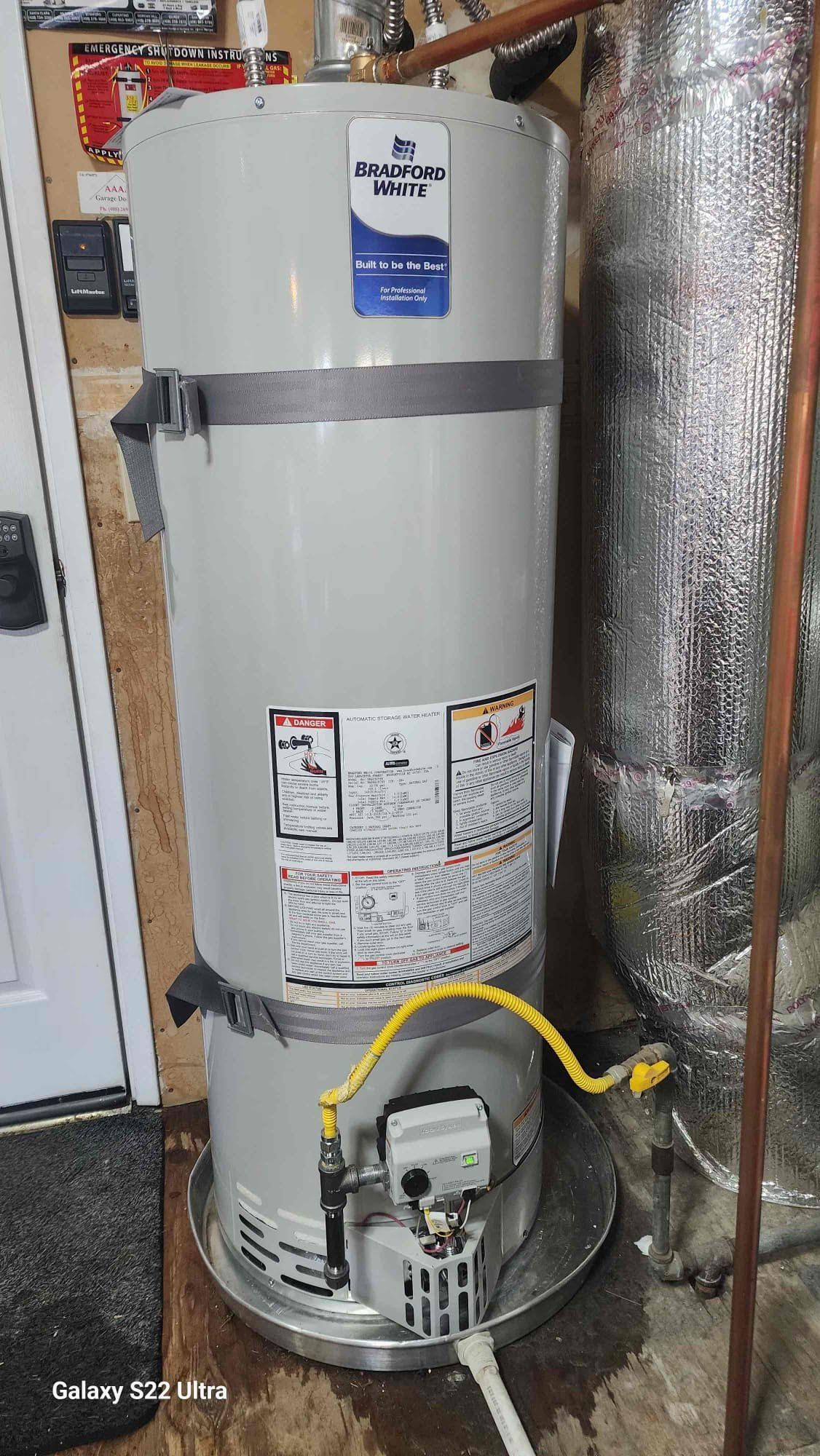
Bradford White has a reputation among plumbers as a well-built tank, and it is a brand we are generally comfortable repairing deeper into its life than some others, because the build quality tends to hold up. That said, reputation does not exempt a Bradford White from the two rules that override everything, a leaking tank is a replacement regardless of the badge, and a unit past its designed life is a replacement even if the current failure is fixable. A well-maintained Bradford White that is flushed regularly in a home with softened water is exactly the kind of unit that can earn a repair at year nine or ten. The same tank neglected on San Jose water may not get there.
The pattern across all three brands is the same, and it is worth stating plainly. Brand quality buys you a stronger repair case while the unit is healthy, but no brand survives a corroded tank, and no brand outruns its designed lifespan. What actually determines how long any of these heaters lasts in a South Bay home is not the badge on the front, it is the water running through it.
Tankless Is a Different Decision
Everything above applies to a conventional tank heater, but if you have a tankless unit, the repair-versus-replace math works differently and it is worth understanding why. Tankless water heaters do not have a large steel tank sitting full of hot water and slowly corroding, which removes the single most common reason a tank heater gets replaced. They also last considerably longer, often fifteen to twenty years against the eight to twelve of a tank, so a tankless unit reaching the age where a tank would be written off may still have years of life ahead of it.
The tradeoff is that tankless units are more complex, with circuit boards, flow sensors, and heat exchangers, so when they fail the repair can be more involved, and the repair ceiling before replacement makes sense sits higher than it does on a tank. The failure that matters most in our area is scale, because hard water coats the heat exchanger the same way it builds sediment in a tank, and a tankless unit that is never descaled will lose efficiency and eventually throw errors. The good news is that most of those problems are repairable, and a descaling and component repair on a tankless heater that is otherwise sound is very often the right call rather than replacement.
We recently handled exactly this kind of job, a homeowner with a tankless unit that had stopped delivering consistent hot water, and the easy assumption would have been to sell a replacement. Instead we diagnosed the actual fault, repaired it, and left them with a working system rather than a new-install invoice they did not need. If you are weighing a tankless repair or considering moving from a tank to tankless as part of a replacement, our tankless installation page covers what that transition involves.
San Jose Hard Water and Why Your Timeline Is Shorter
Here is the factor almost every national repair-versus-replace guide leaves out, and it is the one that matters most for anyone living in the South Bay. Our water is hard, running anywhere from 11 to 26 grains per gallon depending on where your home draws from, and that mineral load does something specific and destructive to a water heater. Every time the tank heats, minerals drop out of the water and settle to the bottom as sediment, and that layer builds year over year, insulating the burner from the water, forcing the unit to work harder and run hotter, and accelerating corrosion of the tank from the inside.
The practical effect is that the eight-to-twelve year lifespan the manufacturer prints on the box runs shorter here. A tank that might see twelve years in a soft-water region often lands closer to eight in San Jose if it is never flushed, which means the repair-versus-replace line arrives earlier for South Bay homeowners than the manufacturer numbers suggest. If your heater is eight years old and a national blog tells you that is mid-life, that blog is not accounting for the water it has been sitting in.
This changes the decision in a concrete way. On San Jose water, a component failure at year eight is a much weaker repair case than the same failure would be somewhere else, because the tank has aged faster than its calendar age suggests. It also explains why sediment noise, rusty hot water, and premature tank failure are so much more common here than the averages predict. The single best thing you can do to change this math is address the water itself, which is why so many of the replacements we install go in alongside a softener, and why San Jose's hard water deserves its own place in this decision. A softened home protects the new unit and genuinely extends how long you can keep repairing it down the road.
The 2027 Ban That Should Factor Into a Borderline Decision
There is one more thing that belongs in this decision right now, especially if your gas tank is sitting on the borderline between repair and replace. Under BAAQMD Rule 9-6, the sale and installation of new gas-fired water heaters is being phased out in the Bay Area, with the rule taking effect for many units starting January 1, 2027. For a South Bay homeowner with an aging gas heater, that changes the repair-versus-replace question in a way it would not have a few years ago.
If your gas tank is borderline, older, and looking at a significant repair, it is worth thinking past the immediate fix. Pouring money into a major repair on a ten year old gas unit that you will likely be replacing before long, into a system category that is being phased out anyway, is a weaker move than planning a replacement on your own timeline, whether that is a like-for-like unit now or a move toward a tankless or heat pump option. We are not saying rush out and replace a healthy gas heater, a working unit is a working unit. We are saying that if you are already on the fence, the ban is a real thumb on the scale, and it is better to make that decision deliberately than to have it forced on you by a failure at the worst possible time. We walk homeowners through exactly how this affects their options in our guide to the 2027 gas water heater ban.
How Long Each One Actually Takes
Timeframe is part of the decision too, because a repair and a replacement are very different mornings.
A standard repair, a heating element, a thermostat, a thermocouple, a relief valve, is usually a same-day fix and often done within a couple of hours once we have diagnosed it, assuming it is a part we carry, which most common failures are. You are typically back to hot water the same day.
A tank replacement is a longer job but still routinely done in a single visit, generally a few hours from draining and disconnecting the old unit to setting, connecting, and bringing the new one up to temperature. A like-for-like swap in an accessible garage is the fast version. If the job involves relocating the unit, upgrading the venting or gas line, adding earthquake strapping to meet code, or moving to a tankless configuration that needs new gas sizing and venting, the timeline stretches accordingly, but even then it is usually completed in a day. When we quote a replacement, we tell you honestly what the specific job involves so you know what your day looks like before we start.
Repair vs. Replacement, the Honest Tradeoffs
Every homeowner wants the cheaper answer, and sometimes the cheaper answer today is the more expensive answer over two years, so it is worth laying out both sides plainly.
Repair gives you the lower cost right now, keeps a functioning unit in service, and on a newer heater it is genuinely the smart financial move, there is no reason to replace a five year old heater over a small part. The cost of repair is that on an older or hard-water-aged unit, you may be buying a short reprieve rather than a real solution, and a second repair call erases the savings.
Replacement costs more up front, and that is the real hesitation for most people, nobody budgets for a water heater. What you get for it is a fresh warranty, a unit sized correctly for your household, a decade or so of service ahead of you, and the chance to address the water and the fuel-source question at the same time, so you are not solving the same problem again in eighteen months. On a unit that is past ten years or has a compromised tank, replacement is not the expensive option, it is the one that costs less over the life of the equipment.
The reason we walk every homeowner through this instead of just quoting the bigger job is that the right answer genuinely changes case by case, and the plumbers worth hiring are the ones who will tell you when a repair is the smarter money even though a replacement pays them more. That is the standard we hold ourselves to, and it is what homeowners tell us they notice.
How to Make Either Decision Last
Whichever way your decision goes, the same handful of habits determine how long the outcome holds up, and in a hard-water region they matter more than almost anywhere else. If you take nothing else from this guide, take these.
Flush the tank once a year
This is the single most important thing you can do, because it clears the sediment that shortens tank life, quiets the noise, and keeps the burner efficient. On San Jose water, skipping this is what turns a twelve year heater into an eight year one.
Check the anode rod
The anode is a sacrificial metal rod that corrodes so your tank does not, and on hard water it wears out faster. Replacing a spent anode is a cheap repair that can add years to a tank, and most homeowners never know it exists until the tank is already gone.
Consider a water softener
Softened water is the closest thing there is to a cure for the underlying problem, it slows sediment and corrosion across the whole home, protects a new water heater from day one, and extends how long you can keep repairing the one you have.
Descale a tankless unit on schedule
If you run tankless, periodic descaling does for the heat exchanger what flushing does for a tank, and it is the difference between a unit that reaches twenty years and one that starts failing at ten.
Address rising water pressure
Excessive household pressure stresses the tank and every fitting on it, and a pressure regulator is an inexpensive protection for an expensive appliance.
None of these are dramatic, but together they are what separate a homeowner who replaces a heater once a decade from one who is calling about the same problem every couple of years.
FAQ
What is the average lifespan of a water heater?
A conventional tank water heater is generally built to last between eight and twelve years, but in the South Bay you should plan on the shorter end of that range unless the unit has been flushed regularly and the home has softened water. Our hard water accelerates sediment buildup and internal corrosion, so a tank that goes unmaintained here often reaches the end of its life closer to eight years than twelve. Tankless units tend to last longer, often fifteen to twenty years, especially when the water is treated and the heat exchanger is descaled on schedule.
How do I know if my water heater needs repair or replacement?
Start with two questions, how old is it and what failed. If the unit is under about eight years old and the problem is a specific part, a heating element, thermostat, thermocouple, or valve, it is usually a repair. If the tank itself is leaking, the unit is past ten to twelve years old, the hot water runs rusty, or you have already repaired it more than once, it is usually a replacement. Water pooling under the body of the tank is the clearest replacement signal there is.
My water heater is 20 years old. Should I replace it?
Almost certainly, yes. A twenty year old tank is well past its designed life, and in a hard-water area like San Jose it has aged even faster than that number suggests, so it is running on borrowed time regardless of how well it seems to be working. Even if it has not failed yet, the odds of a leak or tank failure climb sharply past year fifteen, and a tank that lets go while you are away can flood a garage or a closet. Replacing a twenty year old heater on your own schedule, before it fails, is far cheaper and far less disruptive than replacing it after it floods.
Why do plumbers charge so much to replace a water heater?
Because a replacement is more than the unit itself. The price reflects draining and hauling away the old heater, the new unit, the connections and fittings, code-required work like earthquake strapping and proper venting, a permit where one is needed, and the labor of a licensed plumber doing it right so it does not leak or fail an inspection. A cut-rate install that skips the code work or uses the wrong materials is the kind of job we get called back to redo. What you are paying for is a unit that is installed correctly, safely, and to code, which is what protects your home and your warranty.
Is it worth repairing a water heater that is over ten years old?
Usually not, if the repair is significant. A minor fix on an older unit can be reasonable if the tank is sound, but paying for a major repair on a heater that is already past its designed life tends to mean paying again soon. Most homeowners are better off putting that money toward a new unit with a fresh warranty, especially on a gas unit given the 2027 changes.
Why does my water heater fail faster in San Jose than the warranty suggests?
Hard water. San Jose and the surrounding South Bay have high mineral content in the water, and every heating cycle deposits some of those minerals as sediment inside the tank. That sediment insulates the burner, makes the unit work harder, and speeds up corrosion of the tank, so a heater that might last twelve years elsewhere can reach the end of its life closer to eight here. Annual flushing and a water softener are the two things that genuinely extend the timeline.
Should I replace my gas water heater before the 2027 ban?
Not if it is healthy and working well, a functioning unit is worth keeping. But if your gas tank is older and facing a significant repair, the phase-out of new gas water heater installations under BAAQMD Rule 9-6 is a real reason to plan a replacement on your own terms rather than pouring money into a borderline unit. It is worth understanding your options, including tankless and heat pump systems, before a failure forces a rushed decision.
How long does a water heater replacement take?
A straightforward like-for-like tank replacement in an accessible location is usually a single-visit job completed in a few hours. If the work involves relocating the unit, upgrading the gas line or venting, adding code-required earthquake strapping, or switching to a tankless system, the job takes longer but is still typically finished in one day. We tell you what your specific job involves before we begin so there are no surprises.

The Bottom Line for South Bay Homeowners
The repair-versus-replace decision is not a coin flip and it is not a rule of thumb, it is a specific answer that depends on the age of your unit, exactly what failed, whether it is gas, electric, or tankless, the brand you own, and the water it has been sitting in, and anyone who gives you a blanket answer without knowing those things is guessing. Repair when the unit is young and the failure is a part. Replace when the tank is compromised, the age has caught up, or the repairs have started stacking. And factor in the two things that make the South Bay different, the hard water that shortens your timeline and the 2027 ban that changes the gas equation.
If you are staring at a water heater right now trying to decide, the fastest way to a real answer is to have someone diagnose the actual unit rather than guessing from a blog. We have been doing this across San Jose and the South Bay since 2009, and we will tell you honestly which way the math points for your specific situation, even when the honest answer is the one that makes us less money. For a deeper look at every part of owning a water heater in this area, our full San Jose water heater guide covers the rest.
Call Venture Plumbing at
(408) 898-2500 to get your water heater looked at and get a straight answer on repair versus replacement.